Unprecedented Congressional Boycott Rocks State of the Union, Highlights Deep Political Divide

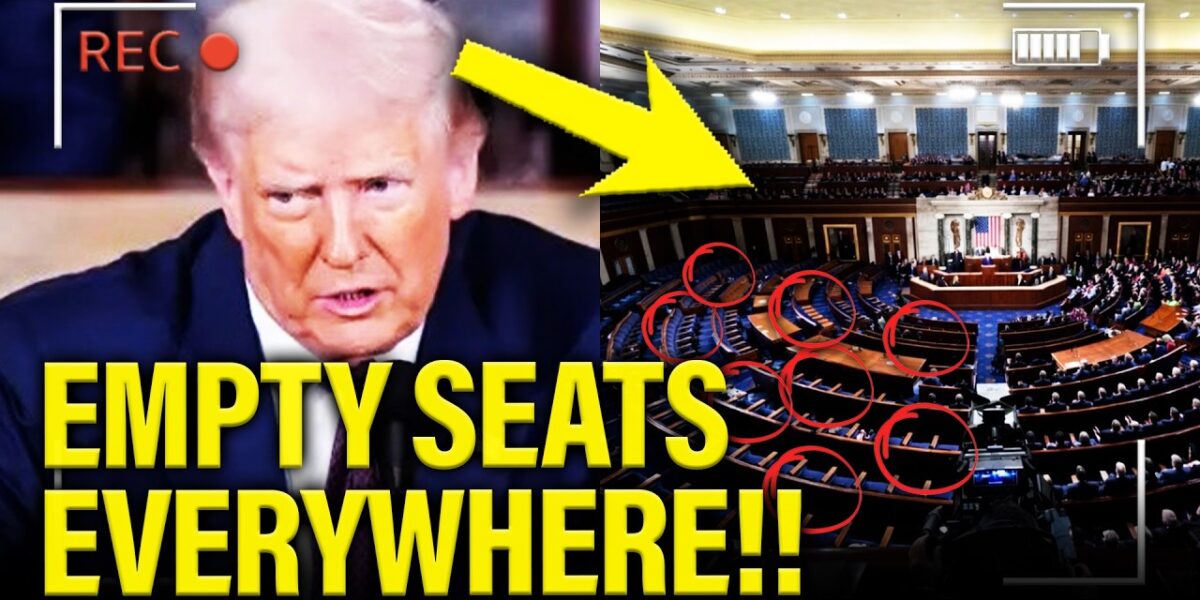
Widespread Boycott Expected at State of the Union Address Amid Deepening Political Rift
Washington D.C. is bracing for a State of the Union (SOTU) address unlike any in recent memory, as a significant number of Democratic lawmakers announce their intention to boycott the event. Led by the Midas Touch Network in partnership with Move On, the protest aims to challenge the legitimacy and decorum of the traditional presidential address, opting instead for an alternative gathering dubbed the "People’s State of the Union" outside the Capitol building.
This widespread refusal to attend, described by organizers as "fairly unprecedented in these types of numbers," underscores the profound political polarization gripping the nation. Lawmakers participating in the boycott cite a range of grievances against the administration, from alleged constitutional violations and disregard for the rule of law to what they perceive as a fundamental breakdown of democratic norms.
The Genesis of the Boycott: A Coordinated Protest
The Midas Touch Network, a progressive media organization, has positioned itself at the forefront of this protest. "The massive boycott against Donald Trump's State of the Union is exploding," stated a representative of the network, highlighting their role in galvanizing opposition. Collaborating with the advocacy group Move On, they have organized the "People’s State of the Union," an event designed to provide an alternative platform for lawmakers to articulate their concerns and connect with constituents.
The alternative event is slated to feature dozens of members from both the House of Representatives and the Senate who will forgo the traditional SOTU address. A stage and area have been set up outside the Capitol, symbolizing a direct counter-narrative to the President’s speech.
Key Voices of Dissent and Their Justifications
Among the most prominent figures to announce their participation in the boycott is Democratic Senator Adam Schiff. "Donald Trump is violating the law and constitution. He is ignoring court orders. He has weaponized the Justice Department to go after his enemies," Schiff stated when announcing his decision. "I will not be attending the State of the Union. I’ve never missed one… but we cannot treat this as normal. This is not business as usual. I will not give him the audience he craves for the lies that he tells." Schiff is expected to be a featured speaker at the People’s State of the Union.
Congresswoman Sarah Jacobs also articulated her reasons for not attending, challenging the notion that her absence would be disrespectful to the institution of the presidency. "I think what’s disrespectful to the institution of Congress is the fact that this president and this administration do not abide by congressionally passed laws and statutes," Jacobs countered during an appearance on CNN. She further expressed unwillingness to "sit there and listen to Donald Trump lie and try and say the economy is doing well when everyone I know in San Diego can barely get by."
Senator Ruben Gallego echoed similar sentiments, stating, "I have more productive things I can do with my time than just sitting there for 2 hours and clapping on queue." He emphasized the need to address pressing issues facing the country and his constituents in Arizona, rather than attending what he views as a presidential "bully pulpit."
Other notable lawmakers slated to attend the alternative event include Senators Markey, Murphy, Tina Smith, Van Hollen, and Representatives Maxwell Frost, Casar, Leger Fernandez, Jim Himes, Sarah Jacobs, and April McLane Delaney. Senator Ron Wyden and Senator Jeff Merkley of Oregon also announced their intention to host a virtual town hall to "hear the actual State of the Union from people in Oregon."
The "People’s State of the Union": An Alternative Platform
The People’s State of the Union is not merely a boycott but an intentional counter-event. By gathering outside the Capitol, organizers and participating lawmakers aim to visibly demonstrate their opposition and offer a different perspective on the nation’s condition. The event seeks to highlight issues and narratives that they believe will be overlooked or misrepresented in the official SOTU address. This parallel event serves as a symbolic act of reclaiming the narrative and asserting a different vision for the country.
Criticism of the Boycott: Upholding Institutional Norms
The decision to boycott has not been without its critics, who argue that such actions undermine democratic institutions and hinder the possibility of compromise. Corporate news outlets, academics, and commentators have weighed in, suggesting that attendance, even in disagreement, is a fundamental part of a legislator’s duty.
During a discussion on CNN, a host questioned whether boycotting was "disrespectful to the institution of the presidency and the institution of Congress," and "bad for democracy." Academics brought on by the network argued that the State of the Union is a constitutionally mandated event, and members of Congress should attend to hear the report and engage in the process of governance.
Sports commentator Stephen A. Smith, known for his outspoken political views, also criticized the boycott, calling it "juvenile, as petulant, as petty." He argued that Democrats risk losing the "high moral ground" if they mirror the behavior they accuse the President of exhibiting. "At some point in time, ladies and gentlemen, there’s got to be an adult in the room," Smith declared, urging lawmakers to "show up" and seek solutions.
Defending the Boycott: A Stand on Principle
Proponents of the boycott, particularly the Midas Touch Network, vehemently reject these criticisms. They argue that the current political climate, characterized by what they describe as a "fascist regime" and an administration that "does not abide by congressionally passed laws," necessitates a departure from traditional norms. "This is not a normal government by the people for the people. This is a fascist regime," a Midas Touch representative asserted, citing actions such as alleged weaponization of government agencies, disregard for court orders, and controversial tariff policies.
They contend that attending the SOTU would be "aiding and abetting" an administration they believe is actively undermining democratic principles. "It’s not childish. It’s standing on values. It’s standing on principle. It’s standing up for democracy. Damn it. That’s what this is about," the network emphasized, positioning the boycott as a principled stand rather than mere partisan obstruction.
A Historical Lens: Contrasting Norms and Conduct
The boycott also invites a stark contrast with past State of the Union addresses and presidential conduct. The transcript references previous SOTUs by former President Biden, highlighting moments of policy discussion (e.g., taxing billionaires, supporting Ukraine, protecting Social Security/Medicare) and even civility (e.g., greeting then-Speaker Kevin McCarthy). These instances are presented as examples of how government "should function."
Conversely, the boycotting lawmakers and their allies point to the current President’s rhetoric and actions as a departure from these norms. Specific examples cited include the President allegedly calling a Democratic leader "low IQ," asserting he doesn’t "have to work with Congress" on tariffs, making bizarre comments about being "kissed," and what they describe as fraudulent economic promises and alleged financial misconduct.
This comparison aims to underscore the perceived degradation of political discourse and the erosion of institutional respect, which, in the eyes of the boycotters, justifies their unprecedented protest.
Visualizing the Protest: Empty Seats and Invited Guests
The visual impact of the boycott is expected to be significant. Reports suggest that the House chamber will feature "empty seats dotting the floor," a stark image that will highlight the depth of the political divide. This absence will serve as a silent yet potent form of protest, directly challenging the President’s attempt to present a unified national front.
Adding another layer to the visual narrative, Democratic members of Congress have invited guests who will likely draw attention to specific issues. Notably, "survivors or survivors’ families of Jeffrey Epstein’s crimes" are expected to be present in the upper galleries, invited by Democrats "to continue to press the Department of Justice to release the millions of pages of files." Their presence will serve as a powerful, silent protest, bringing a highly sensitive and politically charged issue directly into the SOTU setting, further underscoring the political tensions surrounding the event.
Broader Implications for American Democracy
This extensive boycott of the State of the Union is more than just a momentary political maneuver; it reflects a deeper crisis of trust and legitimacy in American politics. When a substantial portion of one party refuses to even attend a constitutionally mandated address by the head of the executive branch, it signals a breakdown in the fundamental mechanisms of democratic engagement.
The event highlights how political polarization has evolved beyond policy disagreements into a fundamental questioning of shared realities and institutional respect. While proponents view it as a necessary defense of democracy, critics worry it further entrenches divisions, making compromise and cooperation increasingly difficult. The State of the Union, traditionally a moment for the nation to reflect, albeit often with partisan differences, now stands as a stark symbol of a deeply fractured political landscape, where even basic acts of institutional participation are subject to intense ideological contestation.
The outcome of this unprecedented boycott and the alternative "People’s State of the Union" will undoubtedly be scrutinized, offering insights into the evolving dynamics of American political protest and the future of traditional political ceremonies.
Source: Trump PANICS as MASSIVE BOYCOTT Ruins ENTIRE SOTU!! (YouTube)

Related Articles
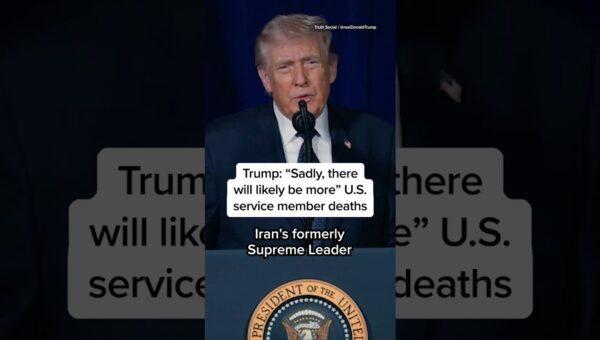
Trump Warns of More US Deaths in Escalating Conflict
Former President Donald Trump issued a somber warning on Truth Social, stating that further U.S. service member deaths are "likely" as geopolitical tensions escalate. He condemned Iran's former supreme leader, Ayatollah Ali Khamenei, and vowed retribution for fallen soldiers.


Air Travel Chaos Erupts as Gulf Conflict Shuts Skies
Tens of thousands of passengers are stranded as the conflict in the Persian Gulf forces widespread airspace closures, disrupting global air travel. A tourist in Israel described witnessing air strikes and the desperate search for escape routes amidst rapidly changing travel options.
Gulf States Caught in US-Iran Crossfire, Seek Stability
Gulf states are caught in the escalating US-Iran conflict, facing violations of sovereignty and national security threats. Leaders express a strong desire for stability and economic prosperity, contrasting with the unfolding scenes of regional instability.