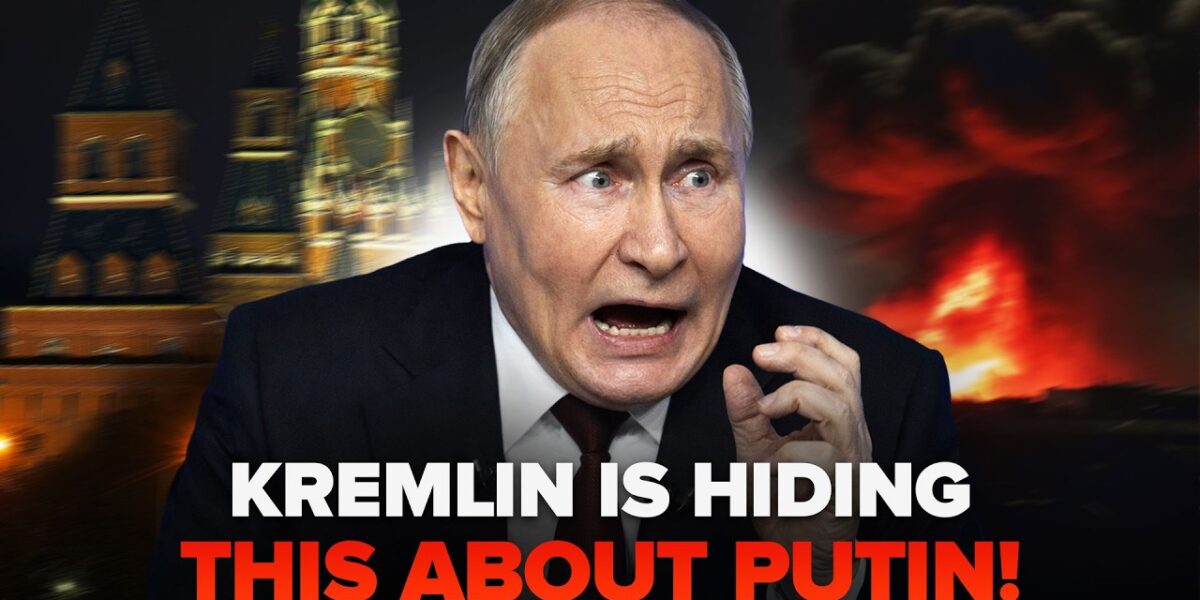
Unmasking the Kremlin’s Enigma: The Real Fears Behind Putin’s Invincible Façade
Despite a carefully cultivated image of invincibility, Russian President Vladimir Putin is reportedly plagued by fears, according to Ukrainian President Volodymyr Zelenskyy, who asserts Putin fears Donald Trump's leverage and does not fear Europe. Exiled Russian opposition figures detail Putin's anxieties about responsibility, death, and social unrest, while Russia's growing dependence on China further exposes the fragility of his power. This comprehensive article unmasks the complex reality behind the Kremlin's façade, analyzing the internal and external pressures threatening Putin's grip on absolute control.

Unmasking the Kremlin’s Enigma: The Real Fears Behind Putin’s Invincible Façade
For decades, the Russian state apparatus has meticulously crafted an image of Vladimir Putin as an unyielding, invincible leader, an untouchable president of the Russian Federation. This carefully curated persona, often dubbed the ‘Putin myth’ or ‘Putin shaft’ by Western media and even gaining its own Wikipedia entry, has been central to the Kremlin’s domestic and international narrative. However, a growing chorus of voices, from Ukrainian President Volodymyr Zelenskyy to exiled Russian opposition figures and world leaders, suggests that this monolithic image may be more fragile than it appears, masking profound fears and vulnerabilities that are increasingly shaping Russia’s trajectory.
The façade of absolute control, once seemingly impenetrable, is now being challenged by international pressure, a burgeoning economic and strategic dependence on China, and internal dynamics that hint at a leader grappling with deep-seated anxieties. As the conflict in Ukraine continues and global geopolitics shift, the question of what truly motivates and frightens Vladimir Putin has become central to understanding the future of Russia and its impact on the world stage.
The Cult of Personality: Architecting the Invincible Leader
The construction of Vladimir Putin’s image as an omnipotent, flawless leader is not an accidental phenomenon; it is the product of a systematic and centralized propaganda campaign. Since his ascent to power, Russian state media, particularly television, has played a pivotal role in portraying Putin as a superhero figure, impervious to weakness, mistakes, or fear. This narrative is reinforced through carefully staged public appearances, popular culture, and even the endorsement of powerful institutions.
Media researchers frequently analyze how this cult of personality is sustained. It involves highlighting moments of perceived strength, such as Putin engaging in judo, riding horseback shirtless, or taking decisive action on the international stage, while simultaneously suppressing any information that might contradict this image. Disinformation campaigns and the strict control of information within Russia ensure that alternative perspectives are marginalized, fostering an environment where the state-sanctioned narrative can flourish unchallenged for a significant portion of the populace.
Beyond secular institutions, the Russian Orthodox Church has also contributed to this myth-making. Patriarch Kirill, the head of the Russian Orthodox Church, once publicly described Putin’s rule as a ‘miracle of God’ and the ‘result of the prayers of holy saints’ during a sermon at Moscow’s main cathedral. Such pronouncements imbue Putin’s leadership with a divine legitimacy, further cementing his image as a figure beyond reproach and questioning. This narrative extends far beyond mere political messaging; it deeply infiltrates various spheres of public life, shaping national identity and loyalty.
The psychological impact of such a sustained campaign cannot be overstated. By consistently presenting Putin as the only capable leader, the protector of Russia, and the guarantor of stability, the Kremlin aims to foster a sense of indispensable leadership. This strategy not only consolidates power but also aims to preempt dissent by suggesting that any alternative would lead to chaos and national decline. However, as external pressures mount and internal cracks begin to show, the sustainability of this carefully constructed reality faces increasing scrutiny.
Zelenskyy’s Insight: The Geopolitics of Fear
One of the most direct challenges to the ‘invincible Putin’ narrative comes from Ukrainian President Volodymyr Zelenskyy. In a February 2024 interview with French channel France 2, Zelenskyy offered a provocative assessment: Vladimir Putin, he argued, fears Donald Trump. This assertion stems from Trump’s significant leverage over Moscow through the potential for military aid and economic pressure.
Putin and Trump: A Complex Dynamic of Leverage
Zelenskyy emphasized that Trump, as a former U.S. president and a potential future leader, understands the immense power Washington wields over Moscow. This influence is primarily channeled through two critical avenues: the imposition of sanctions and the supply of weapons to Ukraine. Should Trump return to the White House, his approach to foreign policy, often characterized by transactionalism and a willingness to challenge established alliances, could present a unique set of challenges and opportunities for Putin. Zelenskyy’s point is that Trump, understanding this leverage, ‘cannot simply agree to all of the Kremlin’s demands.’ The implicit message is that Trump, unlike perhaps some European leaders, might be unpredictable enough to apply pressure in ways Putin finds genuinely threatening, rather than merely inconvenient.
The history of U.S.-Russia relations under Trump’s first term was marked by both attempts at rapprochement and significant points of friction. While Trump often expressed admiration for Putin, his administration also implemented sanctions against Russia and provided military aid to Ukraine (albeit sometimes with delays and controversies). This duality suggests that Trump’s actions are not always aligned with his rhetoric, and his willingness to use economic and military tools as bargaining chips could be a source of anxiety for the Kremlin, which thrives on predictability and control.
The potential for a second Trump presidency thus looms large over Moscow. A U.S. leader who is perceived as capable of unilaterally altering the geopolitical landscape, potentially by either cutting off aid to Ukraine or, conversely, by imposing even harsher sanctions, introduces a level of uncertainty that authoritarian regimes typically abhor. Zelenskyy’s statement highlights a fundamental strategic calculation: real power lies in the ability to dictate terms, and Washington, under a leader like Trump, possesses that capacity in abundance.
Europe’s Role: Gratitude, Support, but Lacking Deterrent Force
While expressing profound gratitude for the substantial support from European partners, Zelenskyy offered a stark assessment of Europe’s deterrent capabilities against Putin. ‘We are grateful to Europeans. They are our partners and have helped us greatly. But unfortunately, Putin doesn’t fear them,’ he stated. The reason, according to Zelenskyy, lies in Europe’s perceived comfort and safety.
‘Europeans live in a safe and comfortable world they built themselves. Many cannot imagine that such aggression would reach their own countries,’ he explained. This sentiment points to a fundamental psychological barrier: the difficulty for societies accustomed to peace and prosperity to fully grasp the brutal realities of expansionist aggression. Despite significant financial, military, and humanitarian aid to Ukraine, Europe’s collective response, constrained by internal divisions, economic dependencies (especially on Russian energy in the past), and a deeply ingrained aversion to direct military confrontation, may not project the kind of decisive, overwhelming force that Putin truly respects or fears.
Zelenskyy’s warning is clear and dire: ‘If Ukraine fails to stop Putin, Russia could move further into Europe.’ He underscored that neighboring countries, particularly those on Russia’s borders, understand they could become the ‘first targets,’ citing the capability of Russian drones and missiles to strike ‘almost anywhere.’ This highlights a critical vulnerability within Europe: the perceived lack of a unified, robust defense posture that could deter further Russian aggression. The conflict in Ukraine is not merely a regional dispute; it is a frontline in the defense of European security and values, a reality that some European nations, according to Zelenskyy, are still struggling to fully internalize.
Democracy’s Struggle Against Rule-Breaking Adversaries
Zelenskyy also touched upon a broader philosophical challenge: the struggle of ‘pure democracy’ against an opponent who ‘doesn’t follow the rules of war.’ Democratic nations, bound by international law, human rights conventions, and the principles of open society, often find themselves at a disadvantage when confronting authoritarian regimes that operate without such constraints. While some countries recognize the existential threat and rally behind Ukraine, others, he noted, ‘attempt to distance themselves from the reality of the situation,’ perhaps hoping to avoid entanglement or maintain economic ties.
This observation speaks to the core dilemma faced by liberal democracies in the 21st century: how to effectively counter hybrid warfare, disinformation campaigns, and overt military aggression from states that disregard established norms and international order. The ‘rules-based international order’ is a concept cherished by democracies, but when one major power openly flouts these rules, the efficacy of diplomatic and economic tools can be severely tested, leaving military deterrence as a stark, often uncomfortable, necessity.
The Dragon’s Embrace: Russia’s Growing Dependence on China
The full-scale invasion of Ukraine in February 2022 triggered an unprecedented wave of sweeping sanctions from Western nations, effectively isolating Russia from much of the global economy. This dramatic shift forced Moscow to pivot eastward, transforming China into its most critical strategic partner. This burgeoning relationship, however, is increasingly asymmetric, casting a long shadow over Russia’s long-term geopolitical independence.
In January 2024, Oleksiy Luhovsky, first deputy head of Ukraine’s foreign intelligence service, confirmed in an interview with Ukrainian media that China has become Russia’s ‘primary trading partner in both the economic and military spheres.’ This partnership is extensive, encompassing ‘dozens of joint projects in energy, infrastructure, mechanical engineering, and technology.’ For Russia, facing dwindling access to Western markets, technology, and finance, China represents a vital lifeline, providing the necessary resources to sustain its economy and military efforts.
Kyrylo Budanov, head of the presidential office of Ukraine, further elaborated on this dynamic during a discussion at the World Economic Forum in Davos, noting that Beijing’s influence over Moscow is ‘steadily increasing economically, politically, and technologically.’ This growing leverage on China’s part is not merely a consequence of Russia’s isolation; it aligns perfectly with Beijing’s broader strategic ambitions to assert itself as a dominant global power. China’s display of advanced weapon systems at a large-scale military parade on September 3, 2023, served as a clear signal of these aspirations, demonstrating its formidable military strength and technological prowess.
The strategic partnership between Moscow and Beijing, while presented as a ‘no-limits’ friendship, appears increasingly unbalanced. Isolated by sanctions and desperate for new markets, cutting-edge technology, and financial resources, Russia finds itself in a position of dependence. Experts widely suggest that the deeper this economic reliance becomes, the less room the Kremlin has for independent geopolitical maneuvering. China, with its vast economy and technological capabilities, is in a powerful position to dictate terms, shape joint initiatives, and potentially influence Russia’s foreign policy decisions. This dependence risks transforming Russia from a co-equal partner into a junior partner, potentially undermining its long-term sovereignty and its ability to project power independently on the global stage. The ‘pivot to Asia,’ born out of necessity, may ultimately redefine Russia’s role in the new world order, not as a leading power, but as a crucial, yet dependent, player in China’s grand strategy.
Unveiling the Dictator’s Inner World: Opposition and International Perspectives
Beyond geopolitical analyses, a more intimate, yet equally crucial, understanding of Vladimir Putin emerges from the observations of Russian opposition figures and world leaders. These insights paint a picture of a leader increasingly consumed by personal fears, which, in turn, influence domestic policy and international behavior.
The Dictator’s Phobias: An Opposition View
Exiled Russian opposition figures, who have long observed and analyzed Putin’s behavior, often draw international attention to what they perceive as his deepest fears. Mikhail Khodorkovsky, a prominent Russian businessman, former oligarch, and one of Putin’s most vocal critics, dedicated a video on his YouTube channel to cataloging these anxieties. According to these observations, the Russian dictator’s phobias began to solidify during his first presidential term, coinciding with his increasing withdrawal from the public sphere, avoidance of ordinary citizens, and a growing preference for the high fences and isolation of his residences. By 2023, these fears had reportedly become chronic, shaping the country’s entire domestic life.
Opposition figures highlight four central fears:
- Fear of Responsibility: This fear is seen as explaining both Putin’s often slow reactions to major events and, more disturbingly, the physical elimination of his opponents. A leader who shies away from accountability may resort to extreme measures to avoid consequences, whether by deferring decisions or removing those who might expose his failings.
- Fear of the Unknown: This manifests in Putin’s tendency to retreat to his secure residences and his notable refusal to visit the front lines of the conflict in Ukraine. Such behavior suggests a deep-seated desire for control and predictability, and an aversion to situations where outcomes are uncertain or beyond his immediate influence.
- Fear of Death: This has become a central, overarching fear, particularly evident in his erratic behavior during the COVID-19 pandemic, where he maintained extreme social distancing even from close aides, and his reported conversation with Chinese President Xi Jinping about ‘eternal life.’ The psychology of aging dictators, often obsessed with their legacy and mortality, underscores this particular anxiety.
- Social Anxiety: This fear is illustrated by practices such as dressing FSB officers as journalists for staged photoshoots and other public appearances. Such measures reveal a profound distrust of genuine public interaction and a need to control every aspect of his environment, even the composition of his audience.
These fears are not merely personal quirks; they have profound implications for Russia’s internal stability. Opposition figures emphasize that ‘individuals are emerging uncontrollably who could replicate the rebellion of the head of the private military company Wagner, Yevgeny Prigozhin.’ These figures, often motivated by grievances stemming from ‘crimes of prison authorities against ordinary Russians themselves,’ could lead to significant social unrest. Irina Romanova, head of the charitable foundation ‘Russia Behind Bars,’ explained that Putin ‘fears this and closely monitors the emergence of such figures.’ The June 2023 Prigozhin revolt, which saw a column of Wagner mercenaries march towards Moscow largely unopposed, served as a stark, real-world manifestation of these internal vulnerabilities. Opposition figures suggest that ‘had the West not panicked at Prigozhin’s actions, his revolt might have succeeded,’ indicating a belief that the Kremlin’s response was driven by fear and a lack of clear strategy in the face of an unexpected internal threat.
World Leaders’ Assessments: The Threat of Democracy
The perception of Putin’s fears is not confined to Ukrainian and opposition circles; it has become a recurring theme among international leaders following the full-scale invasion of Ukraine.
- Joe Biden’s View: U.S. President Joe Biden has repeatedly labeled Putin a ‘war criminal’ and a ‘dictator.’ As early as September 2022, Biden stressed that the Russian leader ‘fears democracy and the example of a free Ukraine.’ According to Biden, Putin is actively trying to destroy Ukraine ‘precisely because a successful democracy next to Russia poses a direct threat to his regime.’ This perspective posits that Putin’s aggression is not merely about territorial gain or strategic buffer zones, but fundamentally about quashing the ideological threat posed by a thriving, democratic neighbor. A free and prosperous Ukraine, demonstrating that a post-Soviet state can successfully integrate with democratic values and Western institutions, directly undermines Putin’s narrative that authoritarian rule is the only viable path for Russia and its neighbors.
- Boris Johnson’s Analysis: Former UK Prime Minister Boris Johnson echoed similar sentiments in an article for The Telegraph in March 2022. He wrote that Putin ‘fears the democratic example of Ukraine and the possibility of color revolution in Russia.’ Johnson argued that the Russian president invaded Ukraine ‘because he fears that Russians might one day want to live as freely as Ukrainians.’ The concept of ‘color revolutions’ – popular uprisings that led to regime change in several post-Soviet states – has long been a source of paranoia for the Kremlin. The success of a democratic Ukraine, therefore, represents not just a geopolitical challenge but an existential threat to Putin’s authoritarian model and his hold on power, by providing an attractive alternative for the Russian populace.
These assessments from world leaders underscore a crucial point: Putin’s aggression is rooted not just in a desire for external power but also in a deep-seated fear of internal instability, spurred by the perceived contagion of democratic ideals. The image of unquestionable strength, so central to Russia’s state narrative, is thus revealed to be a defensive mechanism, an attempt to project invincibility in the face of profound anxieties about his own control and legacy.
The Fragile Façade: Maintaining Control in an Unstable World
The carefully constructed image of Vladimir Putin as an invincible, untouchable leader is increasingly at odds with a complex reality defined by escalating international pressure, a growing and potentially stifling dependence on China, and undeniable internal vulnerabilities. The monolithic façade, once a cornerstone of the Kremlin’s power, is showing cracks, revealing a system far from impenetrable.
The cumulative effect of Western sanctions has undeniably constrained Russia’s economic and technological development, forcing it into a strategic embrace with Beijing that, while providing a lifeline, inherently limits Moscow’s autonomy. This asymmetric partnership means that Russia’s geopolitical maneuvering space is shrinking, making it a junior partner in a relationship where China’s interests increasingly take precedence. This dependence poses a long-term challenge to Russia’s sovereignty and its self-perception as a global power.
Internally, the revelations about Putin’s personal fears—of responsibility, the unknown, death, and social anxiety—suggest a leader who is increasingly isolated and paranoid. The Prigozhin rebellion, though swiftly quelled, exposed the fragility of loyalty within Russia’s elite and the potential for social unrest fueled by internal grievances. Such events directly challenge the narrative of an omnipotent leader with absolute control, demonstrating that even within the highest echelons of power, dissent and instability can emerge unexpectedly.
The fundamental question that now looms large is how long the Kremlin can sustain the image of absolute control in an increasingly unstable geopolitical environment. The disconnect between the carefully curated myth and the unfolding reality is becoming more apparent, both domestically and internationally. As Ukraine continues to resist, as Western nations maintain their pressure, and as China solidifies its influence, Russia’s ability to project an image of unyielding strength will be severely tested. The future of Russia, and indeed the broader international order, hinges on how this fundamental tension between myth and reality ultimately resolves.
Source: 😱Moscow is afraid of this the most! Who is Putin? This is what Kremlin will never show (YouTube)

Related Articles

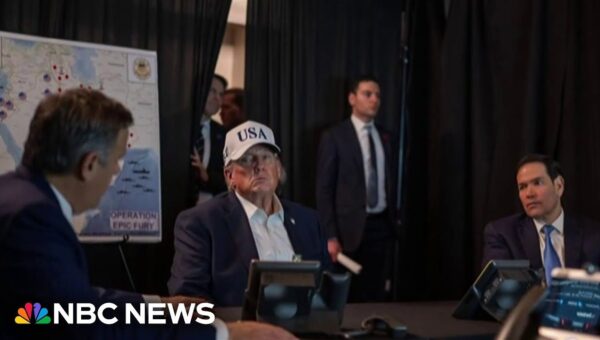
Trump: Iran Strikes Ahead of Schedule, Expects ‘Great Deal for World’
Three U.S. service members have been killed amid escalating conflict with Iran, President Trump confirmed. He stated that strikes are ahead of schedule, with senior Iranian leaders killed, and expressed optimism for a "great deal for the world" despite ongoing talks with Iranian officials.
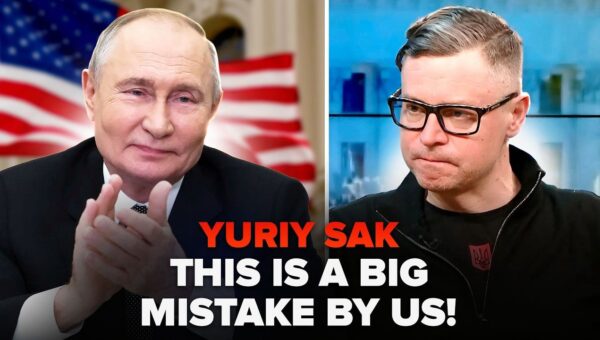
Trump’s Putin Stance: US Strategy and Global Implications
Analysis suggests Donald Trump's approach to the Ukraine war involves pressuring Kyiv, but US involvement is crucial for resolution. China's influence and the 'MAGA' agenda's geopolitical implications are key factors.

US Strikes Iran: Mounk and Fukuyama Discuss Unpredictable Conflict
Leading political scientists Yascha Mounk and Francis Fukuyama analyze the recent US strikes on Iran, warning of unpredictable outcomes and internal instability. They question the objectives of the "war of choice" and its potential to destabilize the region, while also discussing the shifting global perceptions of Israel.