Unmasking the Anti-Xi Camp: Inside the Chinese Communist Party’s Deepening Power Struggle
China's Communist Party is grappling with an unprecedented internal power struggle, as an 'anti-Xi' camp, comprising conservative princelings and reformist elders, challenges President Xi Jinping's authority. The military's allegiance is contested, particularly after Xi's controversial move against General Zhang Youxia, which breached an unspoken 'red line' of elite protection. This intensifying factionalism, compounded by differing views on Taiwan and the economy, has created a dangerous stalemate that threatens the CCP's stability and could reshape China's future.

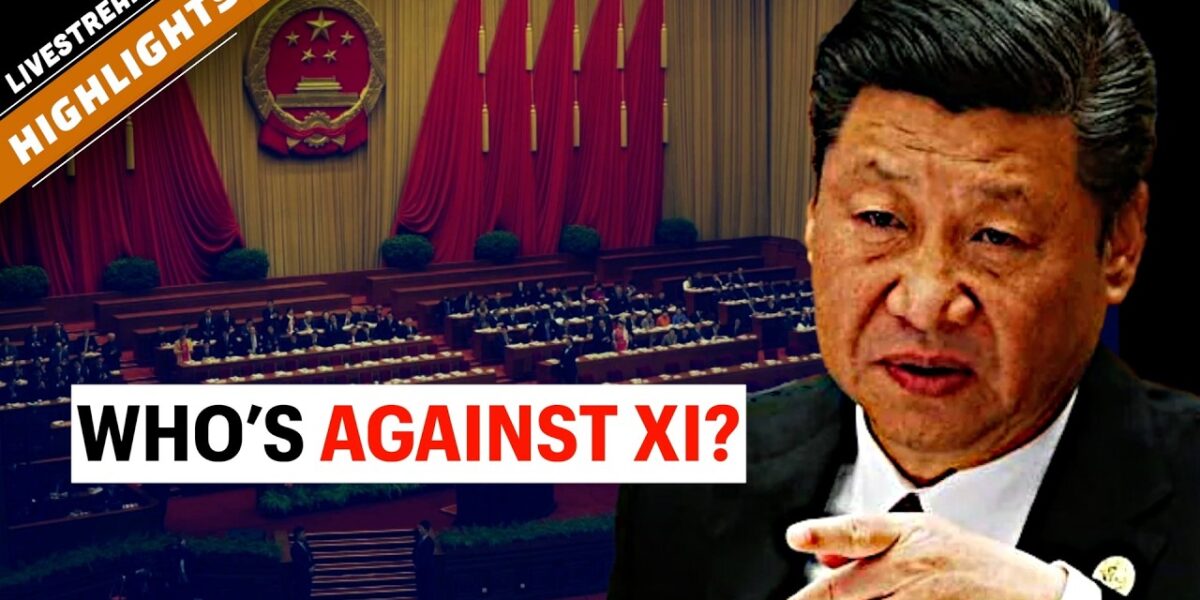
Unmasking the Anti-Xi Camp: Inside the Chinese Communist Party’s Deepening Power Struggle
The Chinese Communist Party (CCP) finds itself ensnared in an increasingly perilous internal power struggle, a ‘danger window’ where the once-hidden fissures within its leadership are becoming starkly apparent. What was once perceived as a monolithic entity under Xi Jinping’s iron grip is now openly fractured, giving rise to effectively two competing party centers. This unprecedented division marks a critical juncture for China’s political future, with ramifications that could reshape global geopolitics.
At the heart of this unfolding drama is the emergence of a formidable ‘anti-Xi’ camp, a complex and internally diverse coalition challenging President Xi Jinping’s authority. Far from a unified opposition, this camp comprises distinct power blocs with overlapping interests and, at times, divergent priorities. Understanding these intricate dynamics is crucial to comprehending the current state of China’s political landscape and the potential trajectories it might take.
The Fractured Landscape: Two Centers of Power
The notion of a single, unchallenged leadership within the CCP has been decisively dispelled. While Xi Jinping continues to hold the titles of Party General Secretary, President of the People’s Republic of China, and Chairman of the Central Military Commission, the effectiveness of his personal power base is reportedly shrinking. His camp, composed primarily of long-time loyalists from his Fujian and Zhejiang years, faces a critical shortage of manpower, exacerbated by a series of purges that have thinned its ranks, particularly within the military.
Despite these setbacks, Xi’s camp retains a significant advantage: the institutional leverage derived from his triple crown of top posts. This control over the formal apparatus of the party, government, and military provides a crucial bulwark, allowing his faction to exert influence even as his personal network diminishes. However, this institutional control is increasingly being challenged by the growing consolidation and strategic maneuvering of the anti-Xi forces.
The anti-Xi camp, while united in its opposition to Xi’s current trajectory, is not a homogenous entity. It is broadly characterized by two major, albeit often overlapping, forces: the conservatives and the reformists. These groups represent different historical legacies, ideological leanings, and strategic objectives, making their alliance against Xi both powerful and inherently complex.
The Conservative Backbone: Guardians of the Red Dynasty
The conservative camp forms the bedrock of the CCP elite and arguably the most formidable challenge to Xi Jinping. This group is largely composed of ‘princelings’ – descendants of prominent revolutionary leaders – and long-standing party hardliners, many with historical ties to the old Jiang Zemin faction. Their primary objective is the preservation of their forefathers’ legacy and the perpetuation of the ‘red dynasty,’ a system that has afforded them immense wealth, privilege, and influence over decades.
These conservatives are staunch defenders of the existing system, not out of ideological purity alone, but because their personal and familial interests are inextricably linked to its continued stability. They have no desire to see the system collapse, as such an event would jeopardize their vast networks and deep resources, both domestically and abroad. Their strength lies not just in their lineage and wealth but also in their extensive connections, particularly within the military.
The People’s Liberation Army (PLA) has traditionally been seen as the ballast stone of the regime, preventing the entire ship from capsizing. The conservatives understand this implicitly, maintaining close ties with military leaders to ensure the regime’s backbone remains aligned with their interests. This deep-seated influence within the PLA makes them a critical force in any internal power struggle.
Initially, some elements within the conservative camp, particularly General Zhang Youxia, reportedly cooperated with Xi Jinping to secure his third term at the 20th Party Congress in 2022. Zhang, a prominent princeling and career military officer, saw his mission as protecting the party and thus aligned with Xi’s bid for continuity. However, this pragmatic alliance proved short-lived, as Xi’s subsequent actions dramatically shifted the conservatives’ stance from cautious observation to fierce opposition.
The Reformist Voice: Seeking Evolution, Not Revolution
Complementing the conservatives, though often with different motivations, is the reformist camp. This group is characterized by prominent party elders, technocrats with extensive governance experience, and some reform-minded princelings. Figures like Wang Yang, a former Politburo Standing Committee member known for his more liberal economic views, are often associated with this camp. Their vision, while still within the framework of CCP rule, is notably more progressive than that of the hardliners.
The reformists advocate for genuine political reforms, albeit cautiously and incrementally. A notable example cited in the transcript is the argument that the PLA should transition from a party army to a national defense force – a significant philosophical shift with profound implications for civil-military relations in China. While most ‘red family’ descendants still lean conservative, the reformist camp attracts those who believe in a more adaptable and responsive governance model.
Their advantages are manifold: deep experience in governance, a refined skill in political maneuvering, and a relatively better public reputation. They are often perceived as less prone to the rampant corruption that has plagued other factions, lending them a degree of moral authority. Former President Hu Jintao, though not firmly aligned with either the conservatives or reformists, is often seen as a pivotal figure who can act as a bridge between these two camps, leveraging his influence to play both sides when necessary.
The Zhang Youxia Incident: A Red Line Crossed
The arrest and subsequent targeting of General Zhang Youxia marked a critical turning point in the CCP’s internal dynamics. After initially aiding Xi’s third-term bid, Zhang became a target of Xi’s purges. This move, which some observers liken to ‘burning the bridge after crossing the river,’ saw Xi use his military loyalists to systematically clip Zhang’s wings. The situation escalated dramatically in the summer of 2024, following a reported stroke suffered by Xi Jinping, an event that allegedly created a power vacuum and allowed Zhang, in concert with party elders, to reassert control over the PLA.
The public manifestation of this shift came at the October 1, 2024 National Day banquet, where Xi Jinping was conspicuously flanked by two reformist party elders, Wang Yang and Li Keqiang (or a similar reformist figure, as the transcript mentions ‘Rea’ which is likely a mishearing of a prominent reformist elder). This unusual seating arrangement was immediately interpreted by insiders as a clear signal of the party elders and reformists’ resurgence.
However, it was Xi’s initial move against Zhang Youxia that ignited the fierce opposition of the conservative camp. For years, this faction had relied on Zhang and the military’s backing to safeguard their privileges. Zhang, a heavyweight among princelings who ‘controlled the guns,’ was viewed as a vital stabilizer for the entire system. By arresting him, Xi not only removed a powerful general but also crossed an unspoken ‘red line’: the rule of ‘no bloodshed among the red families.’ This rule, established during Deng Xiaoping’s era and upheld by successive party elders, was a cornerstone of internal stability, designed to prevent the internecine struggles that characterized earlier periods of CCP history. Its violation was an existential threat to the princelings, signaling that no one, regardless of lineage, was safe.
Taiwan and the Existential Threat to the Elite
Beyond the immediate implications of Zhang Youxia’s arrest, a critical factor driving the conservatives’ sharp turn against Xi Jinping is the issue of Taiwan. Many within this camp vehemently oppose Xi’s aggressive push toward a potential military conflict with Taiwan. They harbor a deep-seated belief that such a war cannot be won and would inevitably risk the collapse of the entire regime.
This opposition is not purely strategic; it is also deeply personal. A significant portion of the princelings’ vast family wealth is parked overseas, particularly in Western jurisdictions. The moment Xi Jinping launches a military operation against Taiwan, the immediate and inevitable consequence would be crippling Western sanctions, leading to the freezing of these substantial assets. For these elites, a war over Taiwan is not merely a political or military calculation; it is an existential threat to their financial empires and multi-generational legacies. This convergence of regime preservation and personal economic interest provides a powerful impetus for their resistance to Xi’s more hawkish stance.
The Shifting Military Allegiance: PLA in the Balance
The allegiance of the People’s Liberation Army (PLA) is arguably the most critical variable in this unfolding power struggle. Traditionally, the military has maintained strong ties with the conservative camp, many of its senior commanders being princelings themselves or having long-standing relationships with this faction. However, the past year and a half have witnessed a more complex dynamic, with the military navigating the competing demands of Xi’s camp, the conservatives, and the reformists.
The transcript highlights a crucial development: the military is now reportedly working with both conservatives and reformists, particularly since the establishment of a ‘Central Committee Decision and Coordination Body’ in June 2025. This body, whose creation formally announced by the CCP, signifies that Xi Jinping now effectively has a ‘boss’ – a mechanism for checks and balances within the party. This institutional shift has empowered the anti-Xi forces to exert greater influence over the PLA.
A key strategy employed by the military leadership, operating under the sway of the anti-Xi factions, is to exploit procedural irregularities. Xi Jinping’s move against General Zhang Youxia reportedly violated both party rules and internal PLA procedures. This provides generals with a ‘legal and procedural shield’ to delay, hedge, and refuse public loyalty statements to Xi. It allows them to resist his directives without engaging in open rebellion, creating a strategic stalemate.
However, this delaying tactic has its limits. The military cannot stall indefinitely. Once Xi Jinping manages to ‘patch up the paperwork’ and retroactively legalize his actions against Zhang Youxia, any continued resistance will be redefined as outright disobedience, carrying severe consequences. This looming deadline creates immense pressure within the PLA, forcing a delicate balancing act between loyalty to the party’s central authority (embodied by Xi) and allegiance to the broader interests represented by the anti-Xi coalition.
Xi Jinping’s visible frustration with this contested loyalty is evident in the increasingly aggressive editorials flooding the PLA Daily. These publications aim to coerce the military into pledging unequivocal loyalty, with recent editorials going so far as to openly warn of a potential party split. Such public pronouncements underscore the precarious balance of power, indicating that Xi does not currently command the full, unquestioning loyalty of the armed forces; indeed, his opponents appear to hold more influence over the PLA at this critical juncture.
Checks and Balances Emerge: A New Power Dynamic
The establishment of the Central Committee Decision and Coordination Body in June 2025 is a monumental development, signaling a significant shift in the CCP’s power structure. This body’s existence introduces a formal mechanism for checks and balances, effectively placing limits on Xi Jinping’s previously unbridled authority. While details of its composition and specific powers remain shrouded in secrecy, its very existence implies a collective leadership model, at least in critical decision-making processes, where Xi is no longer the sole arbiter.
This development, combined with the public display of Xi being flanked by reformist elders at the 2024 National Day banquet, suggests a triumphant return to the spotlight for the party elders and reformists. It indicates a successful effort by these factions to institutionalize their influence and constrain Xi’s ability to act unilaterally, particularly after the perceived vulnerability following his reported stroke. This new body serves as a powerful counterweight, providing a platform for the anti-Xi forces to coalesce and exert their collective will.
The Stalemate: A Dangerous Window
Despite the growing opposition, Xi Jinping retains significant strengths. His primary advantage lies in his status as the party leader, allowing him to strategically bind himself to the regime. He has effectively sent a clear message to all CCP insiders: ‘I am the party. If you take me down, you are taking down the regime.’ This powerful psychological linkage creates hesitation among those who, despite their disagreements with Xi, still wish to preserve the CCP’s rule. For now, this logic, coupled with the ingrained fear of regime collapse, has largely worked to keep the system intact.
Furthermore, Xi’s personal attributes – his ruthlessness, speed, and decisiveness – give him an edge. While his opponents may deliberate, articulate, and calculate, Xi acts swiftly and without hesitation. He consciously manufactures fear, using it as a deliberate glue to hold his power together, exploiting the inherent caution and self-preservation instincts of his rivals.
The current situation is best described as a dangerous stalemate. The collective silence of the PLA, far from being random, reflects a calculated response to the anti-Xi side, indicating that the military is not fully under Xi’s command. The fight has not yet fully erupted into open conflict, but the balance of power is exceedingly fragile. This ‘quiet phase’ is a critical window, pregnant with the potential for either a negotiated resolution, a further consolidation of anti-Xi forces, or a dramatic escalation that could plunge the CCP into unprecedented turmoil.
Broader Implications and Future Scenarios
The deepening internal power struggle within the CCP carries profound implications, both for China’s domestic trajectory and its role on the global stage. Historically, factionalism has been a recurring feature of CCP politics, from the ideological purges under Mao Zedong to the reform-era struggles under Deng Xiaoping and the more subtle power dynamics of the Jiang Zemin and Hu Jintao eras. However, the current situation, with two distinct ‘party centers’ and a direct challenge to the paramount leader’s authority, appears to be of a different magnitude.
Domestically, this internal strife could lead to policy paralysis or erratic shifts, particularly in critical areas such as economic reform, social policy, and environmental governance. A leadership preoccupied with internal survival may struggle to address China’s mounting economic challenges, including a slowing growth rate, property market woes, and high youth unemployment. The erosion of central authority could also empower regional factions or bureaucratic silos, leading to less coordinated governance.
Internationally, the implications are equally significant. A fractured CCP could lead to a less predictable China. Questions about Taiwan, the South China Sea, and China’s relationship with the United States and its allies could become even more volatile. The conservative camp’s opposition to a war over Taiwan, driven by fears of regime collapse and financial ruin, could potentially temper Xi’s more aggressive inclinations, but the internal instability itself might lead to miscalculations or desperate actions by any faction seeking to consolidate power.
Potential scenarios range from a protracted period of internal jostling, with power gradually shifting away from Xi through institutional mechanisms like the Decision and Coordination Body, to a more dramatic, albeit less likely, open conflict. Another possibility is a negotiated power-sharing arrangement, where Xi remains titular head but with significantly curtailed authority. The public, largely shielded from the intricacies of elite politics, would likely only see the outward manifestations of these struggles, such as personnel changes or subtle shifts in state media narratives.
Ultimately, the CCP’s ability to manage this unprecedented internal division will determine not only its own survival but also the future trajectory of one of the world’s most powerful nations. The ‘danger window’ is wide open, and the world watches closely as the hidden power blocs within Beijing vie for control, their decisions poised to send ripples across the globe.
Source: Who Is the Anti-Xi Camp? Inside the CCP’s Hidden Power Blocs (YouTube)

Related Articles
China’s Info War: Rumors, Ads Hint at Deep Political Strife
Unusual rumors of executions and a provocative game advertisement hint at a brewing information war within China. State media's own subtly critical reports further suggest deep political undercurrents and potential dissent.
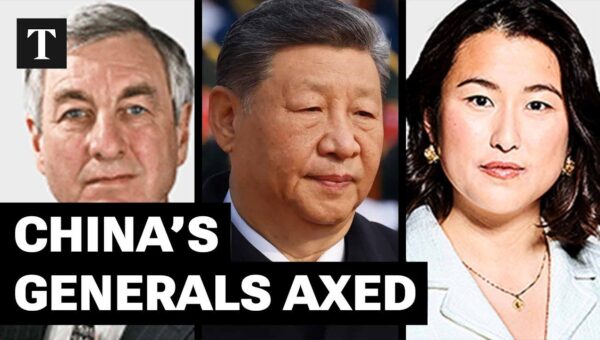
Xi’s Military Purge Sparks Questions of Paranoia and Weakness
President Xi Jinping's extensive purge of top military commanders has triggered debates about his paranoia and the PLA's readiness. Analysts question if these dismissals signal a consolidation of power or reveal deep-seated corruption and incompetence within China's armed forces, with significant implications for regional stability, particularly concerning Taiwan.
Rubio: War’s End Lies in Talks, Not Military Might
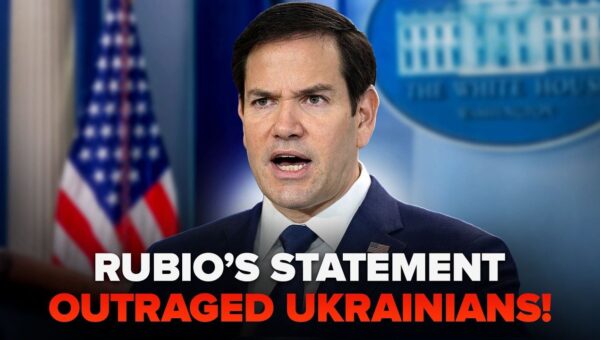
U.S. Secretary of State Marco Rubio stated that the Ukraine war lacks a military solution and will ultimately be settled through negotiation, highlighting America's crucial role in facilitating talks. Meanwhile, Hungary's PM Viktor Orbán accused Kyiv of election interference and disrupting energy supplies, while China's Xi Jinping called for inclusive peace negotiations.