Unlock Home Equity for Investment Gains
Homeowners can leverage their home equity with a Home Equity Line of Credit (HELOC) to invest in real estate. By pairing this with a lease option strategy, investors can generate significant cash flow to cover HELOC payments and build wealth.


Tap Into Your Home’s Hidden Value to Fund Real Estate Investments
Homeowners sitting on significant equity may be overlooking a powerful financial tool: a Home Equity Line of Credit (HELOC). While often viewed as a distant retirement asset, this readily available credit line, secured by your home’s equity, can be strategically leveraged to generate income and build a robust investment portfolio. This approach, particularly when combined with innovative real estate strategies like lease options, offers a pathway to financial freedom, potentially allowing you to replace your primary income stream sooner than you might imagine.
Understanding Home Equity and HELOCs
Your home’s equity is the difference between its current market value and the amount you still owe on your mortgage. For instance, if your home is valued at $500,000 and you have a remaining mortgage balance of $300,000, you possess $200,000 in equity. This represents the portion of the property you truly own.
A Home Equity Line of Credit (HELOC) functions much like a credit card, but it’s secured by your home’s equity. Lenders offer these lines of credit based on your home’s value and your existing loan balance. Typically, they allow you to borrow up to 80% to 90% of your home’s combined loan-to-value ratio. Using the previous example, if your lender allows a 90% loan-to-value on your $500,000 home, they might offer a credit line up to $450,000. With an existing $300,000 mortgage, this could make available a $150,000 HELOC.
A key advantage of HELOCs is their flexibility and cost-effectiveness. You only pay interest on the funds you actually draw, and if you don’t use the line, there’s often no cost associated with keeping it open. This makes them an attractive option for accessing capital without the immediate burden of a traditional loan payment, provided you have a plan for repayment.
The Lease Option Strategy: A Game Changer for Cash Flow
The traditional rental model, while familiar, faces increasing challenges in generating consistent cash flow due to rising interest rates and property values. This is where the lease option strategy presents a compelling alternative.
A lease option is essentially a rent-to-own agreement. It grants a tenant the exclusive right to purchase a property at a predetermined price within a specific timeframe, typically 24 months. This arrangement fundamentally shifts the tenant’s mindset from a renter to a prospective homeowner, leading to several significant benefits for the investor:
- Upfront Option Fee: Tenants pay a non-refundable option fee, which can range from $10,000 to $20,000 on average. This fee provides immediate capital for the investor.
- Rent Premiums: Because tenants are working towards homeownership, they are often willing to pay a premium above market rent. In some markets, this can add $300 to $400 per month to the rental income, potentially boosting monthly cash flow to $700 or more.
- Reduced Repair Costs: Tenants in lease option agreements typically assume responsibility for property repairs and maintenance, treating the home as if it were their own. This significantly reduces the investor’s ongoing expenses and the risk of large, unexpected repair bills wiping out annual profits.
How HELOCs and Lease Options Create a Powerful Synergy
The income generated from a lease option can be strategically used to cover the monthly payments on a HELOC. By securing a HELOC on your home’s equity and investing in properties utilizing the lease option strategy, the increased cash flow from these investments can offset the HELOC’s interest payments. This creates a scenario where your home equity is actively working for you, generating income that covers the cost of borrowing, while the investment property builds equity and provides further returns.
For example, if a lease option agreement generates $1,200 in monthly cash flow after covering expenses, and the HELOC payment is $500, the investor still nets $700 in profit. This model significantly enhances the potential for accumulating wealth and achieving financial independence. The upfront option fee further bolsters the investor’s returns, providing immediate capital that can be reinvested or used to manage the HELOC.
Navigating the Market and Regional Variations
The effectiveness of this strategy is influenced by local market conditions. Areas with strong housing demand and a clear path to homeownership for potential buyers are ideal for lease option investments. Buyers in these regions are more likely to have the financial capacity to pay option fees and rent premiums, ensuring a consistent income stream for investors.
This approach is particularly impactful for homeowners who have seen substantial appreciation in their property values over the past decade. For those with over $50,000 in equity, exploring a HELOC could unlock significant investment potential. The strategy aims to provide a win-win scenario, offering aspiring homeowners a viable path to ownership while providing investors with a more predictable and potentially lucrative income stream than traditional rentals.
Important Considerations
While the HELOC and lease option strategy offers compelling advantages, it’s crucial to approach it with diligence. This is an educational overview, not financial advice. Potential investors should consult with financial advisors, lenders, and legal professionals to understand the risks and ensure compliance with all regulations. Proper documentation, ethical practices, and clear communication are paramount to the success of any lease option agreement, ensuring a positive outcome for both the investor and the prospective homeowner.
Source: Use a HELOC to Invest in Real Estate (I’ll Make the Payment) (YouTube)

Related Articles


SF Condo Market Hits Bottom: Buyers See Opportunity
San Francisco's condo market is showing strong signs of recovery after a significant downturn. With rental rates surging and inventory hitting a five-year low, experts suggest the market may have reached its bottom, potentially signaling a future of price growth.

Renters Gain Ground: Top Cities Offer Affordability
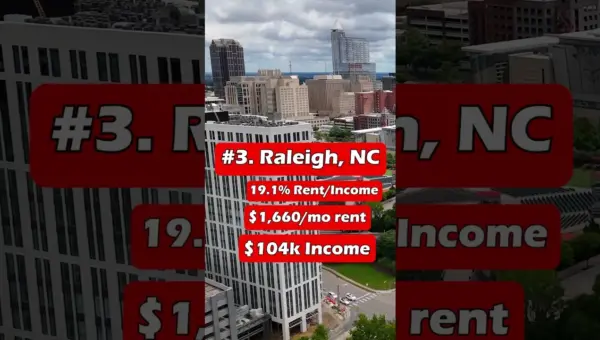
Several U.S. cities are emerging as top rental destinations, offering renters a favorable rent-to-income ratio. Austin, Texas leads the pack, with Salt Lake City and Raleigh, North Carolina also showing strong affordability. This trend is influenced by job markets and broader economic conditions.


Real Estate: Your Foundation For Life’s Big Risks
Discover how real estate investment can build a secure financial foundation, enabling you to pursue bigger risks in life. Learn about passive income generation and wealth-building strategies.