Unemployment’s Three Faces: A Key Economic Barometer
Unemployment, a key economic indicator, is categorized into frictional, structural, and cyclical types. Each offers distinct insights into labor market health and economic cycles, influencing investor strategies and market outlooks.

Understanding Unemployment: A Vital Economic Indicator
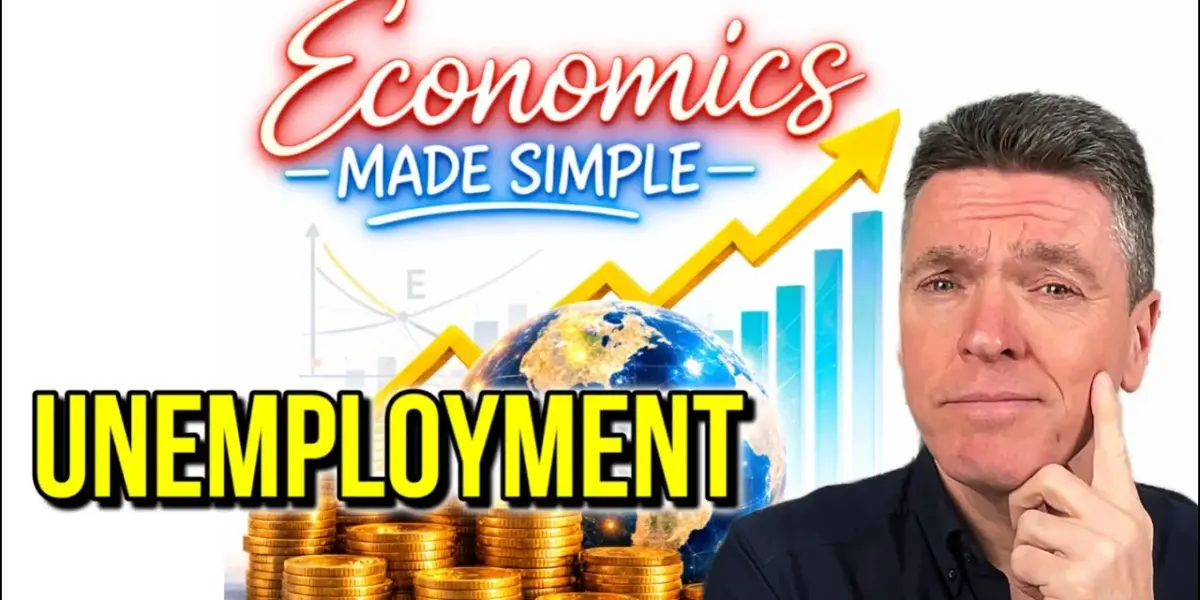
Unemployment, defined as the state of being willing and able to work but unable to secure a job, serves as one of the most critical metrics for assessing the health of an economy. Governments and economists monitor this indicator closely, as shifts in unemployment levels provide invaluable insights into economic activity. A decline in unemployment typically signals business expansion and increased hiring, while a rise may indicate an economic slowdown.
Measuring Joblessness: The Unemployment Rate
The primary tool for quantifying unemployment is the unemployment rate, which represents the percentage of the labor force that is jobless. The labor force encompasses all individuals who are currently employed or actively seeking employment. Economists generally categorize unemployment into three distinct types, each offering a unique perspective on the labor market’s dynamics.
Frictional Unemployment: The Job Transition Phase
Frictional unemployment is a natural and unavoidable component of a dynamic labor market. It occurs when individuals are temporarily between jobs. For instance, a worker might resign from a current position and dedicate a period, ranging from a few weeks to months, to searching for a new opportunity. During this interim, they are considered unemployed, but this phase is a normal part of career progression and labor market fluidity.
Structural Unemployment: Skills Mismatch in a Changing Economy
Structural unemployment arises from a fundamental mismatch between the skills possessed by workers and the skills demanded by employers. This phenomenon is often driven by technological advancements or the evolution of industries. When new technologies emerge or industries shift, the skill sets required for available jobs can change dramatically. Consequently, workers may need to undergo retraining or acquire new competencies to transition into different roles and sectors.
Cyclical Unemployment: Tied to Economic Cycles
Cyclical unemployment is directly linked to the broader economic cycle, particularly during periods of downturn or recession. When aggregate demand in the economy diminishes, businesses may curtail production and consequently reduce their workforce to manage costs. This leads to an increase in unemployment rates.
A Real-World Scenario
Consider an economy entering a recession. Consumers tend to reduce their spending due to economic uncertainty. This reduction in demand impacts various sectors: restaurants may see fewer patrons, retail stores might experience lower sales volumes, and factories could receive fewer orders. As businesses witness a decline in revenue, they may resort to cost-cutting measures, including layoffs, to maintain profitability. This chain reaction results in a rise in unemployment. Conversely, during an economic recovery, as demand picks up, businesses begin to rehire. Restaurants expand their staff, factories ramp up production, and retail outlets employ more workers, leading to a fall in unemployment. This dynamic highlights why unemployment typically rises during recessions and declines during economic expansions.
The Natural Rate of Unemployment
Even in robust economic conditions, unemployment rarely reaches absolute zero. A baseline level of unemployment persists due to individuals voluntarily changing jobs, relocating for new opportunities, or pursuing further education and retraining. Economists refer to this irreducible level as the natural rate of unemployment. It represents the unemployment that exists in an economy when it is operating at its full potential.
Market Impact and Investor Considerations
What Investors Should Know
Understanding the different types of unemployment provides investors with a more nuanced view of economic health. Frictional unemployment is a sign of a dynamic labor market, while high levels of structural unemployment can indicate deeper issues related to education and workforce development, potentially impacting long-term growth prospects for certain sectors.
Cyclical unemployment is a direct consequence of economic cycles and is closely watched by investors as a leading indicator of economic slowdowns or recoveries. Significant increases in cyclical unemployment can signal an impending recession, prompting investors to reassess their portfolio allocations, potentially favoring defensive assets. Conversely, a sustained decline in cyclical unemployment, coupled with low overall unemployment, often suggests a strengthening economy, which can be beneficial for growth-oriented investments.
The natural rate of unemployment is a crucial benchmark. If the actual unemployment rate falls significantly below this natural rate, it could signal an overheating economy and potentially lead to inflationary pressures, prompting central banks to consider interest rate hikes. Investors should monitor unemployment figures in conjunction with other economic data, such as inflation, interest rates, and GDP growth, to form a comprehensive market outlook.
Conclusion
In summary, unemployment is a multifaceted economic indicator that reflects the condition of the labor market and the broader economy. By classifying unemployment into frictional, structural, and cyclical types, economists gain deeper insights into the underlying causes of joblessness. Its intimate connection to economic activity makes unemployment one of the most closely scrutinized economic indicators, offering valuable guidance for policymakers and investors alike.
Source: Unemployment Explained: Frictional, Structural and Cyclical Unemployment – Economics Made Simple (YouTube)

Related Articles

Invest Now: Earnings Growth Signals Buying Opportunities
Strong earnings growth is signaling a prime investment opportunity, urging investors to 'be cool' and avoid market timing pitfalls. Companies like NVIDIA and Apple are highlighted as key players in the AI revolution, while infrastructure plays such as Applied Digital offer further potential.


Your Boring Finances Are Key to Wealth
Building wealth often involves a "mundane middle" phase that, while boring, is crucial for success. Experts advise focusing on consistent saving, tracking progress, celebrating milestones like the "crossover point," and understanding your personal financial 'why' to stay motivated.


Bitcoin Surges Past Gold, S&P 500 Amid Shifting Markets
Bitcoin is outperforming gold and the S&P 500, with experts citing its role as a digital store of value. Major financial institutions like Morgan Stanley are increasing their involvement, and regulatory clarity is on the horizon. On-chain data and technical indicators suggest a potential market bottom, signaling a bullish outlook for cryptocurrency.