UK’s EU Relationship: Caught Between Ambition and Reality
Professor Peter Frankopan criticizes the UK's inconsistent approach to re-engaging with the EU, labeling it "flip-flopping." He argues that Europe perceives this selectively engaging strategy negatively, while global instability overshadows domestic debates. The high economic costs of Brexit and the lack of clear political will in the UK further complicate any potential reintegration.

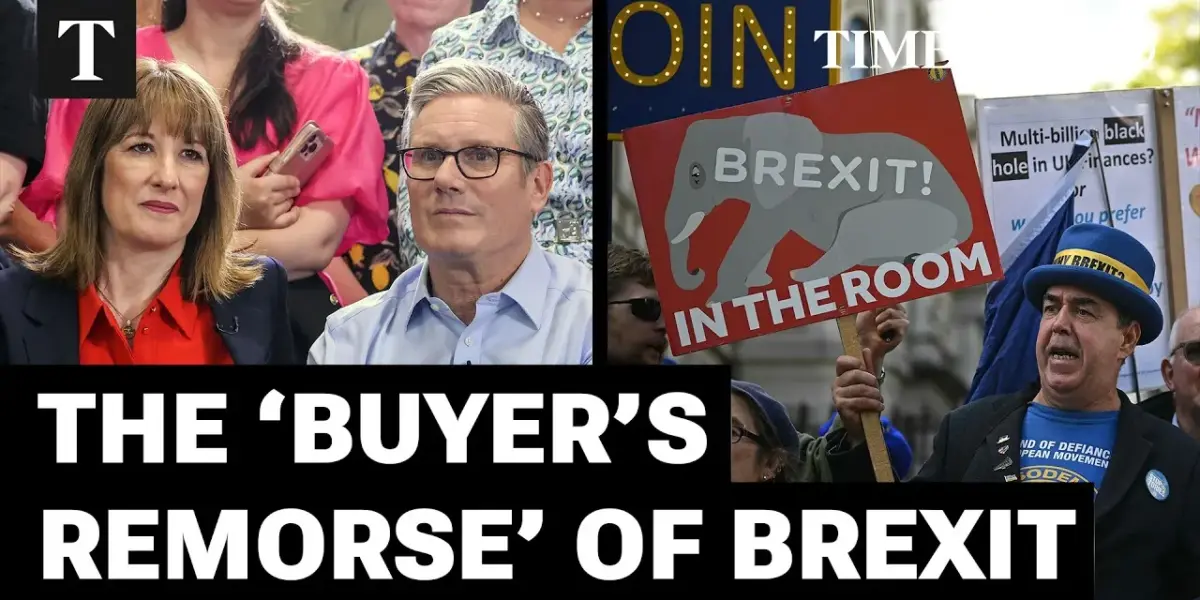
UK’s EU Stance Criticized Amid Global Instability
In a recent discussion on Britain’s evolving relationship with Europe, global history professor Peter Frankopan of the University of Oxford offered a sharp critique of the UK’s current approach. He suggested that the UK’s desire to selectively re-engage with the European Union, without fully committing to its rules, is being perceived negatively on the continent. This strategy, he argued, resembles a “flip-flopping” behavior, similar to that seen with former U.S. President Donald Trump. Frankopan highlighted that this uncertainty creates global unease, citing concerns from leaders in South Korea and Australia about international stability and resource availability.
The High Cost of Brexit and Shifting Political Will
Frankopan pointed out that while some politicians, like Dominic Raab, have acknowledged the financial impact of Brexit, independent economists estimate the cost to the UK economy to be even higher. These costs include reduced employment levels and lower investment flows. He questioned the political will within the UK to pursue closer ties with Europe, noting that only smaller parties like the Liberal Democrats and the Greens are openly advocating for rejoining the EU. This lack of clear political direction, he explained, makes it difficult for European partners to invest energy in rebuilding relationships, especially when the UK’s stance seems to change frequently.
Europe’s Perspective: A Demand for Clarity
According to Frankopan, European officials express frustration with the UK’s perceived attempt to “carve things up as we want.” He suggested that any move towards closer alignment, such as rejoining the customs union, would likely face scrutiny over issues like free movement of people and migration. Frankopan believes there is a binary choice for the UK: either fully commit to the EU or remain outside. He emphasized that the EU’s concern is not just about the energy and effort Britain’s departure cost, but also about the UK underestimating the complexity of reintegration. He used relatable examples like pet travel, airport queues, and differing regulations on products like light bulbs to illustrate the detailed nature of EU membership, stating, “you can’t join a club and say you don’t like some of the rules.”
Global Context: West Appears Chaotic
Frankopan placed the UK’s internal debates within a broader global context of increasing instability and fractures. He mentioned conflicts like the one in Hormuz, alongside technological and climate changes, as issues that consume global attention. He observed that while the West grapples with its direction, other nations are pursuing different models. Frankopan described the West as appearing “chaotic,” prone to changing its mind and making mistakes. He questioned the UK’s relevance and influence in this transitional world, especially considering its energy dependence, economic reliance on global supply chains, and underinvestment in defense capabilities. He suggested that miscalculating the world’s direction has led to underinvestment in crucial areas.
Energy Security and Broader Economic Concerns
The discussion also touched upon the UK’s energy problems and whether closer ties with Europe would solve them. It was noted that Europe itself faces energy deficits and relies on the Middle East and the U.S. for energy, implying that a simple reconnection wouldn’t automatically resolve the UK’s energy challenges. Furthermore, some argue that the EU has not shown significantly greater success than Britain over the past decade, leading to questions about the benefits of rejoining. The conversation also brought up the idea that the UK’s post-Brexit identity has been unclear, with a “flip-flopping” approach to foreign policy concerning nations like China and India. This lack of definition is seen as unsustainable in the face of global powers like Russia and China, and in light of changes in American policy.
The Challenge of Detailed Governance
A significant point raised was the coarsening of political discourse, which may have been exacerbated by Brexit. This has led to a style of governance focused on announcements and press releases rather than detailed policy implementation. Frankopan described this as trying to “survive the next meeting” or “survive the next interview,” driven by the need to appeal in a social media-driven environment. While acknowledging that the current UK government has appointed a minister to focus on detailed, technical aspects of EU relations, the pace of progress has reportedly not met expectations. The article concludes by referencing a piece by Juliet Simmon in The Times, who, having previously voted to remain in the EU, now believes she was wrong, indicating a complex and evolving public sentiment on the matter.
Source: Britain Can’t Dictate Everything In European Negotiations | Peter Frankopan (YouTube)

Related Articles
UK Faces Global Shifts: Defense, EU Ties, and Social Decay
UK leaders discuss pressing global and domestic issues, from reassessing defense ties with the U.S. and Europe to addressing rising school truancy and juvenile delinquency. The conversation also touches on the new era of private-led space exploration and the complexities of work-life balance.
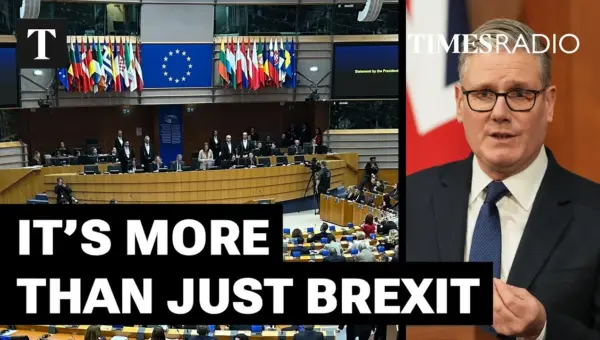
UK Economy Needs More Than EU Ties, Experts Say
Experts argue that the UK's economic problems stem from domestic policy, not just Brexit, and closer EU ties won't be a simple fix. While Labour calls for more cooperation, underlying issues like infrastructure and productivity need addressing.
Slovakia, Hungary Undermine EU Unity on Ukraine Aid
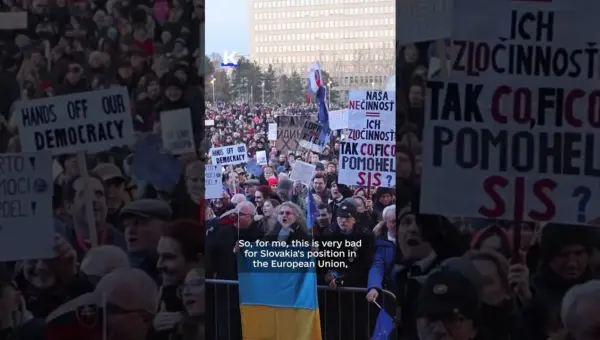
Slovakia and Hungary are undermining European Union unity on support for Ukraine. Prime Minister Fico's divisive rhetoric in Slovakia is eroding his influence and the nation's credibility within the EU. Hungary's parallel actions further fracture the bloc's response.