Ukraine’s Drones Humiliate NATO in War Game
Ten Ukrainian drone operators outmaneuvered a large NATO force in a recent war game, destroying two battalions in half a day. The exercise highlighted critical gaps in NATO's outdated doctrine when faced with modern drone warfare.

Ukraine’s Drones Humiliate NATO in War Game
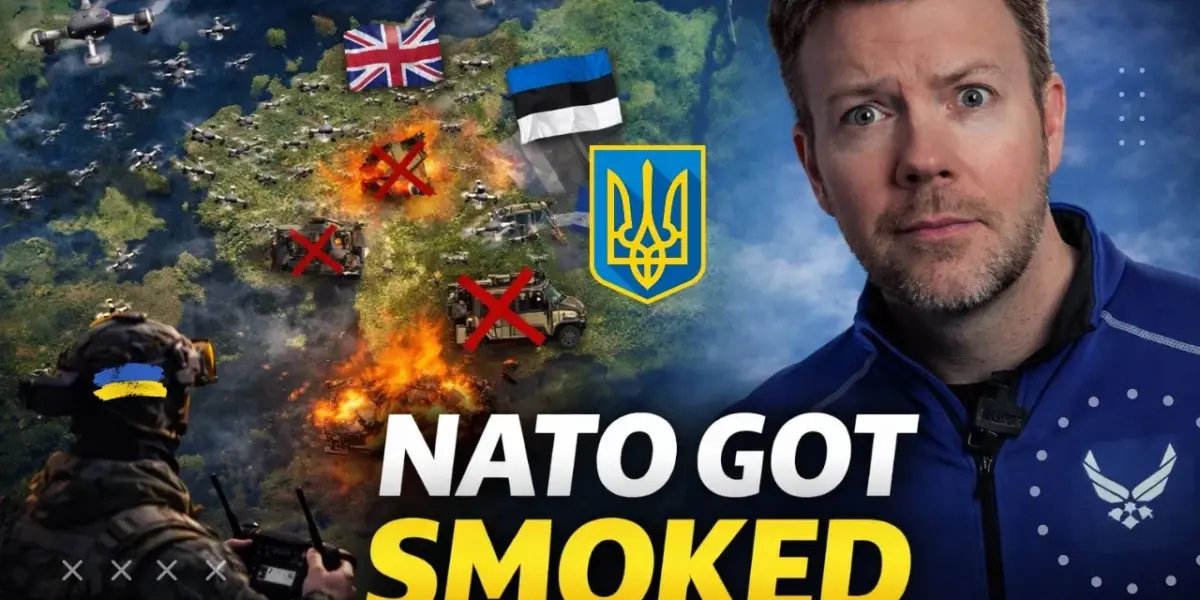
Ten Ukrainian drone operators recently outperformed an entire NATO battle group in a simulated offensive during the “Hedgehog 2025” war game in Estonia. The exercise, which involved over 16,000 troops from 12 nations, revealed significant gaps in NATO’s current military doctrine when faced with modern drone warfare tactics. This outcome highlights how rapidly battlefield realities are outpacing established military thinking.
Drones Dismantle NATO Forces
The war game, held last May, simulated a large-scale mechanized offensive by a NATO battle group. This force included a British brigade and an Estonian division, representing a classic Cold War-era military approach. The opposing force, however, was a small, combined Ukrainian-Estonian unit. Critically, this unit included ten Ukrainian drone operators drawn directly from the front lines of the ongoing conflict. In just half a day, these ten operators effectively destroyed two NATO battalions and simulated the destruction of 17 armored vehicles, along with numerous other targets. The exercise commander himself described the results as “terrible for NATO forces.”
Failure of Doctrine, Not Equipment
The exercise’s most striking conclusion was that NATO’s failure was not due to a lack of advanced equipment. The British and Estonian units were well-equipped by any standard. Instead, the weakness lay in outdated military doctrine. For decades, NATO training has operated under the assumption that concealing vehicles within tree lines provides sufficient camouflage. The Ukrainian operators, however, demonstrated that this assumption is no longer valid in a modern conflict environment. They utilized over 30 drones in a small area, employing tactics that are standard on the Ukrainian front. These tactics overwhelmed NATO’s defenses, leaving them exposed and vulnerable.
What This Means on the Ground
The Ukrainian team operated with a level of speed and efficiency that NATO forces struggled to match. While NATO troops relied on traditional methods like hiding vehicles and checking roads for mines, the Ukrainian operators treated the exercise as routine. They employed a dual-drone strategy: heavy “Baba Yaga” bomber drones for persistent surveillance and precise strikes, and fast, agile FPV (First-Person View) drones for direct attacks. This mirrors their real-world combat approach. A key element was Ukraine’s Delta Battlefield Management System. This system uses AI to analyze information in real-time, identify targets, and coordinate strikes instantly among all operators. In contrast, NATO forces were still relying on paper maps and slower command channels for intelligence dissemination. This created a critical lag in response times, allowing the Ukrainian team to achieve devastating results quickly.
Strategic Implications
This exercise exposed a significant strategic gap: NATO’s doctrine is struggling to keep pace with modern warfare, particularly drone technology. The Ukrainians pointed out that while NATO has extensive written protocols, these are often based on past conflicts. As one Ukrainian pilot noted, if NATO soldiers encountered these drones in a real war, they would likely be considered “200” – military slang for killed in action. The reliance on paper maps in 2025, while the opposing force used advanced digital systems, highlighted this disconnect. This situation is a direct consequence of the institutional challenge faced by militaries that have not been actively engaged in high-intensity conflict. Doctrine is typically written after a war ends, meaning it is often one step behind the next emerging conflict.
Broader Geopolitical Impact
The exercise serves as a crucial wake-up call for NATO. Estonia, a nation bordering Russia, has been proactive in adapting its training and doctrine. By bringing in Ukrainian operators fresh from the front lines, NATO aimed to provide its soldiers with a realistic, albeit controlled, experience of modern warfare. The goal was to create the kind of stress and cognitive overload that forces genuine change. Comfortable soldiers, the thinking goes, do not adapt. Shocked ones do. Ukraine’s willingness to share these hard-won lessons is not just altruistic; it is essential for ensuring NATO remains a credible deterrent. A NATO that operates with outdated tactics would be a liability, especially if Russia were to test the alliance’s resolve.
Historical Parallels
This situation echoes Winston Churchill’s famous observation that “generals are always fighting the last war.” Throughout history, military establishments have often been slow to adapt to new technologies and tactics, leading to significant disadvantages in conflict. The rapid evolution of drone warfare, exemplified by Ukraine’s experience, represents a similar inflection point. The speed at which Ukraine has iterated its drone tactics, driven by the life-or-death stakes of continuous conflict, contrasts sharply with the more deliberate, process-driven adaptation cycles of larger, peacetime militaries.
Conclusion
The “Hedgehog 2025” exercise demonstrated that ten Ukrainian drone operators, using current battlefield-tested methods, could effectively neutralize two NATO battalions. This outcome underscores the urgent need for NATO to integrate lessons learned from the Ukrainian conflict into its doctrine and training. The speed of detection-to-engagement measured in seconds, not hours, and the seamless data sharing via systems like Delta, represent the new standard. The uncomfortable truth is that Ukraine has provided NATO with a vital, albeit difficult, learning opportunity. The critical question now is whether enough attention will be paid to these findings to enact meaningful change before future conflicts demand real-world adaptation under fire.
Source: 10 Ukrainian Operators Destroyed Two NATO Battalions (YouTube)

Related Articles


Global Leaders Warn Trump on War Plans, NATO Future
World leaders are issuing stern warnings to Donald Trump about his war strategies and commitment to NATO. Concerns include a lack of clear plans in Middle East conflicts and alleged Russian-Iranian cooperation targeting US forces. Allies question the future of alliances as geopolitical tensions rise.
Russia Escalates Attacks Amid Global Political Shifts
Russia is escalating attacks on Ukraine's energy infrastructure amid complex global political shifts. Meanwhile, Ukraine's drone capabilities are advancing, strengthening its alliance with NATO. International political alignments and potential election interference are also key concerns.

Ukraine Offers Air Defense Aid in Exchange for Weapons
Ukraine is offering its advanced air defense system knowledge to Middle Eastern countries in exchange for Western weapons like Patriot missiles. President Zelenskyy highlighted the region's vulnerability to drone and missile attacks and Ukraine's unique expertise in countering them. The move aims to secure vital military aid while sharing valuable defensive experience.