Ukraine’s Drone Industry Soars: A Digital Battlefield Marketplace
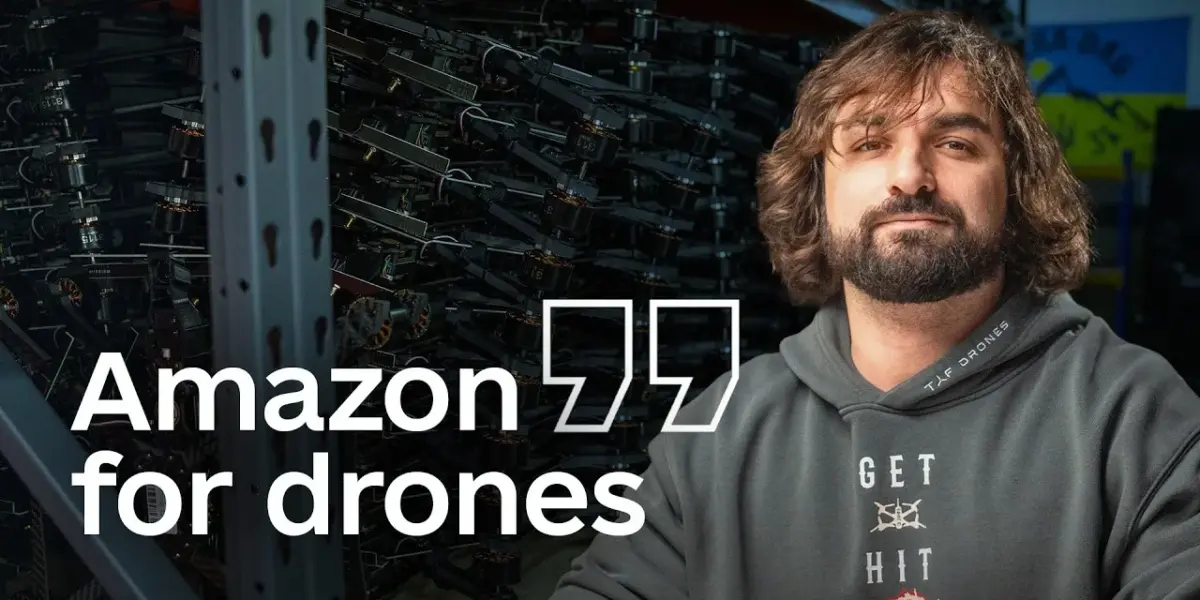
Ukraine's defense industry has rapidly evolved, creating an "Amazon for drones" where military units order tailored equipment online. This rapid scaling, driven by wartime necessity and state support, has transformed companies like Taff Drones into major European producers.

Ukraine’s Drone Industry Soars: A Digital Battlefield Marketplace
Ukraine’s wartime experience has rapidly transformed its defense sector, particularly its drone industry. Military units now order drones and weapons online, akin to shopping on an e-commerce platform. This innovative approach allows individual units to select the most effective tools for their specific missions, a system that surprises many in Western militaries. The drive to compensate for lower troop numbers compared to Russian forces has pushed Ukraine to automate many battlefield processes, with drones leading the charge.
From Logistics to Drone Production: The Rise of Taff Drones
One prominent example of this transformation is Taff Drones, which has become one of Europe’s largest drone producers. The company’s journey began not with military technology, but with logistics. When Russia launched its full-scale invasion on February 24, 2022, the company’s leadership, anticipating the conflict, shifted its focus. Initially, Taff Drones used its fleet of trucks and trailers to transport essential equipment for military brigades, like those based in Odesa.
The company also established a charity, Wave 91, to support the military. Leveraging its logistical expertise, they began importing crucial items like thermal imagers and communication equipment from China and Europe, goods that were restricted at the time. This hands-on involvement exposed the company to the battlefield realities.
Early Adoption and Industrial Scaling
By late 2022, Taff Drones began observing the effectiveness of commercially available drones, like DJI’s Mavic, even in combat zones. This observation led to the next step: assembling FPV (First-Person View) drones. In early 2023, Taff Drones worked with the National Guard to assemble drones using imported components, initially as a non-commercial, charitable effort. These early FPV drones, capable of operating effectively at ranges of 5-7 kilometers, proved their worth.
An ambitious attempt to establish a large-scale FPV drone factory in August 2023, funded by donations, was tragically destroyed by Russian forces, resulting in a loss of approximately $2 million. Despite this setback, the team regrouped, inspired by a commitment to rebuild. By late 2023, FPV drones began to see wider, though still somewhat uncoordinated, use by various military units.
Formalization and State Contracts
In November 2023, the company officially registered as Tech AutoArt South, later known as Taff Drones. The unusual name stemmed from adding drone production as an activity to an existing logistics company to expedite the process during wartime. While still operating partially as a charity, government bodies like the Ministry of Digital Transformation and the Ministry of Defense recognized the need for scalable, systemic processes beyond donations.
This led to a significant turning point in March 2024, when Taff Drones received its first major state contract for 150,000 drones. This marked a transition from a small team to a large-scale operation. The company’s leadership expressed initial nervousness about working with the state, citing common concerns about bureaucratic difficulties. However, the process proved surprisingly transparent and swift, driven by the government’s urgency to equip troops.
Market Liberalization and Competition
The Ukrainian government, through the Ministry of Digital Transformation and the Ministry of Defense, has significantly liberalized its military technology market. Before 2022, only about ten companies were involved in drone production. Now, a more open system encourages competition. Procurement processes have been streamlined, allowing companies capable of quick and efficient delivery to secure contracts.
This approach aims to saturate the market with drones and foster a competitive environment among manufacturers. Taff Drones, now employing around 1,600 people, operates a dual production system. Mass production facilities can churn out 30,000 to 40,000 drones per month in a single configuration. A separate, more specialized production line handles smaller batches, up to 50,000 units monthly, for custom orders. This allows for the creation of products tailored to specific unit needs, though it increases logistical complexity and costs due to varied specifications.
Strategic Implications: The “Amazon for Drones”
The emergence of a marketplace where military units can directly select drones based on price and quality is a significant strategic shift. This decentralized procurement, alongside centralized state contracts, empowers frontline units. It ensures they receive technology precisely suited to their tactical requirements, enhancing battlefield effectiveness. This system fosters a dynamic innovation cycle, forcing manufacturers to constantly adapt and improve to remain competitive.
Taff Drones’ experience highlights the critical role of logistics in scaling production. The company manages production across more than 12 dispersed locations for safety, requiring complex supply chain management. They also deliver directly to units along the front line, absorbing losses and replacing destroyed drone shipments at their own expense, reinforcing their initial charitable ethos.
Looking Ahead: Exporting Expertise
Taff Drones’ current goal is to establish Ukrainian military technology as a recognized international brand. The company’s leadership believes that the rapid innovation and adaptation seen in Ukraine’s defense sector during the war represent valuable expertise. This includes the effective application of relatively simple technologies and a fast cycle of innovation, skills that foreign armies can learn from. Monetizing this experience through exports is seen as crucial for Ukraine’s post-war economic development.
The company is also focusing on developing a post-war business model, aiming to scale its capabilities for dual-use applications, such as surveillance and cargo drones. The rapid legislative and codification changes made by the Ukrainian state to facilitate this industrial growth offer another valuable lesson for European partners looking to modernize their own defense industries.
“When I speak in the west, in Germany or England, I say that our military personnel order drones and weapons as if in a store. That is, they go to a website and choose what they need to destroy the enemy. >> An Amazon for drones.”
Source: The success of Ukraine's drone industry, explained (YouTube)

Related Articles


Ukraine Eyes Missile Production Boost
CBS correspondent Eden Stretch reports on Ukraine's growing role in defense manufacturing, particularly missile systems. She also details the resilience of Ukrainian families through a harsh winter and discusses the evolving perception of Ukraine as a strategic partner rather than a drain on U.S. resources.


US Military Pursues Secret Tech, Lunar Base Plans Emerge
Reports indicate the US military and defense contractors are exploring advanced technologies, possibly reverse-engineering unknown craft. Concurrently, NASA plans a lunar base, while millions of UAP-related files are allegedly deleted, raising transparency concerns. These developments could reshape global power dynamics.

Ukraine’s Drones Strike Deep Behind Russian Lines
Ukraine is increasingly using heavy bomber drones like the 'Vampire' to strike Russian positions. In February, these drones supported counterattacks that reclaimed territory. Despite facing electronic warfare and drone losses, Ukraine sees these unmanned systems as vital for survival and pushing back the invasion.