Ukraine’s Drone Boat Tactic: Japan’s New Maritime Shield?
Ukraine's offer to share naval drone technology with Japan could revolutionize coastal defense. By making coastlines hostile and unpredictable, Japan can deter aggression without a massive fleet expansion. This partnership leverages Ukraine's battlefield-proven innovation with Japan's industrial might.

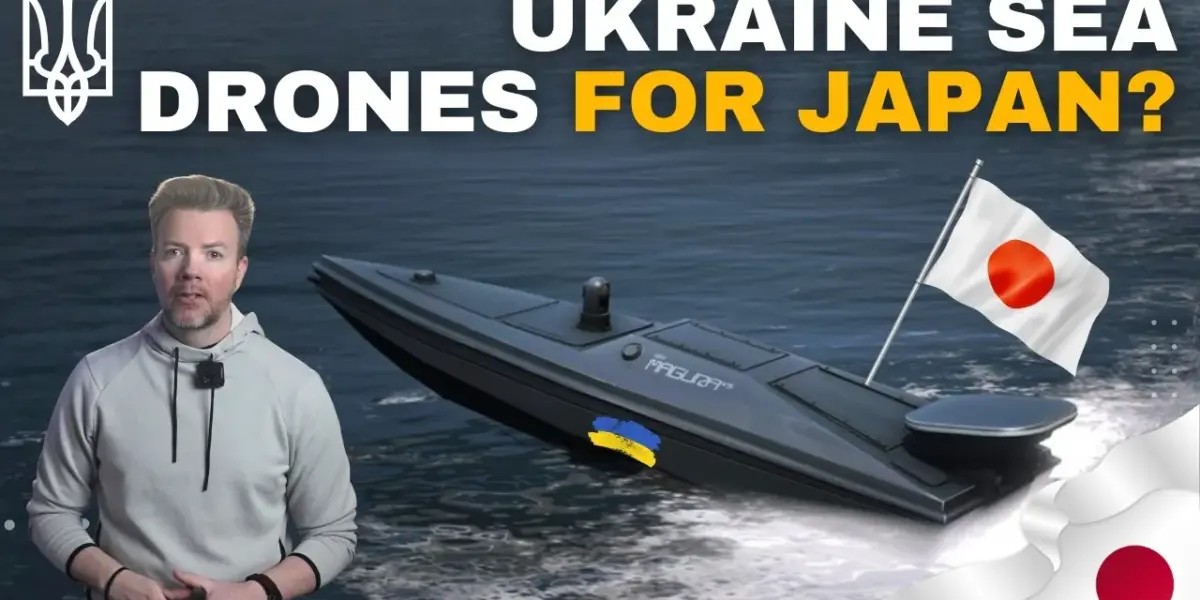
Ukraine’s Drone Boat Tactic: Japan’s New Maritime Shield?
In a move that could redefine coastal defense strategies, Ukraine has offered to share its hard-won expertise in naval drone technology with Japan. This potential transfer, spearheaded by President Zelenskyy, centers on autonomous unmanned surface vehicles (USVs), or drone boats, and advanced UAV interceptor systems. The core proposition is simple yet profound: Japan doesn’t need a larger traditional fleet to deter potential adversaries; it needs to make its vast coastline a hostile, unpredictable environment for any aggressor. Ukraine, through its innovative use of drone boats against Russia’s Black Sea Fleet, has effectively written the playbook for this new era of maritime defense.
The Ukrainian Innovation: Making the Sea Hostile
For years, the image of naval warfare has been dominated by large, expensive capital ships. However, Ukraine has demonstrated a potent counter-narrative. Lacking a substantial traditional navy, Ukraine has leveraged ingenuity and readily available technology to challenge a far superior foe. The key has been the widespread deployment of naval drones, often referred to as “Sea Baby” USVs. These are not merely “kamikaze boats” in the historical sense, a term that carries heavy, often misunderstood, connotations from World War II. Instead, they represent a sophisticated, multi-functional platform. The proposed term, “Ryusian flotillaa” (named after a sea dragon god), captures the maritime and defensive essence of this approach, emphasizing the ocean as the delivery mechanism for deterrence.
These Ukrainian drone boats have evolved rapidly. Early iterations were akin to “floating bombs,” but they have since been upgraded with stabilized machine gun turrets, rocket launchers, and even the capability to launch air-to-air missiles. Reports suggest variants with ranges exceeding 1,500 km and payloads of up to 2,000 kg. The significance lies in their versatility: they can serve as remote gun platforms, scouting units, decoys, sensor carriers, drone launchers, or dedicated strike assets. This adaptability transforms a seemingly simple unmanned vessel into a potent element of a layered defense system.
Japan’s Strategic Imperative: A Geography of Defense
Japan’s geographical reality is its greatest strategic challenge and opportunity. An archipelago nation, particularly with its southwestern Nansei Islands stretching towards Taiwan, faces a vast maritime frontier. Tokyo has been actively reinforcing defenses across these remote islands, with plans to deploy missile units on Yonaguni, the westernmost island, by 2031. The fundamental task for an island nation is to control and secure the waters surrounding it. This is precisely where Ukraine’s drone boat strategy offers a compelling solution.
The proposed “Ryusian flotillaa” concept aligns perfectly with Japan’s need to create a formidable coastal defense. It’s not about replacing existing naval assets like destroyers or submarines, but about augmenting them. Drone boats offer a cost-effective way to establish a “killing zone” extending several miles from shore, making any approach prohibitively risky and expensive for an adversary. This concept fits within Japan’s broader “Shield” concept, a multi-layered defense strategy heavily reliant on networks of unmanned systems.
Layered Defense: Sensing, Targeting, Engagement, Resilience
The effectiveness of drone boats in a defensive posture can be understood through a layered approach:
- Sensing: Japan is already investing in unmanned systems for surveillance. Drone boats can integrate with existing radar and patrol aircraft networks, providing persistent eyes on the water.
- Targeting: Ukraine’s real-world experience in the Black Sea has honed its ability to establish rapid kill chains under constant electronic warfare (EW) and jamming. This battle-tested operational knowledge is invaluable and difficult to replicate in peacetime exercises.
- Engagement: A swarm of autonomous or semi-autonomous drone boats can screen straits, force enemy vessels to maneuver, act as decoys, and directly engage high-value targets if an opening arises. Their configurations can also provide close-in defense against smaller craft, helicopters, or drones.
- Resilience: Crucially, Ukraine’s drone boat operations emphasize survivability. Systems are designed to withstand jamming, loss of communication, and even incorporate AI-assisted targeting and self-destruct mechanisms to prevent capture. This resilience is paramount in the complex EW environment of the Western Pacific.
Why This Matters
The potential transfer of Ukrainian drone boat technology to Japan signifies a pivotal shift in how smaller nations can counter larger military powers. It moves beyond traditional naval arms races, offering a asymmetrical advantage through innovation and adaptable technology. For Japan, a nation with significant industrial capacity and advanced technological foundations, integrating Ukraine’s combat-proven methods could create a formidable, cost-effective deterrent. This partnership could also foster joint production, allowing Japan to build its own drone boat variants tailored to its specific maritime environment, incorporating Ukrainian operational feedback directly into the design.
Historical Context and Future Outlook
The concept of using indigenous innovation to counter a larger invading force has historical parallels. The term “kamikaze” itself, meaning “divine wind,” refers to typhoons that historically repelled Mongol invasions of Japan. While the term was later tragically co-opted for World War II suicide pilots, the underlying idea of leveraging natural or technological advantages to defend the homeland resonates. Ukraine’s drone boat strategy is a modern, technological iteration of this principle.
The implications for regional security are significant. For China, a potential adversary to Japan, the prospect of facing a coastline that is not just patrolled but actively defended by a swarm of intelligent, autonomous vessels would complicate invasion plans, particularly amphibious operations. It also offers a persistent, distributed presence for Japan with lower political risks than constantly deploying high-value naval assets into every potential flashpoint.
Japan’s defense policy has been evolving towards a stronger deterrence posture, particularly in its southwestern islands. The “Ryusian flotillaa” concept fits neatly into this strategy, acting as a defensive tool that raises the cost and risk for any potential aggressor attempting to traverse narrow straits or conduct amphibious landings. It also provides a means for “gray zone” harassment, offering a distributed presence with lower political thresholds than traditional naval deployments.
Navigating the Partnership
While Japan is a technologically advanced nation, its approach to defense spending and international cooperation is carefully calibrated. Japan has historically provided non-lethal aid and enabling capabilities to Ukraine, aligning with its pacifist constitution and alliance commitments. The proposed drone boat technology, framed as a defensive system for sea denial and homeland security, can fit within this existing framework. A realistic cooperation model would likely involve:
- Doctrine and Training Exchange: Ukraine sharing operational lessons on organizing drone operations, EW countermeasures, communication security, and saturation attack planning.
- Hardware and Software Modules: Ukraine providing combat-proven designs and payload concepts, which Japan can then manufacture with its superior quality control and scaling capabilities.
- Integration: Incorporating these drone boats into Japan’s existing layered defense architecture, linking them with radars, patrol aircraft, and land-based anti-ship missiles.
Ukraine has already demonstrated that a nation can lose freedom of movement for an adversary’s navy without engaging in large fleet battles, but rather through persistent, distributed, and intelligent application of technology. For Japan, this means making its maritime approaches feel like an unpredictable storm system, forcing potential invaders to confront the reality that the ocean itself has become a formidable defender.
Source: Japan's New Defense Against China? Ukraine's Drones (YouTube)

Related Articles


Strait of Hormuz Tensions: Nations Navigate ‘Every Man For Themselves’
Nations are navigating a precarious "every man for themselves" situation in the Strait of Hormuz amidst rising tensions. Iran is strategically leveraging its position, while diplomatic efforts and asymmetric threats create an unpredictable environment. The impact of GPS jamming and the low volume of transit highlight the ongoing challenges.


US Faces Iran War Fatigue Amid Shifting Alliances
Growing American skepticism about military action against Iran is pushing the US to seek allied support for maritime security. Clear objectives are being defined, but public and economic pressures are mounting. This situation highlights a potential shift towards multilateralism in global security.

Apache Helicopters Secure Strait of Hormuz
U.S. AH-64 Apache attack helicopters are actively securing the Strait of Hormuz on Day 22 of 'Operation Epic Fury.' They are intercepting Iranian drones and boats to ensure safe passage through the vital shipping lane.