Ukraine’s Brutal 30-Hour Battle for Nadia: Combined Arms Warfare in Action
In a brutal 30-hour battle in March 2025, Ukraine's Third Assault Brigade showcased advanced combined arms tactics to retake the town of Nadia in Luhansk. The operation involved intense artillery barrages, drone surveillance, and coordinated assaults by tanks, armored vehicles, and infantry. Despite initial successes in clearing enemy positions and advancing through the town, the strategic gains proved difficult to maintain amidst the ongoing conflict.

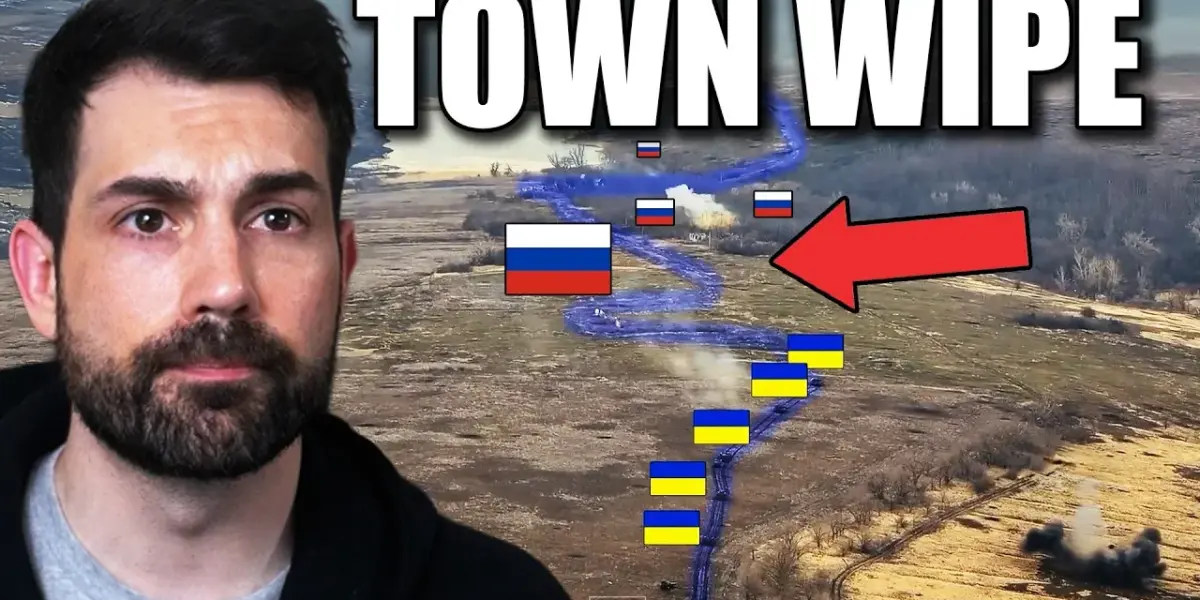
Ukraine’s Brutal 30-Hour Battle for Nadia: Combined Arms Warfare in Action
In March 2025, Ukraine’s Third Assault Brigade engaged in a fierce 30-hour battle to recapture the town of Nadia in the Luhansk oblast. This intense engagement, described as one of the most brutal of the war, showcased a sophisticated application of combined arms warfare, where different military units worked together to achieve a common goal. The operation aimed to reclaim one of the last remaining towns in the Luhansk region, highlighting its strategic and symbolic importance.
The Assault Begins: Artillery and Drones Lead the Way
The offensive commenced with a heavy Ukrainian artillery bombardment, unleashing hundreds of shells onto Russian fortifications. This barrage served to weaken enemy defenses before the ground assault. Cluster munitions were also deployed, designed to detonate anti-tank mines scattered across the area, clearing a path for advancing troops. Overhead, surveillance drones provided crucial real-time intelligence, monitoring enemy movements and enemy positions.
Combined Arms Tactics in Play
The first wave of the attack involved seven Ukrainian armored vehicles, including two T-72 main battle tanks leading the charge. These tanks provided crucial cover fire for two armored personnel carriers (APCs) following closely behind, maintaining a spacing of approximately 50 meters. This distance was critical to prevent a single enemy hit from disabling multiple vehicles.
The assault was multi-pronged, with five separate Ukrainian companies advancing from different directions. Two of these companies focused on flanking maneuvers, aiming to cut off Russian reserve units. The tanks moved forward, laying down suppressive fire with their main guns. Effective command and control were paramount, with constant updates relayed to units to maintain direction and coordination, especially after infantry drop-off points.
Clearing the Kill Zone: Infantry’s Critical Role
A key objective was to clear the “kill zone” – the open ground between defensive positions where enemy forces had pre-registered artillery and machine gun fire. Survival in these areas depended on surprise, speed, spacing, and suppression. The first platoons of infantry were tasked with dismounting from their APCs to eliminate Russian anti-tank teams, a highly dangerous role.
During the advance, one of the lead tanks appeared to be damaged, possibly by a mine or anti-tank munition, but it continued to move forward. Russian artillery shells landed dangerously close to the Ukrainian convoy, forcing vehicles to adjust their routes. A commander, exposed in the hatch of an M113 APC, narrowly avoided shrapnel from a nearby shell explosion.
Infantry Dismounts: A Moment of Vulnerability
Infantry squads, packed inside the APCs for protection against shrapnel, faced extreme danger upon dismounting. This moment of disembarkation, often occurring near enemy trenches, is the most vulnerable phase of the operation. Soldiers are disoriented, exposed, and under direct fire, making it the period with the highest risk of casualties.
Their immediate task was to reach nearby tree lines or cover, laying down suppressing fire to keep enemy heads down. The M113 commander even exited his vehicle to clear a jam on his machine gun, further highlighting the close-quarters nature of the fighting. Infantry were instructed to move quickly and spread out to avoid becoming concentrated targets.
Adapting to Challenges: Equipment Failure and Enemy Reinforcements
The battle was not without its challenges. One Ukrainian APC that dropped off its infantry squad broke down, becoming immobile. Such equipment failures underscore the need for infantry to adapt and overcome unexpected obstacles, as plans rarely unfold perfectly on the battlefield. With enemy reinforcements a constant threat, speed was essential to prevent Russian defenders from stabilizing their lines.
The town of Nadia itself has a complex history in the conflict, having changed hands multiple times. It was initially captured by Russian forces, later liberated by Ukraine, and then recaptured by Russia in October 2023, making its retaking a significant objective for Ukraine.
Real-Time Command and Control: The “Fog of War”
Throughout the operation, real-time battlefield data from drones and ground units was fed back to Colonel Andre Bulitzky, the brigade commander. From his command post, he monitored the offensive’s progress, relaying information about enemy movements and directing units. This constant flow of information was crucial for navigating the “fog of war” – the confusion and uncertainty inherent in combat.
To aid understanding, an English dub was used for the Ukrainian commander’s orders. The Ukrainian infantry faced the challenge of advancing across open fields from the tree line to the next defensive position, where they were exposed.
Close Quarters Combat and Strategic Reserves
The fighting devolved into close-quarters combat, with Ukrainian and Russian soldiers engaging each other within distances as close as 25 meters, often in trenches and dugouts. Tactics like “pre-firing” – shooting before visually confirming an enemy – were employed to gain an advantage in these rapid engagements. The use of grenades in trench fighting was also prevalent.
A critical moment occurred when a Ukrainian squad realized they had been dropped off significantly off-target, forcing them to reorient under fire and potentially losing momentum. To compensate for this error and reinforce weak points, command merged squads and committed reserve units. The strategic deployment of reserves, a tactic dating back to ancient warfare, proved vital in reinforcing friendly lines and preventing the assault from stalling.
Pinpointing and Destroying Enemy Positions
Ukrainian Mavic drones were used to pinpoint the location of enemy machine guns, though this proved difficult at times. Once enemy positions were identified, often revealed by infantry drawing fire, FPV drones were deployed to strike them. This iterative process of identifying, striking, and advancing continued, gradually degrading Russian defenses.
Trench lines became a focus, with Ukrainian forces clearing them meter by meter. The objective was not only to capture ground but also, ideally, to take Russian soldiers captive for prisoner exchanges. The battlefield was littered with casualties, though graphic details were omitted for the platform.
Sustained Pressure and Armor Advance
After 30 hours of intense fighting, the combined arms approach continued with constant pressure. Infantry drew fire, which allowed drone strikes and armored advances to be coordinated. This relentless hammering of enemy positions eventually created an opening for Ukrainian main battle tanks and armor to push forward more safely, as anti-tank threats were neutralized.
A Ukrainian tank fired an explosive grenade at a tree line, and multiple rocket systems were mentioned, indicating the use of heavy firepower. Intercepted Russian communications suggested surprise and shock at the scale and coordination of the Ukrainian assault.
Clearing the Village and the Aftermath
Ukrainian troops moved through the village, clearing trenches and buildings. The goal of taking prisoners remained, as it provided valuable intelligence and leverage for future exchanges. After clearing the area, Ukrainian soldiers found a place to rest, marking the end of the 30-hour assault phase.
Territorial Claims and Symbolic Significance
While Ukraine’s Third Assault Brigade claimed to still hold the village, subsequent reports in 2026 indicated that Russian forces had once again gained control of Nadia, asserting their dominance over 99.84% of the Luhansk Oblast. This cycle of fighting over small, strategically and symbolically important territories, where hundreds can die over a few square kilometers, underscores the brutal reality of the conflict.
Even a small piece of territory can hold significant symbolic meaning and impact morale. For Ukrainians, these areas represent their homeland, making their defense a matter of national identity and resilience.
Market Impact
The intense fighting and the strategic importance of locations like Nadia directly impact the ongoing global security landscape. The transcript mentions a potential diversion of $750 million in U.S. military aid from Ukraine to the Middle East, raising concerns in Europe. Such shifts in aid allocation can affect military supply chains, defense contractor stocks, and the overall economic stability of regions involved in conflict. Investors monitor these developments closely, as they can influence geopolitical risk premiums and investment flows into defense and related industries.
What Investors Should Know
The battle for Nadia exemplifies the complex and costly nature of modern warfare. Investors should understand that protracted conflicts can lead to significant military spending, impacting national budgets and potentially influencing inflation and interest rates. The effectiveness of combined arms warfare, as demonstrated here, highlights the evolving nature of military technology and strategy, which could benefit defense technology companies. Furthermore, geopolitical instability stemming from such conflicts can create volatility in energy markets and global supply chains. Monitoring news from sources like Ground News, which offers diverse perspectives on such events, can help investors gain a more balanced understanding of the global security situation and its potential economic ramifications.
Source: The Most Insane Combat Footage (YouTube)

Related Articles
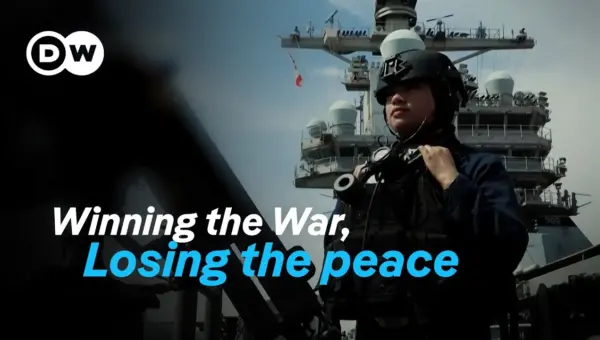
Iran War: Killing Leaders Won’t Topple Regime, Experts Warn
Experts warn that eliminating Iran's leaders may not be enough to topple the regime, suggesting a more complex strategy is needed. The ongoing conflict raises concerns about a prolonged, cyclical war rather than a decisive victory, especially with upcoming elections influencing political timelines.

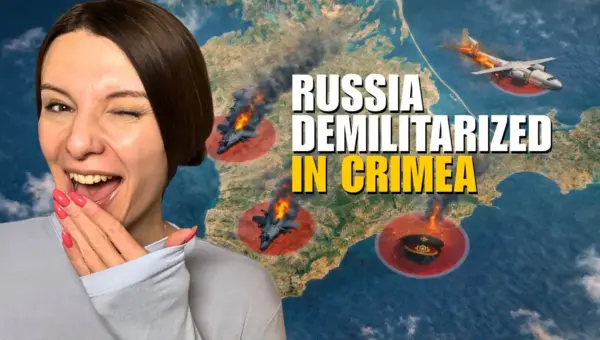
Crimea Becomes Russian Aircraft Graveyard
Russia has lost three military aircraft over Crimea in a single week, raising questions about its air power. The incidents, including the crash of an An-26 with senior officers, highlight challenges for Russian military strategy.
Russia Stalls on Ukraine Front Lines, Escalates Air Attacks
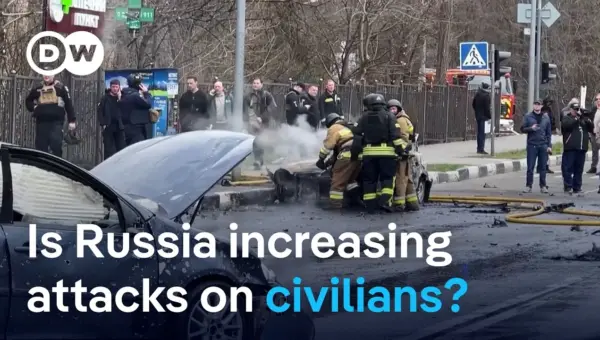
Russia has failed to make significant territorial gains in Ukraine for the first time in 2.5 years, while simultaneously escalating aerial attacks. Ukrainian officials accuse Moscow of an "Easter escalation" using drones and missiles, leading to civilian casualties and destruction. Concerns also mount over shifting global focus and the need for continued international support.