Ukraine War’s Longevity Puzzles Analysts
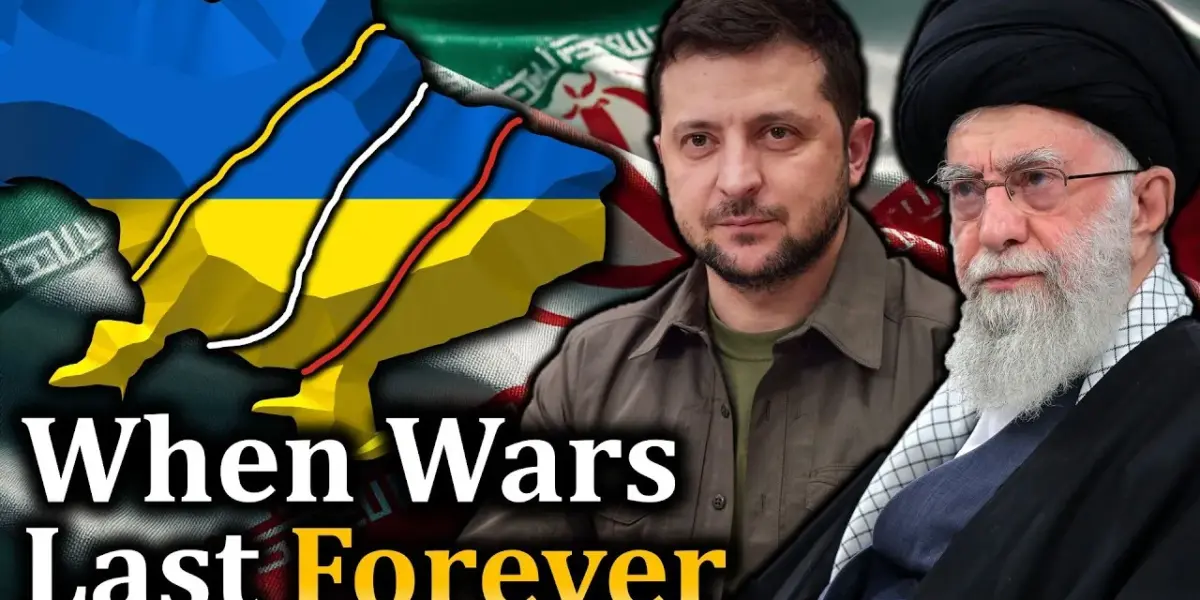
The Russia-Ukraine War's four-year duration challenges historical norms, driven by "late-stage uncertainty" about future capabilities and commitments. This prolonged conflict dynamic also has implications for potential future scenarios, such as those involving Iran, and reflects broader geopolitical shifts impacting global alliances like NATO.

Ukraine War’s Longevity Puzzles Analysts
The ongoing conflict between Russia and Ukraine has surpassed four years, a duration that defies historical norms for interstate wars and presents complex challenges for conflict termination. This extended timeline, especially without accounting for earlier hostilities since 2014, prompts deeper analysis into the underlying reasons why wars persist.
Late-Stage Uncertainty Drives Prolonged Conflict
A key factor contributing to the prolonged nature of modern conflicts, particularly the Russia-Ukraine war, is what experts call “late-stage uncertainty.” This occurs when parties involved may agree on the current military situation but disagree fundamentally about the future. Battles fought today do not necessarily provide clear information about what the future holds. This uncertainty can hinder peace negotiations, as neither side is fully confident about the long-term outcomes or the true capabilities and resolve of their opponent.
This concept is crucial for understanding potential future conflicts, such as scenarios involving Iran. If a conflict were to erupt, uncertainty about the duration of U.S. military operations or the depth of its munitions stockpiles could prolong fighting. Unlike direct battlefield information, which can quickly reveal relative strengths, uncertainty about future support or resource availability does not resolve easily through immediate combat.
The Puzzle of Bargaining Failure
Traditionally, wars are expected to end when parties can accurately assess the costs and likely outcomes of continued fighting. If both sides can deduce the expected result of combat and understand the costs in terms of what they stand to lose, a negotiated settlement should theoretically exist that is better than fighting. Bargaining can fail if one party possesses private information that suggests they will fare better in war than the other side anticipates.
For instance, Ukraine may have had a clearer understanding of Russia’s internal military weaknesses than Russia itself. Similarly, Iran might question the sustainability of U.S. weapons stockpiles, while the U.S. may possess greater reserves than perceived. Historically, the fighting itself served as a mechanism for resolving such uncertainties. As battles unfolded, combatants learned about the true balance of power. A rejection of an initial peace offer signaled a willingness to bear costs and risks, suggesting a stronger position.
However, when uncertainty pertains only to future stages, this learning process breaks down. If the private information only becomes relevant much later, current battles offer little insight. For example, Russia might have anticipated that Western support for Ukraine would wane over time. Observing that support for the first year revealed little about its long-term continuation. In such cases, the convergence of expectations, information revelation, and credible signaling—which typically shortens wars—is impossible.
Implications for Ukraine and Iran
The prolonged nature of the Russia-Ukraine war suggests that both sides have been operating under significant late-stage uncertainty regarding long-term commitments and capabilities. The fact that the war has continued for over four years indicates that the information needed to reach a stable negotiated settlement has been slow to emerge. The ongoing debate about the strength and duration of Western support for Ukraine highlights this dynamic.
For Iran, the situation presents a different, though related, challenge. Uncertainty regarding the U.S. ability to sustain military operations for extended periods could prolong any potential conflict. If Iran believes U.S. stockpiles are limited, it might be less inclined to negotiate, expecting U.S. capabilities to degrade. However, a well-stocked U.S. could potentially bluff its endurance for a short period, leading to a protracted engagement without necessarily resolving the core uncertainty.
Shifting Global Security Landscape
The extended conflict in Ukraine also occurs against a backdrop of significant geopolitical shifts. The United States’ strategic pivot towards focusing more on China as a primary competitor necessitates a transition of European security responsibilities to European nations. This shift has been a gradual process, marked by discussions and efforts to encourage increased European defense spending.
This transition period has exposed internal NATO disputes. Some European allies have shown reluctance to fully embrace increased responsibility, while the U.S. seeks to adjust its commitment levels. These internal tensions, though historically present in alliances like NATO (e.g., France’s withdrawal from the integrated command structure), are now more visible to the public. This visibility can create perceptions of a dysfunctional alliance, even as NATO has historically proven adept at resolving internal disagreements.
The strategic reorientation also impacts how alliances are viewed. The North Atlantic Treaty Organization, originally formed to counter the Soviet Union, has adapted to a post-Cold War era. However, its regional focus contrasts with its global security objectives. The rise of China as a pacing competitor has prompted NATO to engage more with Indo-Pacific partners, seeking to address potential coordinated attacks involving China and Russia. This requires difficult trade-offs for the U.S., which must balance interests in both Europe and the Indo-Pacific.
The Future of Alliances and Conflict
The challenges faced in resolving the Ukraine conflict and managing potential tensions with Iran are intertwined with broader changes in the global security architecture. The expectation of these evolving geopolitical realities, rather than the conflicts themselves, may have contributed to the initial uncertainty that led to the wars. For instance, Russia’s decision to invade Ukraine might have been influenced by an expectation that Western resolve would eventually crumble as the U.S. shifted focus to China.
Ultimately, while families, like alliances, can experience conflict, the ability to resolve these disputes through dialogue and consensus-building is crucial. NATO’s continued existence and its efforts to adapt to new threats suggest a capacity for managing internal disagreements. The sustained support from European nations for Ukraine, despite U.S. funding fluctuations, indicates a long-term commitment that may finally be providing the clarity needed to move towards conflict resolution.
Source: Late-Stage Uncertainty and the Difficulty of War Termination in Iran and Ukraine (YouTube)

Related Articles

China Fights Back: Tariffs Loom Ahead of Trump Visit
China is retaliating against US trade investigations that could lead to higher tariffs. This escalating trade tension occurs just before a planned visit by President Trump. The dispute involves accusations of unfair practices and impacts global supply chains.


Israelis Forge Resilience Amidst Constant Bomb Shelter Drills
Life in Israel is a blend of resilience and constant vigilance, with many families adapting to frequent bomb shelter drills and even sleeping in makeshift shelters. Despite ongoing missile attacks, Israelis strive to maintain normalcy, though businesses face disruption and emotional fatigue is a growing concern.


Israel Escalates Iran Strikes, Warns of Wider War
Israel has launched significant strikes inside Iran following continued missile fire, warning of further escalation. The conflict risks wider regional instability and economic disruption, especially concerning the Strait of Hormuz.