Ukraine War: Russia’s Military Exposed as Weak, Disorganized
Four years into Russia's full-scale invasion, Ukraine's resilience is evident as Russia fails to achieve its war aims. Expert Yurii Sak details Russia's strategic failures, its current war of attrition, and the evolving battlefield dynamics shaped by drone technology. The article also explores the geopolitical implications, the West's critical lessons, and Ukraine's burgeoning defense industry.

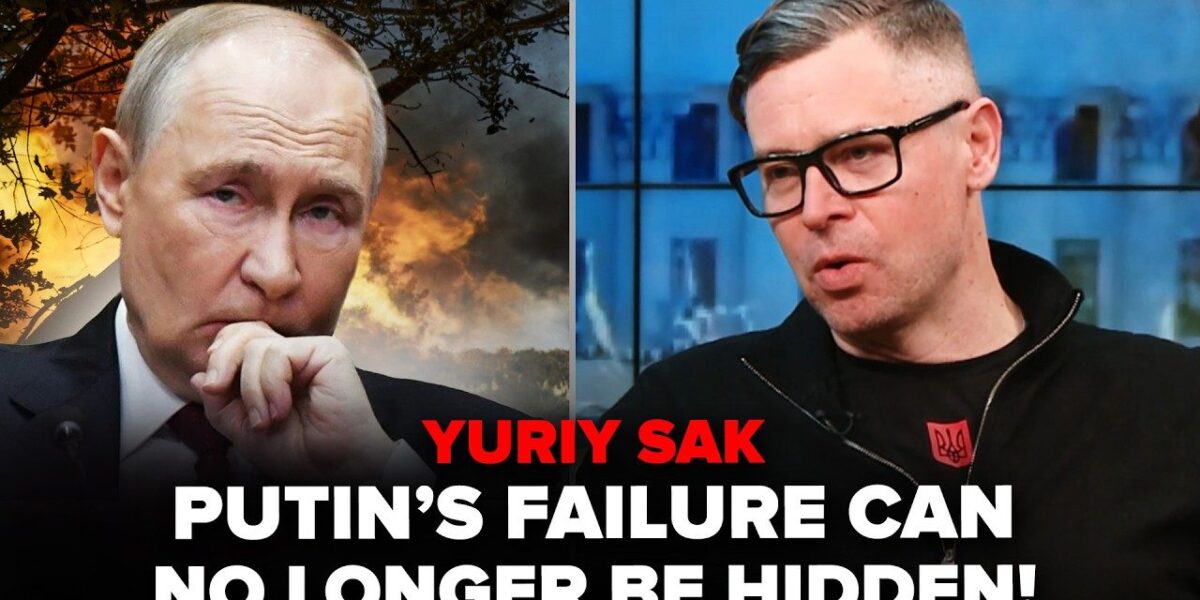
Kyiv’s Resilience: Four Years On, Russia Fails to Achieve War Aims
Four years into Russia’s full-scale invasion, Ukraine remains defiant, thwarting Moscow’s initial objectives. The conflict has evolved into a brutal war of attrition, heavily reliant on drone warfare, with little territorial movement. Despite ongoing diplomatic efforts, trust remains elusive, while NATO meticulously analyzes battlefield lessons to shape future defense strategies. This article delves into the current state of the war and assesses Russia’s strategic failures, featuring insights from Yurii Sak, former advisor to Ukraine’s Minister of Defense.
Russia’s Strategic Defeat: Unmet Objectives and a Strengthened NATO
Yurii Sak unequivocally states that Russia has strategically failed. He argues that success should be measured by the alignment of stated objectives with achieved outcomes. “They have achieved nothing,” Sak asserts, highlighting Russia’s failure to denazify or demilitarize Ukraine. Instead, Russia’s aggression has paradoxically strengthened and expanded NATO, with two new members joining since the invasion began. For Ukrainians, the upcoming anniversary is a somber reminder of the war’s tragic toll, yet also a testament to their resilience and heroism. Conversely, Sak describes the situation for Russia as a “disgrace” and a “shame,” one that cannot be masked by propaganda.
A Brutal War of Attrition: Ukraine’s Advantage in Losses
The conflict is currently characterized by a grueling war of attrition. While the situation on the front lines is far from easy, with ongoing casualties, Sak notes that the ratio of losses favors Ukraine. Russia is reportedly losing more personnel than it can recruit, and has lost significant territory. “The price in terms of manpower and equipment that the Russians are paying for every square kilometer of which 300 they have just lost,” Sak explains. Ukraine’s strategy, as articulated by the Minister of Defense, aims to inflict substantial monthly casualties on Russian forces, shifting the attrition to Ukraine’s advantage. However, the front line remains largely static, with localized Russian counterattacks anticipated, particularly in the Zaporizhzhia region come spring.
Technological Asymmetry and Western Support Lag
Sak identifies air defense systems and missiles as Ukraine’s most pressing military need. He notes that Russia’s current strategy focuses on destroying Ukraine’s energy infrastructure to pressure the population into negotiations. “The major challenge and it’s been voiced by President Zelenskyy recently at Davos Munich in other interviews of course air defense systems and air defense missiles,” Sak states. He criticulates the West’s consistent delay in providing requested military aid, suggesting a pattern of being “two steps behind.” This lag impacts Ukraine’s ability to counter Russian tactics effectively, especially in the rapidly evolving landscape of modern warfare where innovation cycles are short.
The Drone Revolution: Transforming Battlefield Dynamics
Drones have fundamentally altered the nature of warfare in Ukraine. Sak explains that the ubiquity of reconnaissance drones and the establishment of “kill zones” have rendered large-scale troop movements obsolete. “The tactics have changed on both sides,” he notes, with Russian forces now operating in smaller, infiltrating groups to mitigate drone detection. This has resulted in a positional warfare characterized by a back-and-forth struggle for small areas, creating a largely frozen front line. The speed at which new technologies are developed and countered necessitates a robust and agile defense industry, an area where Ukraine is actively seeking to partner with European countries.
Geopolitical Puzzles: US Policy and China’s Role
The motivations behind Washington’s continued engagement with Putin, despite Russia’s unreliability, are complex. Sak suggests that while Donald Trump may initially have favored pressuring Ukraine, he is beginning to understand that Russian aggression cannot be ignored. The upcoming mid-term elections and Trump’s desire to avoid appearing weak are also factors. Sak posits that the US lacks a clear solution to the conflict, partly because Ukraine remains steadfast. He proposes a “conspiracy theory” that a resolution might require US cooperation with China, given Beijing’s influence over Russia’s industrial and energy sectors. Convincing China that pressuring Russia aligns with its own interests could be key to unlocking meaningful peace talks.
The MAGA Connection and Global Standing
The “Make America Great Again” (MAGA) movement and its associated “America First” sentiment are intrinsically linked to the outcome of the Ukraine war, according to Sak. He argues that a failure in Ukraine would undermine America’s status as the leader of the free world and a superpower. The current “hazy geopolitical outlook” from the White House, characterized by “strategic ambiguity,” makes predicting future moves difficult. However, there is a growing bipartisan consensus that America’s global standing is at stake, with China closely observing the US response. A failure to lead in resolving the Ukraine conflict could have significant negative repercussions for American influence worldwide.
European Awakening and the Specter of World War III
Ukrainian President Zelenskyy’s assertion that Putin has already initiated World War III reflects a growing sentiment. Sak suggests that the conflict could be seen as a harbinger of a larger global confrontation, with some believing World War III began in 2014 with Russia’s annexation of Crimea. Europeans, he notes, are increasingly recognizing the threat and taking the situation more seriously. This has spurred greater partnership between Ukrainian and European defense industries, with joint ventures in drone and interceptor production on the rise. While Sak does not personally label the current situation as World War III, he believes humanity is “at the doorstep” of such a conflict, with the next six to twelve months being critical.
Ukraine’s Defense Industry: A Miracle of Resilience
Ukraine’s defense industry has experienced remarkable growth, expanding from around 50 companies in 2022 to over 700 today, including over 600 privately owned entities. This evolution is described as nothing short of a “miracle.” Ukraine is now a significant player on the global defense industry map, a position it aims to capitalize on. While Ukraine is becoming self-sufficient in areas like drone production, Sak acknowledges limitations in producing advanced air defense systems, such as Patriot missiles, which require licensing from US producers. The development of Ukraine’s own long-range missile program and self-propelled howitzers like “Bogdana” are highlighted as significant achievements.
Lessons Learned: Defending Democracy in a Risky World
The West has learned a critical lesson: the idea of the “end of history” and the impossibility of major wars is a fallacy. Sak emphasizes that democracy and freedom must be actively defended. This realization is expected to lead to more efficient military alliances, a renewed arms race, and a clear message to authoritarian regimes that complacency is no longer an option. The world will continue to be fraught with risk, and the civilized hemisphere has “woken up to reality.”
Preparing for Peace Through Strength
Sak invokes the Roman truism “Si vis pacem, para bellum” (If you want peace, prepare for war). He suggests that while discussions about peace processes and security guarantees are ongoing, the core issues remain irreconcilable. The presence of Russian troops in Donbas and Ukraine’s inability to withdraw its own forces are significant obstacles. The possibility of Western military deployment after a peace agreement is discussed, but Sak cautions against falling into a trap of focusing on theoretical post-ceasefire scenarios when fundamental disagreements persist. The shift in Western rhetoric, now openly discussing troop deployment, strengthens Ukraine’s negotiating position by signaling resolve to Russia.
Source: ⚡️Kyiv crushed Putin’s army completely! Russia lied about its power. It’s learning war in Ukraine (YouTube)

Related Articles

Trump’s Putin Stance: US Strategy and Global Implications
Analysis suggests Donald Trump's approach to the Ukraine war involves pressuring Kyiv, but US involvement is crucial for resolution. China's influence and the 'MAGA' agenda's geopolitical implications are key factors.


Melania Trump’s Quiet Diplomacy on Ukraine War
Former First Lady Melania Trump has emerged as an influential, though unofficial, voice on the Ukraine war, reportedly shaping her husband's perceptions and engaging directly on humanitarian issues like the deportation of Ukrainian children. Her advocacy, possibly influenced by her European background, has drawn international attention and sparked unique reactions, including widespread social media support from Ukrainians.

Iran’s Regime Under Siege: Attacks Cripple Leadership, Impact Russia
Iran's regime is reportedly facing critical blows from targeted attacks, crippling its leadership and severing a vital military supply line to Russia. This dual pressure is significantly impacting Russia's war efforts in Ukraine, while internal dissent grows within Iran.