Ukraine War: Four Years On, Can Russia Sustain Its Effort?
Four years after Russia's full-scale invasion, Ukraine's resilience has surprised many, with recent territorial gains and innovative defense strategies. Despite Western sanctions, Russia's war effort continues, prompting debate on sustained support and the true cost of peace.

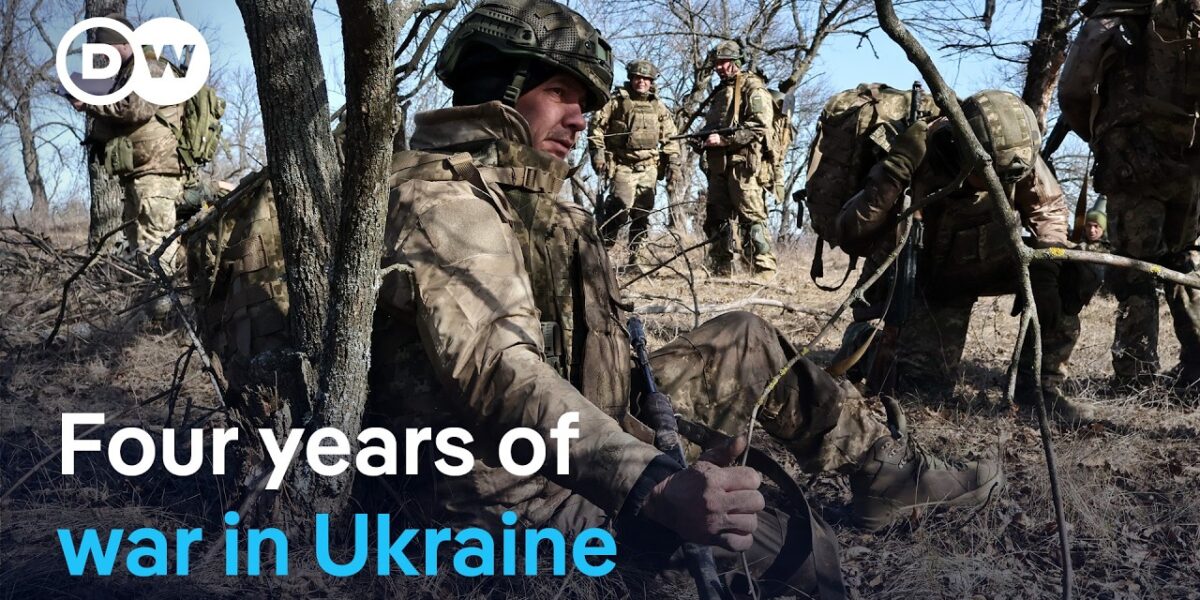
Four Years Since Full-Scale Invasion: Ukraine Holds Ground Amidst Shifting Alliances
Four years after Russia launched its full-scale invasion of Ukraine on February 24, 2022, the conflict has evolved into a protracted struggle. What many initially believed would be a swift Russian victory has transformed into a frozen front line, with Russian forces occupying approximately 20% of Ukrainian territory. However, recent Ukrainian gains, reclaiming around 400 square kilometers in recent weeks, have been acknowledged by German Chancellor Olaf Scholz, suggesting a more resilient Ukrainian defense than often perceived.
Ukrainian Resilience and Modern Warfare Lessons
Justin Crump, an intelligence and security analyst and founder of the think tank Sibeline, agrees with the assessment of Ukraine’s strong performance. “I think Ukraine’s done very well to stay in the fight for 4 years and very well to largely have managed to freeze the front lines uh over the last few years against increasing Russian pressure,” Crump stated. He highlighted that while Russia has made slow, incremental advances in some areas, Ukraine’s ability to hold its ground against significant pressure is a testament to its immense effort. The initial swift territorial gains by Ukraine in the early months of the war, which captured global attention, have since given way to a more attritional phase, a reality that can sometimes overshadow the ongoing Ukrainian resilience.
The “secret” to Ukraine’s sustained resistance, according to Crump, lies in its existential fight for survival. “The Ukrainians are fighting for their homes, fighting for their land,” he explained. This fundamental difference in motivation, where Russia is seen as the aggressor and Ukraine as the defender of its homeland, provides a powerful impetus for Ukrainian forces. Beyond sheer determination, Ukraine has adeptly leveraged new technologies and improvisation. A notable example is Ukraine’s success at sea, where, despite possessing no formal navy, it has significantly degraded Russia’s Black Sea Fleet, largely through the innovative use of drones.
Evolving Nature of Warfare
The conflict in Ukraine has also offered profound insights into the evolution of modern warfare. Crump noted the widely recognized, yet previously underexplored, utility of drones, particularly smaller commercial variants used as direct weapons. “Those are things that we hadn’t seen in previous conflicts,” he observed. However, some lessons remain timeless. The difficulty of capturing territory once front lines become static, reminiscent of the Iran-Iraq War in the 1980s, continues to be a stark reality. The impact of economic warfare, including Russia’s targeting of civilian infrastructure to exert pressure, is also a recurring theme, albeit not a new one.
Interestingly, certain aspects of hybrid warfare, often discussed in theoretical terms, have proven less effective on the ground in Ukraine. Information warfare and cyber operations, while present, have not fundamentally altered the battlefield dynamics, which remain predominantly physical. “So, as always, mixed lessons. Some things are new, some things reinforce things we understood,” Crump concluded, emphasizing that the core nature of warfare, despite technological advancements, retains enduring characteristics.
Sanctions and Economic Pressure: A Double-Edged Sword
Western sanctions have been a primary tool in pressuring the Kremlin, but their effectiveness in halting Russia’s war effort has been debated. While sanctions have undoubtedly made life more difficult for Russia, they have not deterred President Putin, who maintains firm control over a population largely resigned to the government’s directives. “The economy in Russia clearly not doing brilliantly well,” Crump acknowledged, pointing to measures like VAT increases. Despite Russia’s resilience in maintaining its war machine, the cumulative effect of sanctions is gradually taking its toll.
Russia has strategically managed its economic and human resources, drawing troops and volunteers from less prominent regions and keeping the impact away from major cities. However, Crump suggested that this pressure is beginning to be felt more broadly. He characterized Western efforts thus far as “not quite enough, not quite on time,” though acknowledging that these actions have been crucial in keeping Ukraine in the fight and mitigating the full force of Russian aggression. The critical question now, he emphasized, is whether this support can be sustained and if Ukraine can be equipped to compel Russia into more meaningful concessions.
Shifting Alliances and European Responsibility
The geopolitical landscape has seen significant shifts, particularly in Ukraine’s reliance on its allies. Since the return of Donald Trump to the White House, Kyiv has become increasingly dependent on European support. Crump noted that European leaders initially reacted more strongly than anticipated, partly due to feeling misled by Putin’s assurances against invasion. However, this initial surge of support eventually lagged, with the United States taking a more prominent role. More recently, with the U.S. effort described as “negligible” since Trump’s return, Europe has borne the brunt of supporting Ukraine over the past year, a feat that demonstrates its capacity but also strains its resources.
This reliance on Europe raises a critical debate: is it more prudent to ensure Ukraine’s victory or to prepare for future Russian aggression? The allocation of funds to Ukraine means less available for rebuilding European defense forces. Ukrainian President Volodymyr Zelensky has consistently underscored the long-term threat posed by Russia, a perspective Crump believes is accurate. Europe has stepped up, but the commitment to continue this intense effort, especially with projections of at least another year of fighting through the summer, remains a significant question mark.
The Elusive Prospect of a Just Peace
The prospect of peace negotiations remains fraught with complexity. Russia, believing it can gain more through military pressure, views occupied territories as irrevocably Russian. Ukraine, conversely, seeks guarantees against future Russian aggression and the return of its sovereign territory. The core sticking point is the definition of a “just peace,” with Ukraine deeply concerned about long-term security guarantees, especially given Russia’s history of violating agreements, including the 1994 Budapest Memorandum.
Alexandra Matvichuk, founder of the Ukrainian Center for Civil Liberties and a Nobel Peace Prize laureate, stressed that peace talks must not lose sight of the human dimension. “Politicians discussed natural minerals, Russia’s territorial claims, geopolitical interest, but they don’t speak about people,” she observed. Matvichuk highlighted that Russian occupation entails severe human rights abuses, including enforced disappearances, torture, rape, and the denial of identity. She firmly believes that diplomacy must be bolstered by decisive actions to make the cost of war higher than the cost of peace for Russia, as war is currently profitable for Putin.
The Human Cost and a Plea for Support
The human toll of the war is immense, impacting nearly every Ukrainian life. The story of 11-year-old Roman Alex, a survivor of a Russian missile strike that killed his mother, exemplifies the devastating consequences for civilians. Roman, who suffered severe burns, has traveled to Washington D.C. to advocate for continued Western support. His personal testimony, delivered with a child’s sincerity, carries significant weight with policymakers. “I would tell them to support Ukraine, to protect Ukrainian children, because when we are together, we are strong and invincible,” Roman conveyed.
Matvichuk echoed the sentiment that impunity is a driving force behind the conflict. Her organization has documented over 98,000 alleged war crimes, a fraction of the total. “Russians has never been punished, They believe they can do whatever they want,” she stated, emphasizing the urgent need to hold perpetrators accountable. Despite the immense suffering, Matvichuk finds hope in the solidarity and resilience of the Ukrainian people, who are demonstrating extraordinary dignity in the face of adversity. “Hope is a deep understanding that all our efforts have meaning,” she concluded.
Looking Ahead: Sustaining Support and Accountability
As the war enters its fifth year, the focus remains on sustaining international support for Ukraine and ensuring accountability for war crimes. The ability of Russia to maintain its war effort indefinitely will be tested by ongoing sanctions, military aid, and the will of its own population. For Ukraine and its allies, the challenge lies in providing sufficient resources and maintaining political will to achieve a just and lasting peace, while simultaneously addressing the profound human cost and the imperative for justice.
Source: Can Russia keep up its war effort indefinitely? | DW News (YouTube)

Related Articles

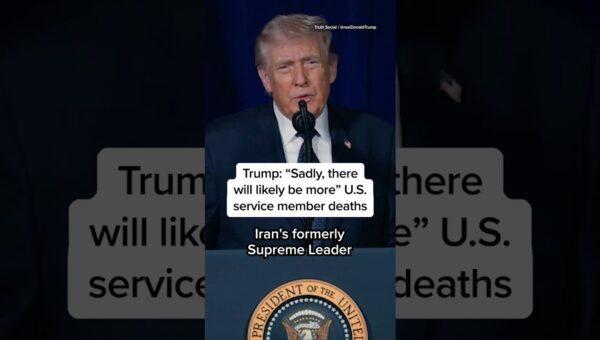
Trump Warns of More US Deaths in Escalating Conflict
Former President Donald Trump issued a somber warning on Truth Social, stating that further U.S. service member deaths are "likely" as geopolitical tensions escalate. He condemned Iran's former supreme leader, Ayatollah Ali Khamenei, and vowed retribution for fallen soldiers.

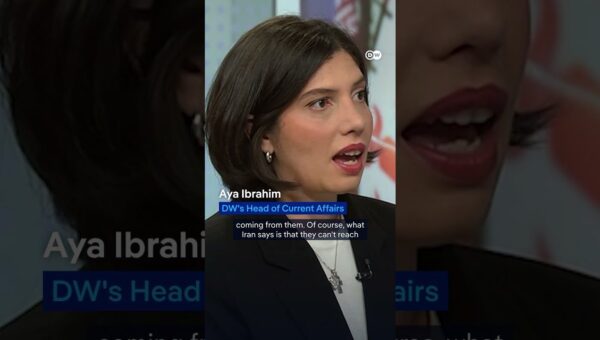
Gulf States Caught in US-Iran Crossfire, Seek Stability
Gulf states are caught in the escalating US-Iran conflict, facing violations of sovereignty and national security threats. Leaders express a strong desire for stability and economic prosperity, contrasting with the unfolding scenes of regional instability.

Geopolitical Turmoil Bolsters Bitcoin Amidst ETF Inflows
Geopolitical tensions and strong Bitcoin ETF inflows are creating a resilient market. Analysts point to exhausted sellers and the potential for capital rotation into crypto, while regulatory clarity on the Clarity Act could unlock significant institutional investment.