Ukraine War Enters Fifth Year: What’s Next for Europe?
Four years into Russia's full-scale invasion, the Ukraine war's devastating human and economic toll continues. The key sticking point remains territory, with a potential June peace deal deadline looming amidst discussions of European military involvement and U.S. security guarantees.

Ukraine War Enters Fifth Year: What’s Next for European Security?
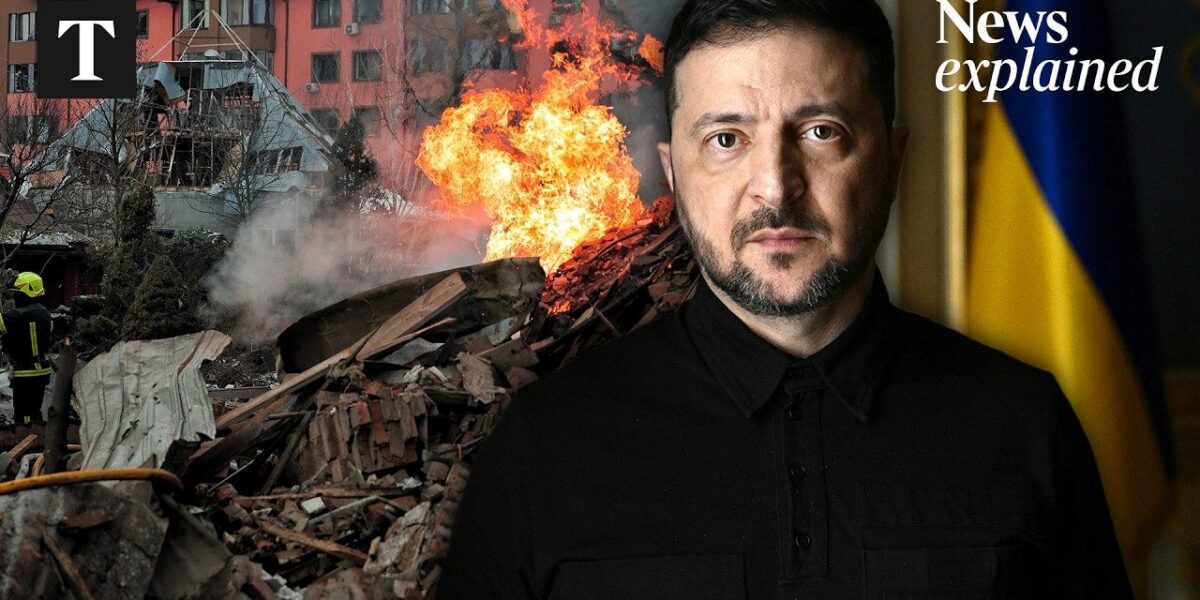
As the conflict in Ukraine enters its fifth year since Russia’s full-scale invasion in February 2022, and marking four years since the initial annexation of Crimea and fomenting of rebellion in the Donbas, the specter of prolonged war continues to cast a long shadow over European security. The devastating conflict, the deadliest in Europe since World War II, has resulted in immense human loss and economic devastation, leaving a critical question hanging in the air: what comes next for Ukraine and the broader European security architecture?
The Human and Economic Toll of Protracted Conflict
The sheer scale of human suffering is staggering. Ukrainian President Volodymyr Zelenskyy has claimed that 55,000 Ukrainian soldiers have been killed, with a significant number missing. Western estimates, however, place Ukrainian fatalities much higher, with one Washington-based study suggesting between 100,000 and 140,000 deaths. Russian casualties are believed to be even greater; one study identifying fallen soldiers by name identified 173,477 deaths. Beyond the military, an estimated 15,000 Ukrainian civilians have been killed, with approximately 40,000 injured. The economic repercussions are equally dire. A joint assessment by the World Bank and other international institutions estimates that Ukraine will require approximately $524 billion over the next decade for reconstruction—a figure equivalent to three times Ukraine’s current GDP.
Territory: The Unyielding Sticking Point
At the heart of the protracted conflict lies the intractable issue of territory. Russia currently controls roughly 20% of Ukrainian territory in the east and southeast. President Zelenskyy has been resolute in his refusal to cede any further ground to Russia, a stance that presents a significant hurdle to any potential peace agreement. The Donbas region, encompassing the provinces of Donetsk and Luhansk, remains the primary focus. Ukraine still controls about 30% of Donetsk, including some of its most heavily fortified defenses. Ceding this territory, Ukrainian officials fear, would leave the nation vulnerable to further Russian aggression. Conversely, for Russian President Vladimir Putin, the Donbas is a non-negotiable objective. Russia has already passed legislation recognizing the region as its territory, despite not fully controlling it. This obsession with the Donbas dates back to 2014, when Russia first invaded Ukraine, and Putin’s inability to secure it on the battlefield has seemingly cemented its importance in his strategic calculus.
The Quest for Peace: Deadlines and Diplomacy
Amidst the ongoing fighting, diplomatic efforts are underway, albeit fraught with challenges. President Zelenskyy has indicated that he believes a peace deal needs to be concluded by June, a deadline he attributes to pressure from the United States. This timeframe echoes sentiments previously expressed by former U.S. President Donald Trump, who, during his presidency, claimed he could resolve the conflict rapidly, even within a single day. However, more than a year after such pronouncements and numerous talks, significant progress remains elusive. The June deadline, perceived as U.S.-imposed, underscores the external pressures influencing the negotiation timeline. Yet, the fundamental disagreement over territory remains the primary impediment to any lasting resolution.
Shifting Alliances and the ‘Coalition of the Willing’
As the war grinds on, discussions about a potential peace agreement are increasingly involving the prospect of direct military involvement by European powers. A concept referred to as the ‘Coalition of the Willing,’ spearheaded by Britain and France and potentially including other European nations and Canada, is being discussed. The United Kingdom, in particular, has expressed its readiness to deploy troops and aircraft to support Ukraine. However, as the transcript notes, the military capabilities of these European nations alone may not be sufficient for such an operation. Consequently, there is a desire for the United States to provide security guarantees, a notion that carries historical weight. Ukraine was provided with security assurances following earlier peace negotiations after 2014, assurances that Russia subsequently disregarded with its renewed invasion. This history raises critical questions for Ukraine: even if a ceasefire is agreed upon, how can Kyiv be assured that Moscow will not violate the terms once again?
Broader Implications for European Security
The ongoing war in Ukraine represents a fundamental challenge to the post-World War II European security order. The conflict has exposed vulnerabilities and forced a re-evaluation of defense strategies across the continent. The potential for direct military intervention by NATO or individual European states, while discussed, carries significant risks and requires careful consideration of escalation dynamics. The reliance on U.S. security guarantees, while historically significant, also highlights the ongoing dependence of European security on transatlantic relations. The war has underscored the need for greater European strategic autonomy and a unified approach to confronting external threats. The sacrifices made by Ukraine, as noted, have been immense, and President Zelenskyy faces political pressure to achieve a favorable outcome. The gamble with the lives of millions continues, with the outcome deeply uncertain.
What’s Next?
As the conflict shows no signs of abating and the June deadline for a potential peace deal looms, attention will remain fixed on the diplomatic front and the evolving military landscape. The willingness of European powers, particularly the UK and France, to commit troops, and the potential U.S. involvement in providing security guarantees, will be crucial developments to monitor. The unwavering Russian focus on territorial control in the Donbas, juxtaposed with Ukraine’s determination to preserve its sovereignty, ensures that the issue of territory will remain the central obstacle. The coming months will likely determine whether a fragile peace can be brokered or if the devastating conflict will continue to exact its heavy toll on Ukraine and reshape the future of European security.
Source: Ukraine Four Years On: What's Next for European Security? (YouTube)

Related Articles
Putin Condemns US Strikes on Iran as ‘Cynical Violation’
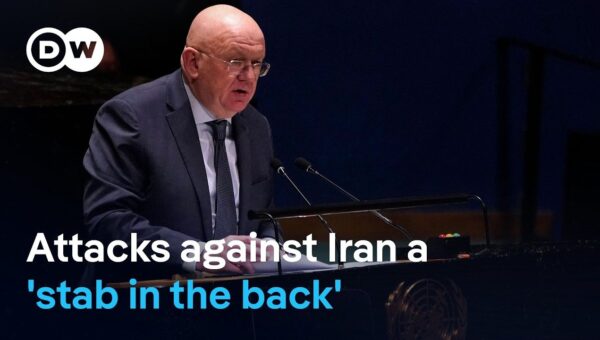
Russian President Vladimir Putin has condemned US air strikes on Iran, calling them a "cynical violation" of international law and morality. While Moscow offers strong words of support, experts suggest Russia's practical aid to Iran may be limited by capacity and logistical constraints. The incident also raises questions about Russia's global standing and its impact on the war in Ukraine.

Europe Faces Post-Cold War Order Collapse After Munich Security Summit
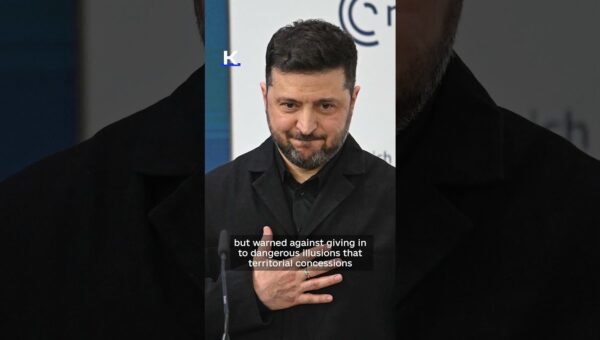
Western leaders at the Munich Security Conference acknowledged the end of the post-Cold War security order, raising concerns for Europe's future. Ukrainian President Zelenskyy urged continued support against territorial concessions, while transatlantic tensions underscored the shifting geopolitical landscape.

Trump’s Putin Stance: US Strategy and Global Implications
Analysis suggests Donald Trump's approach to the Ukraine war involves pressuring Kyiv, but US involvement is crucial for resolution. China's influence and the 'MAGA' agenda's geopolitical implications are key factors.