Ukraine Unleashes Drone Tsunami: Kyiv’s Industrial Might and Long-Range Arsenal Set to Reshape War and Global Security
Ukraine is dramatically escalating its defense capabilities, projecting an astounding seven million domestically produced drones this year, alongside advanced long-range missiles. This unprecedented industrial surge is transforming Ukraine into a 21st-century 'arsenal of democracy,' poised to reshape the battlefield, global defense industries, and the future security of Europe. The strategic pivot aims to degrade Russia's war-fighting capacity and underscores Ukraine's unwavering resolve against aggression.

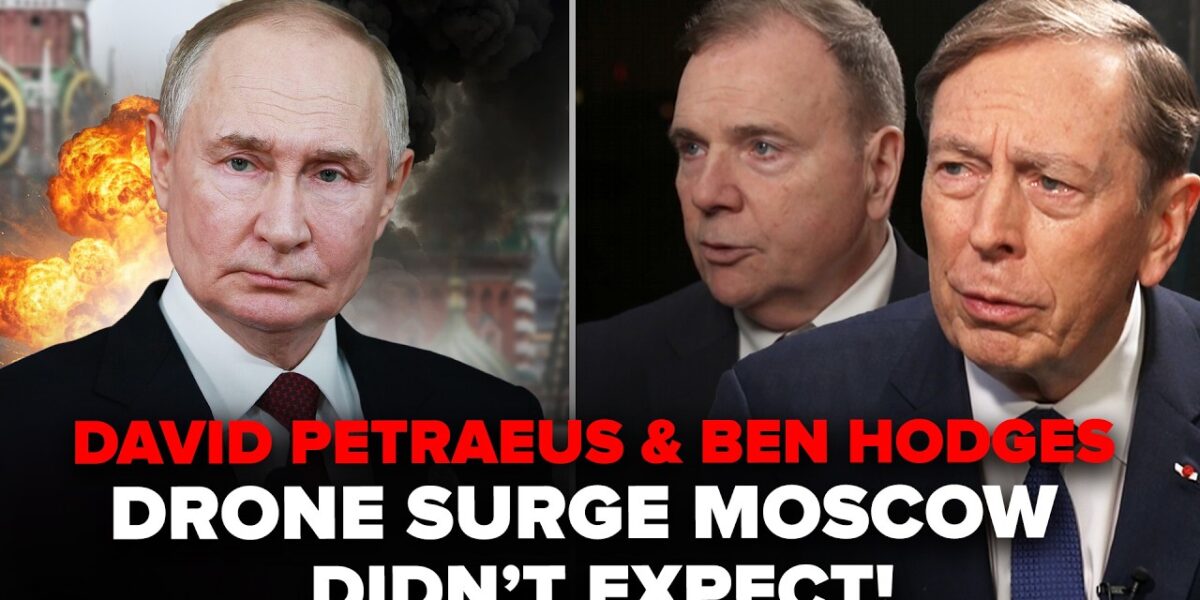
Ukraine Unleashes Drone Tsunami: Kyiv’s Industrial Might and Long-Range Arsenal Set to Reshape War and Global Security
In a dramatic escalation of its defense capabilities, Ukraine is poised to unleash an unprecedented wave of domestically produced drones, projected to reach an astonishing seven million units this year. This monumental surge in unmanned aerial vehicle (UAV) manufacturing, coupled with the development of formidable long-range missiles, signals a profound shift in Kyiv’s strategic approach, transforming the nation into a burgeoning ‘arsenal of democracy’ and fundamentally altering the dynamics of the ongoing conflict with Russia. The implications extend far beyond the immediate battlefield, promising to reshape global defense industries and the future security architecture of Europe.
The Drone Revolution: Kyiv’s Production Skyrockets
The scale of Ukraine’s drone production ambition is nothing short of breathtaking. After producing an impressive 3.5 million drones last year, Kyiv aims to double that output to seven million in the current year. To put this into perspective, a single Ukrainian company is reportedly targeting a production of three million drones on its own, a figure that dwarfs the combined annual output of major Western powers. By comparison, the United States, a global leader in military technology, produces approximately 300,000 to 400,000 drones annually. This stark contrast underscores Ukraine’s rapid adaptation and innovative prowess in wartime.
This unprecedented production capacity is not merely about numbers; it represents a strategic pivot. The sheer volume of drones, ranging from inexpensive, expendable FPV (First-Person View) drones to sophisticated reconnaissance and strike UAVs, enables Ukraine to saturate the battlefield. These drones can be deployed ‘all day, every day’ against Russian forces, creating what some analysts describe as a pervasive ‘kill zone’ that significantly complicates Russian logistics, troop movements, and defensive postures. The ability to deploy millions of these unmanned systems offers a cost-effective yet devastating counter to Russia’s numerical superiority in traditional artillery and armored vehicles.
The strategic utility of this drone arsenal is multifaceted. FPV drones, often equipped with explosives, provide precision strike capabilities against individual targets, from personnel to light armored vehicles, with minimal risk to Ukrainian operators. Reconnaissance drones offer invaluable real-time intelligence, enhancing situational awareness and enabling more effective targeting. Longer-range variants can penetrate deep into Russian-held territory and even the Russian Federation itself, striking critical infrastructure and military assets far behind the front lines. This expansion of reach significantly complicates Russia’s defensive planning and forces a dispersion of resources, further straining its already stretched military apparatus.
Long-Range Dominance: The ‘Flamingo’ Missile and Strategic Reach
Complementing its drone offensive, Ukraine is also advancing its long-range missile capabilities. The development of new weapons systems, such as the ‘Flamingo’ missile, boasting a formidable range of 3,000 kilometers and a larger warhead than the US Tomahawk cruise missile, marks another significant leap. This capability grants Ukraine the means to strike deep into Russian territory, targeting strategic assets, supply lines, and command centers that were once considered untouchable. Such strikes are designed not only to degrade Russia’s military potential but also to exert psychological pressure on the Kremlin and the Russian populace.
The ability to conduct deep strikes is a game-changer. By hitting oil and gas infrastructure, logistics hubs, and military headquarters within Russia, Ukraine can directly impact Moscow’s capacity to finance and sustain the war effort. As one observer noted, the destruction of Russia’s oil and gas infrastructure is a ‘very good strategy,’ directly reducing Russia’s ability to fund its aggression. The economic impact of such strikes, coupled with falling oil prices, further erodes the Kremlin’s financial stability, making it harder to replenish resources and maintain public support for the protracted conflict.
Ukraine as the ‘Arsenal of Democracy’ for the 21st Century
The rapid evolution of Ukraine’s defense industry draws parallels to the United States’ role as the ‘arsenal of democracy’ during World War II, supplying the Allied powers with the matériel needed to defeat fascism. Today, Ukraine is not only fighting for its own survival but also forging an innovative defense sector that could serve as a crucial supplier for Europe and beyond. The experience gained in developing, manufacturing, and deploying cutting-edge weapons systems in real-time combat conditions is invaluable, positioning Ukraine as a future leader in defense technology.
Beyond the immediate conflict, this burgeoning industrial capacity holds significant economic promise for post-war Ukraine. The country is not expected to revert to its old extractive industries or traditional heavy manufacturing. Instead, the expertise cultivated in advanced manufacturing, design, and rapid prototyping for drones and missiles will form the bedrock of a new, high-tech economy. This ‘arsenal of democracy’ could rearm and equip Europe with modern, combat-proven weaponry, filling crucial gaps and offering alternatives to existing suppliers. For instance, concerns about European and even American police forces using Chinese-made DJI drones could be addressed by Ukrainian companies offering secure, domestically produced alternatives.
The ‘Greatest Generation’ Forged in Fire
The profound sacrifices and innovations witnessed in Ukraine have led some to describe the current generation of Ukrainians as their ‘greatest generation,’ echoing the term applied to Americans who fought in World War II. This generation, demonstrating unparalleled bravery on the battlefield and remarkable ingenuity in innovation, is not only defending its homeland but also securing the future of democracy. Their skills in design, manufacturing, and combat application are not just for wartime; they are exportable assets that will drive Ukraine’s economic recovery and global influence in the aftermath of hostilities.
This spirit of resilience is deeply ingrained in the Ukrainian national consciousness. Despite the immense hardship endured by its people, there is an unwavering resolve to resist Russian aggression and reclaim sovereign territory. Every Ukrainian, from the leadership to the ordinary citizen, expresses a steadfast determination not to concede any land. This resolve is rooted in the understanding that ceding territory is not merely giving up ‘dirt’ but abandoning Ukrainian people and their future to Russian occupation, a fate they are determined to prevent.
Putin’s Calculus: The Limits of Imperial Ambition
Analyzing Vladimir Putin’s motivations reveals a stark reality: casualties hold little sway over his decisions. Two primary factors drive his war strategy: maintaining his grip on power and ensuring the Russian economy can finance the conflict. He operates under the apparent confidence that the United States will not decisively intervene to stop him, and that Europe lacks the collective will or capacity to fill that perceived void. This conviction fuels his continued aggression, leading to a protracted conflict with immense human cost.
However, this calculus is increasingly challenged by Ukraine’s strategic targeting. The campaign to destroy Russia’s oil and gas infrastructure is recognized as a highly effective strategy. These strikes directly undermine Putin’s ability to fund the war, thereby striking at one of his core motivations. The continuous destruction of refineries and export terminals impacts Russia’s production capacity and global oil prices, creating a direct negative feedback loop on the Kremlin’s war chest.
Ending the war without losing power presents a formidable challenge for Putin. The prospect of millions of disaffected veterans returning to a ‘trash’ economy, without a clear victory to justify their sacrifices, poses a significant threat to his regime’s stability. Despite narratives of Putin’s strategic genius, his isolation and potential reliance on filtered information could lead to miscalculations. The Prigozhin mutiny, though ultimately suppressed, exposed significant cracks in his authority and the loyalty of his security apparatus, revealing a populace and military leadership hesitant to defend the Kremlin until the outcome was clear.
Manpower and Attrition: Debunking Russian Superiority
The notion of an overwhelming Russian manpower advantage is often overstated. While Russia possesses a larger population, its ability to effectively mobilize and sustain combat-ready forces faces significant challenges. Evidence suggests Russia is resorting to desperate measures, including recruiting North Koreans and coercing immigrants into military service, highlighting underlying manpower issues. Ukraine, on the other hand, is defending its homeland, a powerful motivator, and has effectively utilized tactics like creating ‘kill zones’ to maximize lethality while minimizing troop exposure.
Reports of staggering Russian casualties underscore the unsustainability of their attrition-based strategy. In December alone, Russian forces reportedly suffered 35,000 killed and wounded, with an inability to replenish 9,000 troops in January. Ukraine’s defense minister has set an objective of inflicting 50,000 Russian casualties per month, a worthy aim that, if achieved consistently, would severely cripple Russia’s combat effectiveness. Beyond infantry, the focus remains on destroying Russia’s core strengths: logistics, headquarters, artillery, and drone production facilities, which, if neutralized, render even a large force ineffective.
The Unwavering Resolve: No Retreat, No Surrender
The question of ceding territory for peace, particularly the Donbas region, has been unequivocally rejected by Ukrainian leadership and its people. There is a universal belief that Russia would not be satisfied with such concessions and would inevitably continue its aggression. Past experiences, including the Budapest Memorandum, have taught Ukraine that international guarantees without robust enforcement are insufficient. Any ceasefire not predicated on full Russian withdrawal is seen as a mere pause, allowing Russia to regroup for future attacks.
Ukrainian President Volodymyr Zelenskyy’s steadfast leadership, characterized by genuine interaction with soldiers, citizens, and world leaders, stands in stark contrast to Putin’s isolated and authoritarian style. This authentic leadership reinforces national unity and determination. The advice given in 2022 by some Western figures, including former US General Mark Milley, to settle the war after early successes in Kyiv, Kharkiv, and Kherson, is viewed by Ukrainians as a dangerous miscalculation. For Ukraine, compromising on territory means compromising on its people and its very future.
Security Guarantees: A Call for Concrete Commitments
Discussions around security guarantees for Ukraine remain a critical but contentious issue. Proposals involving a tiered response from allies (e.g., 24 hours for Ukrainian troops, 48 hours for a ‘coalition of the willing,’ 72 hours for potential US involvement) are met with skepticism. Crucially, many such proposals often demand that Ukraine first concede territory, a non-starter for Kyiv. Furthermore, the perceived reluctance of the current US administration to provide sufficient aid raises doubts about its willingness to commit to direct military intervention in a future scenario.
Ukraine seeks a robust, legally binding security framework, akin to a treaty ratified by Congress, offering far greater assurances than past agreements like the Budapest Memorandum. Without such concrete commitments, any guarantees are viewed as potentially hollow, leaving Ukraine vulnerable to future aggression. The ongoing debate highlights the need for Western allies to move beyond rhetoric and provide tangible, long-term security assurances that genuinely deter Russian expansionism.
The Endgame: A Protracted Struggle for Europe’s Future
While Ukraine faces immediate challenges in conducting large-scale counteroffensives due to resource and manpower constraints, and Russia continues its incremental gains at immense cost, the long-term strategy remains clear: degrade Russia’s ability to wage war. The focus on disrupting Russia’s oil and gas exports, especially with European cooperation in stopping the ‘shadow fleet’ that circumvents sanctions, is a winning strategy. This economic pressure, combined with sustained military pressure, is essential to forcing a recalculation in the Kremlin.
The war’s endgame is not merely about Ukraine’s borders; it is about the future of European security. The best defense for Europe is a Ukrainian victory. If Ukraine were to fail, the threat to other European nations, particularly the Baltic states like Latvia and Lithuania, would become a ‘real possibility’ within a year or two. Europe is increasingly recognizing that Russia is already engaged in a ‘gray zone’ war, employing hybrid tactics, cyberattacks, and disinformation campaigns that precede kinetic combat. Failure to confront these operations decisively only increases the risk of direct military confrontation.
Therefore, the path forward demands unwavering support for Ukraine, providing it with everything necessary to defeat Russia. This is not just an act of solidarity but a pragmatic investment in the collective security and stability of Europe. The continued transformation of Ukraine into a formidable military-industrial power, capable of producing millions of drones and advanced long-range missiles, is not just a testament to its resilience but a beacon of hope for a more secure future, free from the shadow of Russian imperial ambition.
Source: 💥Russia to face MILLIONS of Ukrainian drones! Kyiv DOUBLES DOWN on long-range missile (YouTube)

Related Articles


Trump’s Putin Stance: US Strategy and Global Implications
Analysis suggests Donald Trump's approach to the Ukraine war involves pressuring Kyiv, but US involvement is crucial for resolution. China's influence and the 'MAGA' agenda's geopolitical implications are key factors.


Melania Trump’s Quiet Diplomacy on Ukraine War
Former First Lady Melania Trump has emerged as an influential, though unofficial, voice on the Ukraine war, reportedly shaping her husband's perceptions and engaging directly on humanitarian issues like the deportation of Ukrainian children. Her advocacy, possibly influenced by her European background, has drawn international attention and sparked unique reactions, including widespread social media support from Ukrainians.

Iran’s Regime Under Siege: Attacks Cripple Leadership, Impact Russia
Iran's regime is reportedly facing critical blows from targeted attacks, crippling its leadership and severing a vital military supply line to Russia. This dual pressure is significantly impacting Russia's war efforts in Ukraine, while internal dissent grows within Iran.