Ukraine Strikes Russian Port, Experts See Shifting Russian Sentiment
Ukrainian forces have struck a key Russian Black Sea port, hitting naval and oil infrastructure. Meanwhile, experts observe a shift in Russian public sentiment as propaganda intensifies. President Zelenskyy warns of further Russian attacks and seeks more air defense, while Ukrainians remain firm against territorial concessions.

Ukraine Targets Russian Naval and Energy Infrastructure
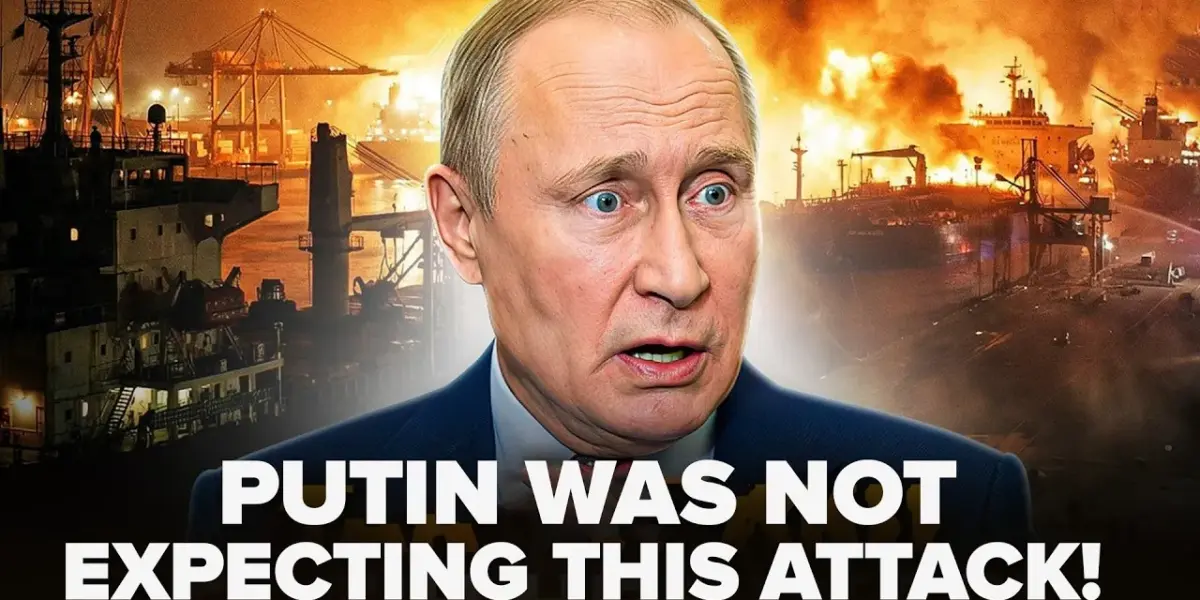
In a significant escalation of the ongoing conflict, Ukrainian forces have successfully conducted drone strikes targeting military and oil infrastructure in Russia’s Black Sea port of Novorossiysk. The overnight operation resulted in a massive fire, impacting naval assets, air defense systems, and a major oil terminal crucial for supplying Russian forces. Sources within Ukraine’s SBU security service confirmed the strikes, which are part of a deliberate strategy to degrade Russia’s military, energy, and financial capacity to sustain its war effort.
Novorossiysk, a key military logistics hub on the Black Sea, plays a vital role in the movement of oil, weapons, and supplies essential for Russia’s operations in Ukraine. The successful strikes underscore Ukraine’s growing capability to project force deep into Russian territory and disrupt critical supply lines.
Kremlin’s Propaganda Escalates Amidst Shifting Russian Public Opinion
As the war grinds on with no clear end in sight, Russia is reportedly intensifying its propaganda efforts, employing darker and more desperate tactics. According to Russia expert Mark Galeotti, the internal mood within Russia is quietly shifting. The initial narrative of a quick and glorious victory has been replaced by the harsh realities of prolonged conflict, economic strain, and mounting casualties, leaving the Kremlin with a dwindling victory narrative to sell.
State media is increasingly leaning on themes of fear, conspiracy, and existential threats, portraying NATO as intent on destroying Russia and Ukraine as a mere Western puppet. This shift in rhetoric is seen by analysts as a classical authoritarian playbook, deployed when reality fails to align with the desired narrative. Galeotti suggests this escalation of myth-making indicates a lack of full confidence within the Kremlin that the Russian populace still believes in the war or its ultimate victory.
Zelenskyy Warns of Russian Escalation and Seeks Air Defense Support
Ukrainian President Volodymyr Zelenskyy has warned of an impending new wave of large-scale Russian strikes, targeting not only energy and logistics infrastructure but potentially water supply systems. The aim, he stated, is to create shortages and sow further distress among Ukrainian communities. President Zelenskyy urged local authorities to prepare for these risks and emphasized Ukraine’s urgent need for additional air defense missiles to protect its critical infrastructure.
Despite the heightened threat, Zelenskyy reiterated Ukraine’s ongoing commitment to negotiations aimed at ending the war. However, he stressed that if Russia abandons talks, Ukraine will pursue alternative methods to pressure Moscow into halting its aggression. The immediate priority remains achieving results at the negotiation table while remaining prepared for all scenarios.
Ukrainians Reject Territorial Concessions for Security Guarantees
Recent nationwide polling in Ukraine reveals a strong public sentiment against trading territory for security guarantees. The majority of Ukrainians are unwilling to withdraw troops from Donbas or cede land to Russia in exchange for Western security assurances. Public skepticism towards negotiations remains high, rooted in a deep distrust of Russia’s willingness to honor any agreements.
The persistent reality of Russia’s relentless attacks, alleged civilian terror, and open calls for Ukraine’s destruction fuels this skepticism. Promises of future security guarantees without immediate, tangible protection are viewed as abstract and unreliable. The prospect of Western nations not intervening militarily or providing robust air support further diminishes support for territorial concessions. The overarching sentiment among Ukrainians is a willingness to engage in difficult compromises, but not what they perceive as capitulation.
Ukraine Offers Drone Defense Expertise to Global Partners
In a notable shift, Ukraine is positioning itself as a provider of defense expertise, offering to share its hard-won knowledge in countering Iranian drones and missiles with international partners. President Zelenskyy highlighted the recent events in the Middle East, noting that even advanced air defense systems cannot guarantee 100% protection. Ukraine’s unique experience in combating Shahed drones, he stated, is invaluable.
This initiative is not about exporting Ukrainian weaponry but about sharing combat-proven tactics, technologies, and air defense practices with nations that have supported Ukraine. UK Prime Minister Rishi Sunak has already indicated that Ukrainian experts could be deployed to assist Gulf countries in defending against Iranian drone attacks. This marks a new role for Kyiv, transforming it from a security recipient into an exporter of critical battlefield expertise.
Middle East Conflict’s Potential Impact on Russia and Global Markets
The escalation of conflict in the Middle East, involving the US, Israel, and Iran, is having a complex impact on global markets and potentially benefiting Russia. Analysts suggest that disruptions to oil supplies from the region, particularly if Iranian oil is removed from the market or transit through the Strait of Hormuz is impeded, could lead to a sharp rise in oil prices. This scenario would translate into direct financial gains for oil-exporting nations, primarily Russia.
Furthermore, China and India, existing buyers of discounted Iranian oil, might pivot even more towards Russian crude, thereby reducing the effectiveness of sanctions against Moscow. This paradoxically means that as the world navigates a new crisis, Russia’s economy could receive a financial reprieve. However, some analysts caution that any benefit for the Kremlin might be short-lived, with potential long-term economic repercussions still looming.
China’s Contrasting Rhetoric on Sovereignty in Ukraine and the Middle East
A striking contrast has emerged in China’s rhetoric regarding sovereignty and territorial integrity when comparing its response to the conflict in Ukraine versus the recent escalation in the Middle East. Following Iranian strikes in the Gulf, Beijing emphasized principles of sovereignty, territorial integrity, and regional security, calling for an end to hostilities and condemning US and Israeli actions as violations of international law.
However, when Russia invaded Ukraine, China’s application of these same principles was reportedly far more cautious and muted. This divergence in language and emphasis suggests a selective application of international law, raising questions about Beijing’s geopolitical alignments and its approach to state sovereignty depending on the context and involved parties.
EU Prepares for Middle East Fallout and US Debuts New Missile
European Commission President Ursula von der Leyen has warned of serious fallout for Europe from the escalating conflict in the Middle East, citing impacts on energy, transport, migration, and security. The EU is convening an emergency security meeting to assess risks and potential consequences, with concerns heightened by attacks reaching as far as Cyprus and Saudi Arabia.
Meanwhile, the United States has utilized its newest precision strike missile, the Long-Range Hypersonic Weapon (LRHW), in combat for the first time during strikes on Iran. This weapon, with nearly double the range of older missiles, significantly expands US strike capabilities, allowing for deeper penetration into enemy territory and quicker destruction of key military assets. The Pentagon released footage of the missile’s launch, signaling a clear message to adversaries about its combat readiness and expanded reach.
Analysis: Trump’s Iran Strategy and Future Outlook
Financial Times chief foreign affairs columnist Gideon Rachman has assessed Donald Trump’s strategy toward Iran as potentially flawed. Rachman argues that the US is attempting an unprecedented approach by seeking regime change through airstrikes alone, without a ground invasion and lacking a clear plan for post-collapse governance. The absence of an organized opposition on the ground, combined with the potential for prolonged conflict leading to chaos and wider regional instability, raises significant concerns.
As the situation remains volatile, the international community, including Ukraine, continues to navigate complex geopolitical shifts. The resilience of Ukraine’s defense capabilities, its evolving role in global security, and the unpredictable consequences of regional conflicts will be critical factors to monitor in the coming months.
Source: 💥Ukraine STRIKES Russia! Minus Putin’s Ships. Massive OPERATION: Kremlin’s MAIN PORT on Fire (YouTube)

Related Articles

Iran War Escalates: Wider Regional Conflict Looms
The war involving Iran, Israel, and the U.S. shows no signs of slowing, with recent escalations including widespread drone and missile attacks across the Gulf and the involvement of Hezbollah in Lebanon. Experts warn of a growing risk of a wider regional conflict, potential Iranian state collapse, and significant global economic and security repercussions.

Europe Seizes Russian Oil Tanker, Escalating Sanctions War
France and Belgium have seized a Russian oil tanker in the North Sea, marking a significant escalation in sanctions against Moscow. This military enforcement of economic measures targets Russia's "shadow fleet" used to circumvent international sanctions, potentially impacting global energy markets and the ongoing conflict in Ukraine.

Trump’s Iran Gambit: Legacy of Destruction or Strategic Masterstroke?
The recent US strikes on Iran, justified by an 'imminent threat,' have ignited debate about Donald Trump's legacy. Critics question the legality and shifting justifications, drawing parallels to the Iraq War and warning of potential regional instability. The long-term consequences remain uncertain.