Ukraine Strikes Russian Missile Hub, Signals Shifting Global Alliances
Ukraine has reportedly struck the Kremly L microelectronics plant in Bryansk, a crucial Russian missile industry facility, using Storm Shadow missiles. This attack highlights Ukraine's growing military capabilities and challenges narratives suggesting it should concede to Russia. The incident also underscores shifting global alliances, with the U.S. reportedly seeking Ukrainian assistance.

Ukraine Strikes Key Russian Missile Facility
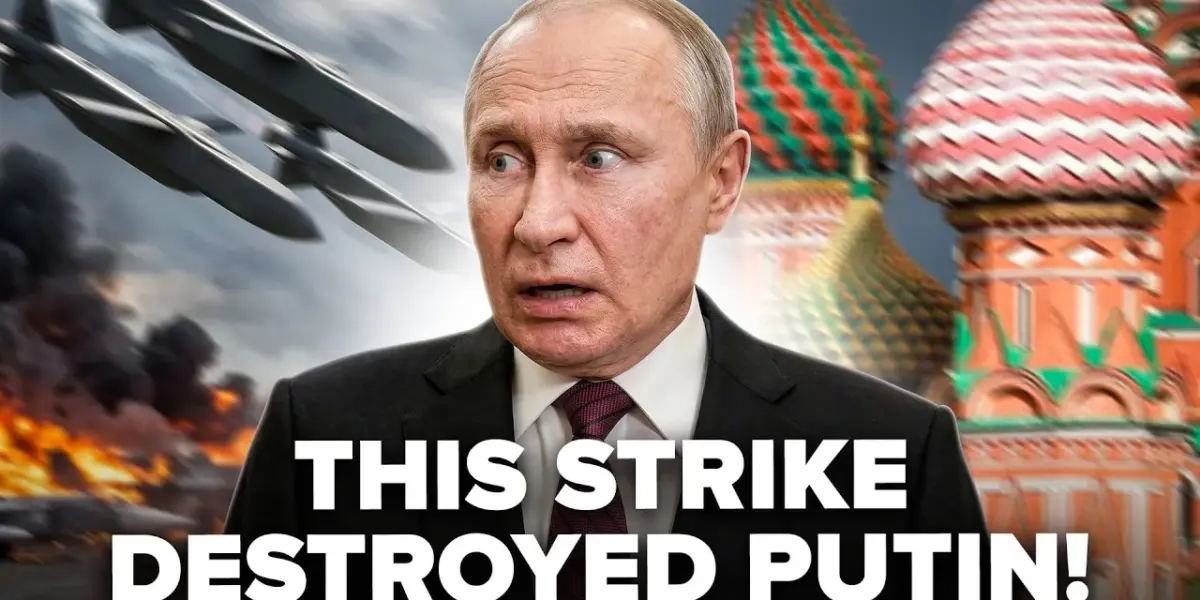
In a significant escalation, Ukraine has reportedly destroyed the Kremly L microelectronics plant in Bryansk, a critical facility believed to be involved in the production of control systems for nearly all types of Russian missiles. The unprecedented strike, allegedly carried out using British-made Storm Shadow cruise missiles, has sent shockwaves through Moscow and is being analyzed for its broader political, strategic, and symbolic implications.
According to analysts from the Bora group, seven Storm Shadow missiles were employed in the attack. The destruction of this plant represents a direct blow to Russia’s missile industry, a cornerstone of its military capabilities. While the Kremlin has remained largely silent, a spokesperson for President Putin stated that the response to Ukrainian strikes on Bryansk would be determined by the Russian military, hinting at potential retaliation.
Ukraine Demonstrates Growing Military Prowess
The strike on the Kremly L plant is seen as a powerful demonstration of Ukraine’s evolving military capabilities and its ability to project power deep into Russian territory. “It just proves that Ukraine does have cards to play and almost every day we are proving that we have those cards, we have means, we have weapons,” stated Um Bbachuk, former deputy prime minister for EU integration, in an interview. He added that Ukraine is actively testing its own domestically produced missiles, which are reportedly even more powerful than the Storm Shadows used in the attack.
This development directly challenges narratives, such as those emanating from the Trump administration, suggesting that Ukraine should concede to Russian demands. “This contradicts to Trump’s administration statement that… we have to agree to whatever Russia is saying because anyway Russia is going to get what it wants. Doesn’t look like this for me though,” Bbachuk observed. He suggested that the Ukrainian counter-offensive in southern Ukraine is disrupting Russian military plans, leading to increased Ukrainian confidence in both negotiating and planning their war efforts.
Shifting Global Alliances and Ukraine’s Role
The interview also highlighted a significant shift in global perceptions of Ukraine, with even the United States now reportedly seeking Ukrainian assistance in the Middle East. Ukrainian President Volodymyr Zelenskyy’s comments, relayed through an interview with Irish blogger Carolyn Robertson, indicated that requests for Ukrainian aid underscore Kyiv’s growing influence and capabilities. “Right now, it’s thanks to our soldiers, incredible, incredible people and to many different production lines that we have been developing since the beginning of the war. Now we have a high level,” Zelenskyy reportedly said.
Bbachuk elaborated on the symbolic and political importance of this development, referencing a publication in Axios, an outlet known for its access to verified information from the Pentagon, White House, and State Department. “Seven months ago, President Zelenskyy was offering us exactly this kind of assistance, which request for which we received now. So that time… the US state department, White House, they were not enthusiastic. They practically had a very, let’s say, cool reaction and took no decision,” he noted.
“It’s much better for us to have an alliance with Ukraine which demonstrates its technical capabilities and which is a trusted ally of the US and of other democratic countries and helps us and is helping US allies in the Middle East than Russia which is sharing intelligence with Iran and which is providing weapons for Ukraine and which is financing terrorism.”
This stark contrast positions Ukraine as a reliable partner, while Russia’s actions, including alleged intelligence sharing with Iran and financing terrorism, are increasingly isolating it on the global stage. The shift in US policy, as suggested by the Axios report, indicates a growing recognition of Ukraine’s strategic value over attempts to appease or pressure Moscow.
Concerns Over Widening Military Cooperation Axis
President Zelenskyy also voiced concerns about potential deepening military cooperation between Russia, Iran, and possibly other nations. He warned that Russia, having already supplied Iran with drones, could potentially send troops to support the Iranian regime. This echoes past instances, such as North Korea’s alleged deployment of soldiers to Russia, who could then be sent to Ukraine.
Bbachuk described this as a realistic escalation scenario, emphasizing Russia’s historical proficiency in financing and recruiting paramilitary groups, reminiscent of the Wagner Group. “So there could be some missionaries which Russia may provide or recruit or finance, we who who might go to Iran. And this is a very realistic scenario,” he stated. Russia’s influence over groups like Hezbollah in the Middle East further amplifies this concern, as Moscow seeks to present itself as a defender of smaller nations against the United States.
The interview also touched upon the paradoxical relationship between Israel, which has historically maintained a degree of support for Putin, and Russia’s increasingly adversarial stance towards the West. The fact that Putin’s support for Iran, while being a de facto adversary to Israel, is still viewed by some, including figures like Trump, as a partnership, was highlighted as difficult to comprehend.
Sanctions Policy and Economic Implications
The discussion also delved into the complexities of sanctions policy, particularly concerning Russian oil. The White House’s temporary allowance for India to purchase Russian oil that was already at sea, justified by a global supply shortage, was scrutinized. Bbachuk warned that such seemingly minor concessions could be a dangerous first step, drawing parallels to international sports federations gradually readmitting Russian athletes.
“Russians are slowly conquering or getting back recognition without demonstrating any wish to reach to stop the bloody war in Ukraine, to stop killing peaceful Ukrainians and to respect international law and order,” he commented. He expressed concern that while the current measure might be temporary, it could lead to further easing of sanctions, benefiting Russia economically and undermining international pressure.
Alternative solutions to oil shortages, such as releasing strategic reserves or engaging with countries like Venezuela, were proposed. However, the significant geopolitical challenges, including Iran’s threats to disrupt oil tanker passage through the Strait of Hormuz, complicate these efforts. The security of oil transit remains a major concern, with Iran’s Revolutionary Guard Corps employing small, difficult-to-detect speedboats that pose a substantial threat to commercial shipping.
EU’s Financial Support for Ukraine Amidst Obstacles
Despite political hurdles, the European Union is reportedly finding ways to ensure continued financial support for Ukraine. Reports suggest that even if Hungary and Slovakia continue to block a €90 billion loan package, Baltic and Nordic countries may provide €30 billion through bilateral loans. This mechanism, which does not require unanimous EU member state approval, would bypass potential vetoes.
“Absolutely, you are correct. And this scenario was prepared at the very beginning. It was one of the options instead of the mechanism of consensus or unilateral vote of all EU members,” Bbachuk confirmed. He noted that while the EU initially attempted a consensus-based approach, the persistent obstruction from certain member states might necessitate this bilateral solution. He emphasized the critical nature of this funding for Ukraine’s budget, particularly in April, and expressed hope for a permanent solution to address decision-making processes within the EU that allow for such blockages.
The reliance on consensus within the EU is seen as a vulnerability that can be exploited by countries like Russia, which can leverage allies such as Hungary, Slovakia, and potentially Serbia to paralyze decision-making. Bbachuk advocated for a shift towards a majority-based voting system to prevent such gridlock.
Looking Ahead
The coming months will be crucial in observing the impact of Ukraine’s strike on the Kremly L plant, the evolving dynamics of global alliances, and the effectiveness of international sanctions against Russia. Ukraine’s ability to sustain its military operations and secure vital financial aid, particularly in the face of internal EU political challenges, will be key indicators of the war’s trajectory. Furthermore, the potential for a wider military cooperation axis between Russia and other nations, coupled with ongoing tensions in the Middle East, warrants close monitoring.
Source: 😱After this, Moscow is ready to end war! Powerful strike terrified Kremlin. This the end (YouTube)

Related Articles

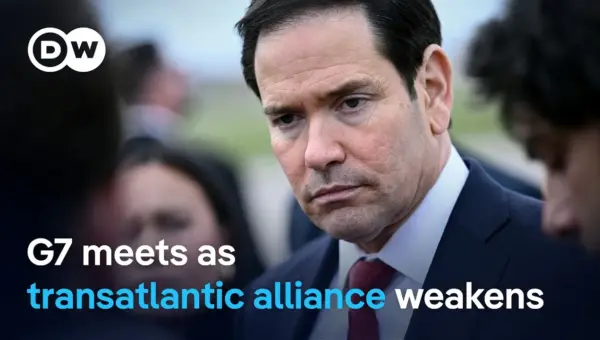
G7 Allies Clash Over Iran War Strategy, Urge Focus on Russia
G7 foreign ministers met in Paris, revealing deep divisions over the U.S. war with Iran. European allies urged the U.S. to pressure Russia, linking its actions to the conflict and fearing support for Ukraine will wane.

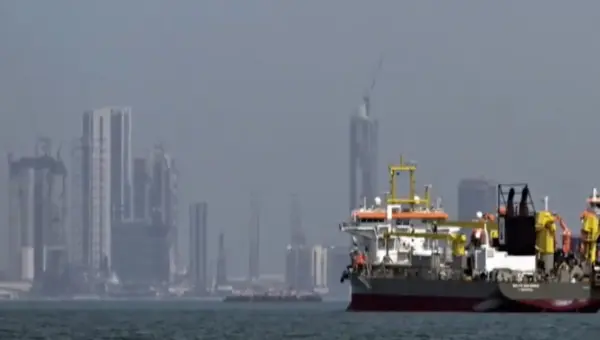
Iran Blocks China Ships, Exposing Beijing’s Weak Grip
Iran's recent decision to block Chinese ships at the Strait of Hormuz is exposing the limits of Beijing's influence in the Middle East. This action is causing delays and cancellations for Chinese manufacturers, turning a perceived geopolitical win into an economic strain.
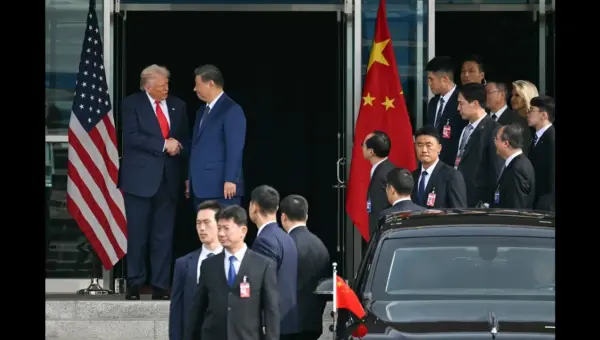
Trump’s “Walk Away” Tactic Signals Tougher Stance on China
Retired Air Force Brigadier General David Stillwell believes President Trump's strategy of being willing to walk away from negotiations puts pressure on China. This tactic, combined with US global actions and strengthened alliances, signals a more assertive American foreign policy.