Ukraine Strikes Deep: Russia’s War Machine Buckles
Ukraine is launching deep strikes into Russia, targeting oil exports, refineries, and rail lines. These attacks aim to cripple Russia's war machine by disrupting its economy and supply chains. The coordinated pressure strains Russia's resources and military, potentially forcing a strategic shift.


Ukraine Strikes Deep: Russia’s War Machine Buckles
Ukraine’s military is now striking deep inside Russia, targeting critical infrastructure and supply lines. This strategy aims to make it impossible for Russia to continue its war effort. Recent attacks on oil terminals, refineries, and transportation networks are putting significant pressure on Russia’s ability to fund and supply its forces.
Key Strikes Deepen Russian Strain
A recent major attack hit the Shashkaras terminal in Novorossiysk, a vital hub for Russia’s Black Sea oil exports. This facility processes about 761,000 barrels of crude oil daily, representing 14-19% of Russia’s total crude output. The strike targeted the port’s piers, rendering it unusable and impacting Russia’s ability to export oil and other goods.
Novorossiysk is also home to Russia’s Black Sea Fleet, which relocated there from Crimea due to earlier Ukrainian attacks. The strike raises concerns about the fleet’s security, as it could now be vulnerable to further Ukrainian action.
The economic impact is significant. Closing the Novorossiysk port for just two days could cost Russia an estimated $90 million. A week-long closure could reach $310 million, not including repair costs, increased security, and higher insurance premiums.
Beyond oil infrastructure, Ukraine is also targeting refineries. The Novoselivka refinery, which processes around 340,000 barrels per day or 11% of Russia’s gasoline, was struck. These attacks on fuel production and export capabilities directly affect Russia’s domestic economy and its ability to generate revenue for the war.
Widespread Sabotage Cripples Transport
The pressure extends to Russia’s internal transportation systems. Sabotage incidents, including train derailments, are increasing. Over 90% of goods in Russia move by rail, making these disruptions highly damaging to both commercial activity and military logistics. Saboteurs are reportedly targeting rail relays, causing collisions and derailments, which hinders the movement of supplies to the front lines.
Airport closures and disruptions have also been reported in southern Russia, further complicating movement and logistics. This coordinated pressure across multiple sectors aims to overwhelm Russia’s response capabilities.
Weakening Air Defenses and Military Morale
Ukraine continues to target Russia’s radar systems and air defense networks. Strikes on sophisticated systems like the S-400 and multiple rocket launchers degrade Russia’s ability to protect its territory and forces. The objective is to weaken Russia’s air defenses, making its own territory and military assets more vulnerable.
Evidence suggests that the strain of the war is also affecting Russian military morale. Reports indicate that some soldiers are damaging their own equipment to avoid deployment. This internal dissent, coupled with a recent poll suggesting only 24% of Russians wish to continue fighting, highlights growing opposition to the war within Russia.
Strategic Implications
Ukraine’s strategy shifts the battlefield’s focus from territorial gains in Ukraine to degrading Russia’s war-making capacity within Russia itself. By attacking key economic and logistical nodes simultaneously, Ukraine aims to create a systemic crisis for the Kremlin. This approach makes it harder for Russia to respond effectively, as resources and attention must be diverted to defend its interior.
The repeated nature of these strikes is crucial. While Russia might absorb a single attack, a sustained pattern wears down its systems, increases costs, and reduces reliability. This economic attrition is designed to bleed Russia’s war machine over time, making the conflict unsustainable.
Historically, disrupting an adversary’s economic lifelines and logistical chains has been a key strategy in warfare. By targeting oil exports, fuel production, and transportation, Ukraine is directly attacking the financial and material resources Russia needs to sustain its operations. This mirrors strategies used in other conflicts to isolate and weaken an aggressor’s ability to project power.
The broader geopolitical impact includes increased pressure on Russia’s economy and its ability to maintain international trade. The attacks also highlight Ukraine’s growing capability to strike deep within Russian territory, demonstrating resilience and evolving tactical proficiency.
Recent successes in intercepting over 90% of incoming drones, partly aided by Western support and donations for Ukrainian drone technology, bolster Ukraine’s defensive capabilities and demonstrate its adaptability in countering Russian aerial threats. This technological advancement plays a vital role in protecting Ukrainian lives and infrastructure.
Overall, the current Ukrainian offensive strategy is designed to make the continuation of the war untenable for Russia. By increasing the costs and decreasing the effectiveness of Russia’s war effort, Ukraine seeks to force a strategic reassessment from Moscow.
Source: Russia Is Quietly Reaching the BREAKING Point (YouTube)

Related Articles

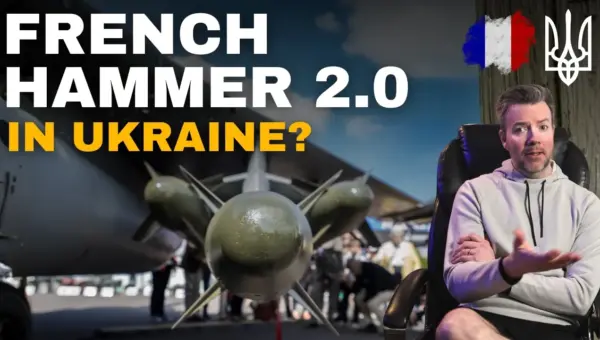
France Upgrades Smart Bomb, Bolstering Ukraine’s Arsenal
France has upgraded its AASM Hammer smart bomb with a new multi-mode seeker, enhancing its effectiveness for Ukraine. The advanced 'Lear Seeker' improves targeting in complex environments and could be integrated into future French precision weapons. The potential deployment of upgraded Hammers, and eventually longer-range XLR variants, poses a growing challenge to Russian forces.


Putin’s War Aims: Annihilation, Not Peace
Russia's war aims in Ukraine are centered on annihilation, not peace, according to a former Ukrainian Prime Minister. He describes negotiations as a KGB tactic and highlights Russia's strategic alliance with Iran. Putin's goal is to destroy Ukraine as a state, not to reach a genuine settlement.


Russia Escalates Daytime Strikes Across Ukraine
Russia has intensified its daytime air attacks across Ukraine, using more drones and missiles. This strategy aims to test new tactics, overwhelm air defenses, and terrorize civilians, particularly in frontline regions.