Ukraine Peace Talks Stall: A Year of Failed Diplomacy
One year of U.S.-led peace talks between Ukraine and Russia has yielded little progress, with key demands remaining irreconcilable. Despite Ukraine's concessions, the conflict persists, highlighting the complex motivations and inconsistent strategies of mediators like Donald Trump.

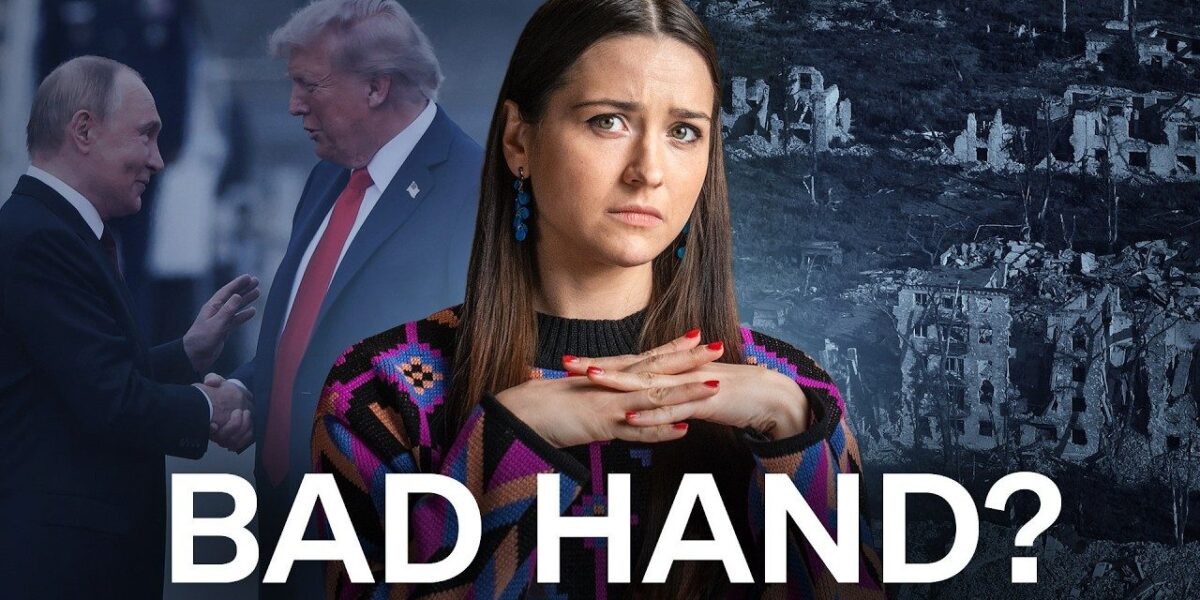
One Year On, Peace Remains Elusive in Ukraine Amidst Complex Negotiations
KYIV – It has been one year since then-U.S. President Donald Trump reportedly told Ukrainian President Volodymyr Zelensky that Ukraine “don’t have the cards right now.” This statement, made in the context of alleged Oval Office discussions, implied that Ukraine’s survival hinged on accepting Trump’s terms for peace negotiations with Russia. Over the past twelve months, Ukraine has largely adhered to this directive, agreeing to mineral deals, ceasefire terms, and direct leader-to-leader meetings with Russia. However, despite these concessions and active participation in U.S.-led peace talks, the conflict shows no signs of abating, leaving peace further away than ever.
The Genesis of U.S.-Led Peace Initiatives
Following a period of roughly three years with no significant diplomatic negotiations between Russia and Ukraine, save for initial failed talks in the early days of Russia’s 2022 full-scale invasion, the landscape shifted during Donald Trump’s 2024 re-election campaign. Trump vowed to act as a peacemaker, asserting his unique ability to broker a swift deal between Vladimir Putin and Volodymyr Zelensky. These U.S.-led talks commenced in late February 2025. While modest gains, such as prisoner exchanges and the opening of diplomatic communication channels, have been achieved, a lasting ceasefire or a durable peace framework remains absent.
Trump’s Approach: Business Over Diplomacy
The efficacy of the peace talks has been significantly influenced by the motivations and tactics of the primary mediator, Donald Trump. Described as a capitalist rather than a humanist, and more of a businessman than a historian, Trump’s impatience has been a notable factor. His approach framed the war as a problem to be solved, a deal to be negotiated, and a foreign policy success to be credited to his administration. Trump’s initial optimism, believing that both Russia and Ukraine were equally eager for peace and merely needed a nudge toward compromise, has reportedly dissolved into frustration.
The fundamental disconnect lies in the core objectives of the belligerents: Russia seeks a neutralized, demilitarized, and politically subordinate Ukraine, while Ukraine strives for freedom and robust deterrence against future aggression. Trump himself acknowledged the unexpected difficulty of the conflict, admitting in a CBS interview around the six-month mark of the talks that he had anticipated it would be one of the easier conflicts to resolve. This protracted negotiation period has created anxiety for Ukraine, given the potential for the U.S. to withdraw its support.
Ukraine’s Delicate Balancing Act
Ukrainian President Zelensky has been navigating a precarious path, attempting to maintain U.S. aid and intelligence sharing without compromising Ukraine’s territorial integrity or future security. Publicly, a civil relationship has been maintained between Trump and Zelensky, avoiding further public altercations. However, behind the scenes, Trump has reportedly pushed Ukraine towards territorial concessions, including signing away mineral rights and resources, and has even floated the idea of recognizing Russian control over Crimea as a bargaining chip.
Inconsistent Pressure on Russia
In contrast to the pressure applied to Ukraine, the pressure on Russia and President Putin has been notably lighter and more inconsistent. While sanctions have been utilized, they have often been accompanied by mere threats. Trump’s public condemnations of Russia’s actions have varied in tone and frequency, exemplified by a tweet urging Putin to “stop” after a mass attack on Ukraine. Mixed signals regarding the potential supply of longer-range weapons to Ukraine, depending on Russia’s negotiation stance, have further complicated the diplomatic strategy.
Furthermore, Trump has extended overtures to Putin, offering him a path back to the international stage. His decision to welcome Putin to U.S. soil, despite the International Criminal Court’s arrest warrant for the Russian leader, underscores this approach. The transcript suggests a personal affinity between Trump and Putin, with Trump appearing impressed by Putin’s consolidation of power and seeking recognition as an equal leader. Reports indicate that Trump’s attempts to pressure Russia have often been thwarted by direct communication with Putin, raising questions about the ultimate basis of their dynamic.
The Sticking Points: Irreconcilable Demands
The core of the negotiation stalemate lies in the fundamentally divergent demands of Ukraine and Russia. Ukraine’s conditions for peace include security guarantees from allies, justice for war crimes, the return of deported Ukrainian children, and no recognition of Russian occupation. Ukraine has expressed willingness to freeze fighting along current front lines but not to withdraw from currently controlled territory.
Russia, conversely, demands that Ukraine cede its eastern Donbas region, limit its military capabilities, and abandon aspirations of joining NATO. Such terms, according to analysts, would leave Ukraine vulnerable to future Russian aggression, a prospect that deeply alarms Ukrainians who fear a revival of Russian imperial ambitions. Conversely, Russia’s elite reportedly harbors fears of a resurgent Soviet Union, making concessions difficult.
Public Opinion and the Stakes of Peace
Despite accusations from Trump and his administration that Ukraine’s leadership is prolonging the war, the transcript highlights that the Ukrainian people overwhelmingly support their president’s stance: a bad peace is worse than no peace. The conflict is framed as an existential struggle for Ukraine’s survival and freedom against authoritarianism, while for Russia, it is seen by some as a fight for the revival of a lost empire. This fundamental ideological divide makes compromise exceedingly difficult.
Mounting Pressures and Potential Outcomes
Both nations face mounting pressures. Ukraine grapples with manpower shortages and the sustainability of international aid, largely now from Europe. Russia endures sanctions, resource scarcity, and long-term international isolation, impacting national morale. Both countries are also confronting demographic crises stemming from war casualties and displacement.
Lithuania’s former Minister of Foreign Affairs, Gabrielius Landsbergis, suggests that peace talks are primarily stalled over Ukraine’s territorial concessions, a non-negotiable point for Kyiv. He posits that Ukraine still believes it has a realistic chance of shifting the battlefield dynamics. Alternative strategies for applying pressure on Russia include escalating casualties on the battlefield, thereby complicating Russian mobilization efforts, and maintaining robust financial and economic support for Ukraine from Western allies.
Landsbergis also notes that while the U.S. appears to be reducing pressure on Russia, Europe is beginning to recognize its greater responsibility in the peace process. However, Europe is still in the nascent stages of developing a cohesive strategy, contemplating how to engage with Russia in a manner that compels genuine negotiation rather than mere diplomatic humiliation.
The Road Ahead: Uncertainty and Contingencies
The past year of negotiations has been characterized by clumsy handling, inconsistent pressure, and a failure to bridge irreconcilable worldviews. The prospect of diplomatic resolution in the near future remains uncertain. Peace talks are unlikely to succeed unless the underlying power dynamics shift significantly, and Russia perceives the continuation of the war as more detrimental than its cessation.
While the odds of a peace deal in 2026 are not zero, optimism is reportedly low in Ukraine. A major shift in the geopolitical landscape or within Russia itself would likely be required for talks to yield tangible results. As the transcript concludes, Donald Trump’s initial assertion of holding all the cards appears less confident now, leaving Ukraine prepared to continue its fight, with or without robust U.S. backing, and with an unwavering desire for a successful peace process.
Source: Trump’s struggle to deliver peace | Ukraine This Week (YouTube)

Related Articles

Iran’s Regime Under Siege: Attacks Cripple Leadership, Impact Russia
Iran's regime is reportedly facing critical blows from targeted attacks, crippling its leadership and severing a vital military supply line to Russia. This dual pressure is significantly impacting Russia's war efforts in Ukraine, while internal dissent grows within Iran.

Trump’s ‘Willing Sacrifice’ Remark Sparks Outrage and Concern
President Donald Trump's recent remarks suggesting American casualties in a potential Iran conflict are "a sacrifice I am willing to make" have drawn widespread criticism. The comments, interpreted by many as insensitive, have sparked debate about presidential rhetoric and the gravity of military service.

Trump’s Tariffs Linked to Stagnant Job Growth in First Year Back
The U.S. economy saw minimal job growth in 2025, adding just 181,000 jobs, a figure attributed to business uncertainty fueled by Donald Trump's volatile tariff policies. While January 2026 showed gains, they were heavily concentrated in healthcare, masking broader economic weakness and significant layoffs.