Ukraine Peace Efforts Face Uphill Battle Amid Russian Obstinacy; British Monarchy Shaken by Historic Royal Arrest
Hopes for a ceasefire in Ukraine remain distant as diplomatic efforts stall over Russia's "unreasonable" territorial demands, despite Italy's proposals for security guarantees and reconstruction. Concurrently, the British monarchy faces an unprecedented crisis following the arrest and questioning of Prince Andrew on suspicion of misconduct in public office, marking a historic low for the royal family.

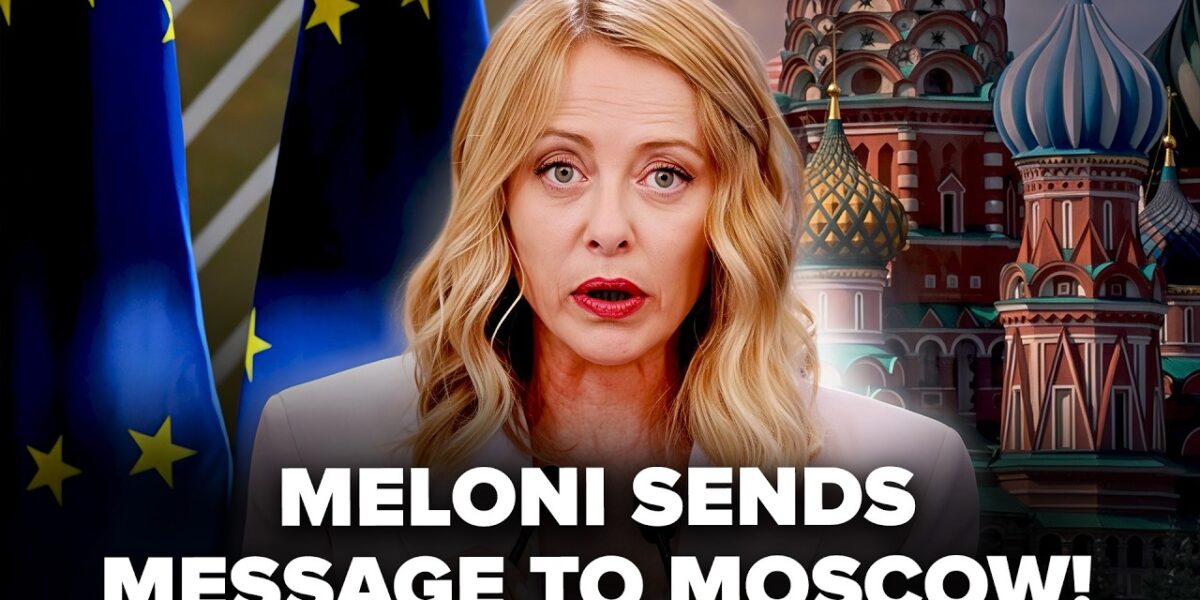
Ukraine War Enters Fourth Year: Diplomatic Impasse Looms Large
As the conflict in Ukraine approaches its grim fourth anniversary, international efforts to broker a lasting peace settlement appear increasingly fraught with challenges. Despite significant diplomatic initiatives, including proposals from Italy, the fundamental disagreements between Kyiv and Moscow, particularly over territorial claims, continue to create an seemingly insurmountable hurdle. The global community watches closely, acknowledging the profound implications of a prolonged war for international law and stability.
Italy’s Vision for Peace: Security Guarantees and Reconstruction
Italy has actively engaged in the diplomatic arena, presenting a robust framework for potential peace. Central to its efforts are proposals for comprehensive security guarantees for Kyiv, drawing inspiration from the formidable Article 5 of the Atlantic Pact, which mandates collective defense among NATO members. This framework aims to provide Ukraine with the assurance necessary to negotiate its future with confidence, knowing that its sovereignty and territorial integrity would be safeguarded against future aggression. Beyond security, Italy has also made substantial progress on plans for the post-conflict reconstruction of Ukraine, recognizing that peace must be accompanied by the rebuilding of infrastructure, economy, and society. These efforts underscore a commitment not just to ending hostilities, but to fostering a resilient and prosperous Ukraine.
Within broader peace plans being discussed, numerous technical issues have reportedly found resolution on paper. However, the core impediment to any breakthrough remains the issue of territories currently occupied or claimed by Russia. According to diplomatic assessments, Russia’s demands in this regard are deemed “absolutely unreasonable.” The prevailing sentiment among international partners is that while peace is paramount, it must be a just peace—one that upholds the principles of international law and respects national sovereignty. The breaking of these fundamental rules, as many observers contend, inevitably leads to a more chaotic and unstable world order, a scenario that is in no nation’s long-term interest.
Putin’s Strategic Straitjacket: A War Without a Clear Endgame
The Russian leadership, under President Vladimir Putin, finds itself ensnared in a complex strategic dilemma four years into its full-scale invasion of Ukraine. What many analysts believe was intended as a swift military campaign to weaken Kyiv and realign Ukraine within Moscow’s sphere of influence has instead devolved into a protracted and costly war of attrition. The initial objectives, widely understood to include the swift capture of Kyiv and the installation of a compliant government, have not been achieved, leaving the Kremlin without a decisive outcome.
Ukrainian resistance, bolstered by an unprecedented level of military and financial support from Western allies, has hardened front lines and defied expectations. The conflict has become a grinding struggle, with both sides incurring heavy casualties and expending vast resources. While Russian forces maintain control over significant portions of eastern and southern Ukraine, they have been unable to secure a decisive breakthrough that would fundamentally alter the strategic landscape. The human cost has been immense, with casualties mounting on both sides, and the economic toll on Russia has been substantial. Extensive international sanctions have strained key sectors of the Russian economy, particularly energy, finance, and technology. Although the Russian government has demonstrated a degree of adaptability, redirecting trade flows to non-Western partners and significantly ramping up domestic military production, the long-term economic consequences and the strain on its human capital continue to escalate.
For President Putin, the political stakes at home are extraordinarily high. The Kremlin has meticulously framed the war as a historic mission, essential for Russia’s security and its stand against perceived Western expansionism. State media consistently portrays the conflict as a vital defense against external threats and a necessary step to reclaim historical Russian lands. After years of such fervent nationalistic messaging, accepting a settlement that could be perceived as a compromise or a concession carries significant political risks for Putin’s carefully cultivated image as a strong, unwavering leader. Any outcome that falls short of justifying the immense sacrifices made by the Russian people could potentially undermine his authority and spark discontent, however tightly controlled the domestic political environment may be.
Conversely, continuing the war without a clear path to victory presents its own set of dangers. Prolonged fighting places immense pressure on Russia’s military resources, personnel, and logistical capabilities. It also increases uncertainty about domestic stability. While public dissent remains largely suppressed through stringent government controls and censorship, the potential for war fatigue to grow, especially if losses continue without visible progress on the battlefield, cannot be entirely discounted. Analysts are divided on Putin’s strategy: some suggest he is betting on time, hoping that Western support for Ukraine will eventually wane, while others believe he sees no better option than to continue the conflict, even without a clear or achievable path to outright success.
Diplomatic Efforts and Deep-Seated Mistrust
Despite the ongoing hostilities, diplomatic efforts to end the war have periodically surfaced, albeit with limited success. Western officials have engaged in discussions exploring various scenarios for ceasefires or negotiated settlements, and there have been indirect contacts between Moscow and Kyiv. However, the prospects for a lasting peace remain uncertain, primarily due to fundamental disagreements and a deep-seated lack of trust between the warring parties.
According to reports, including those from “The Economist,” diplomatic talks involving representatives from the United States, Ukraine, and Russia have taken place in Geneva, aimed at exploring potential avenues to de-escalate and eventually cease fighting. While U.S. officials have described these meetings as a constructive “step forward,” they readily acknowledge that major disagreements persist. Ukraine, steadfast in its defense of sovereignty, insists that any peace deal must unequivocally protect its independence and territorial integrity. Kyiv’s leaders have consistently rejected proposals that would require them to cede any territory currently under Russian occupation, viewing such concessions as a betrayal of national interests and the sacrifices made by its citizens.
On the other side, Russia continues to demand significant political and territorial concessions, showing little urgency or genuine willingness to commit fully to a comprehensive peace settlement. European intelligence officials have expressed considerable skepticism regarding the likelihood of a breakthrough deal in the near future. Many worry that Moscow may be using these talks primarily as a means to alleviate international sanctions or to buy time to regroup its forces, rather than genuinely pursuing a peaceful resolution. This skepticism is compounded by profound mistrust on both sides; Ukraine fears that Russia could exploit any weakly guaranteed peace agreement to regroup and launch further aggression, while Russia likely views any agreement as a temporary measure until its strategic objectives can be achieved.
Domestic politics further complicate the path to compromise. Ukrainian leaders face strong public opposition to any territorial concessions, with national sentiment firmly behind the defense of every inch of their land. Similarly, hardliners within Russia’s political establishment and military are reportedly opposed to relinquishing any battlefield gains, viewing them as hard-won achievements. For now, experts agree that while peace talks are ongoing, they remain fragile. A lasting settlement appears increasingly improbable unless both sides demonstrate a willingness to make difficult and politically costly compromises, a willingness that has yet to materialize.
Zelenskyy’s Frustration and Russia’s Maximalist Stance
Professor Lucas, an international politics expert, shared a critical assessment of the current state of negotiations, suggesting that President Putin is primarily “buying more time” and shows no genuine willingness to negotiate in good faith. Despite this overarching political deadlock, some technical progress has been noted, particularly concerning the military arrangements for a potential ceasefire. Reports indicate a working agreement for the United States to lead a monitoring mission to oversee any ceasefire, signifying a crucial step in establishing trust and verification mechanisms.
However, the issue of European involvement in such a mission remains contentious, with Russia reportedly objecting to the presence of any European troops inside Ukraine. While these technical discussions lay the groundwork for what a ceasefire might look like, they do not address the profound political chasm. Ukrainian President Volodymyr Zelenskyy has voiced his deep frustration, noting the lack of progress on the political front. Without explicitly naming Russia’s chief negotiator, Mr. Medinsky, Zelenskyy’s comments, shared through social media, conveyed palpable exasperation. He reportedly stated, “We don’t need any more historical lessons from the Russians,” a clear jab at the Kremlin’s frequent use of lengthy historical narratives to justify its actions and assert Ukraine’s historical ties to a “greater Russia.”
It appears that instead of engaging in substantive negotiations on critical issues such as the status of the Donetsk region, security guarantees for the rest of Ukraine, or the fate of the Zaporizhzhia nuclear power plant, Mr. Medinsky has often resorted to reiterating the Kremlin’s maximalist demands. These demands, effectively calling for Ukraine’s political surrender to Russia, have consistently stalled genuine diplomatic progress. The disparity in the duration of recent talks – a six-hour session followed by a mere two-hour meeting that ended prematurely – serves as a telling indicator of the lack of substantive engagement. Despite this, Ukraine has expressed a desire for another round of meetings, awaiting the Kremlin’s response, though expectations for a breakthrough remain low. The prevailing view is that until the Kremlin abandons its maximalist demands – which include seizing the entirety of the Donetsk region and ensuring the rest of Ukraine remains weak without effective security guarantees – no genuine progress can be made. For many, Russia’s approach to the negotiating table is not to seek compromise but to demand capitulation.
The Unyielding Standoff Over Territory
The core of the political impasse lies in the unyielding territorial demands, particularly concerning the Donbas region. President Zelenskyy has emphatically stated that Ukrainians would reject any deal requiring them to give up the Donbas to Russia without a national referendum. This stance reflects the deep national resolve to protect Ukraine’s territorial integrity and the will of its people. While technical discussions on military arrangements for a ceasefire hold some value, as they would be ready if a political breakthrough were to occur, politically, there has been virtually no movement from the Kremlin throughout any of these talks.
Drawing parallels to the much-vaunted Istanbul talks in the spring of 2022, which ultimately collapsed because Russia presented Ukraine with an ultimatum and changed its terms, current negotiations face a similar fate. Zelenskyy’s recent comments further highlight this challenge. He clarified that while Ukraine would not cede Donbas or Donetsk without a referendum, it would consider withdrawing its military forces from the 22% of Donetsk it currently controls, provided Russia reciprocates by withdrawing from its occupied areas of Donetsk. This proposal effectively outlines a framework for establishing a demilitarized zone, a concept also discussed by American officials as a potential “demilitarized free economic zone.”
However, there has been no indication from the Kremlin that it would accept such a demilitarization. Russia’s unwavering demand for the entirety of the Donetsk region, which holds immense strategic importance, remains a non-negotiable point for Moscow. This creates an intractable stalemate: Ukraine is unwilling to surrender its fortified positions in Donetsk, its European partners would not accept such a concession, and Russia is unwilling to accept only the territory it currently occupies. Until this fundamental disagreement over territory is resolved, or at least a basis for compromise is found, the prospects for any meaningful agreement remain exceedingly remote.
Broader Implications for Global Order
The protracted conflict in Ukraine, characterized by a persistent diplomatic stalemate and Russia’s unyielding demands, carries profound implications far beyond the immediate battlefield. The repeated violation of international law, including the principles of sovereignty and territorial integrity, erodes the very foundations of the global order established in the post-World War II era. If such transgressions are left unchecked or are rewarded through territorial concessions, it risks creating a dangerous precedent, potentially emboldening other actors to pursue their objectives through military force rather than diplomatic channels.
As one diplomat articulated, the breakdown of international legal norms “builds a situation that can only be more and more chaotic.” This sentiment underscores the broader concern that an unresolved conflict in Ukraine could contribute to a more unstable, unpredictable, and dangerous world. The long-term consequences extend to global security architectures, economic stability, and the credibility of international institutions. Achieving not just peace, but a just peace, becomes paramount not only for Ukraine but for the future of international relations and the prevention of further widespread chaos.
Unprecedented Crisis for the British Monarchy: Prince Andrew’s Arrest
In a stunning development that sent shockwaves through the British establishment, Prince Andrew, Duke of York, was arrested and taken into custody for several hours, marking an unprecedented crisis for the monarchy. The detention and questioning of the son of the late Queen Elizabeth II, once celebrated as a dashing war hero, represents a severe blow to the royal family’s image and standing. This event marks the first time in modern history that a member of the British royal family has been arrested, with the last comparable incident dating back to 1649, when King Charles I was executed for treason during the English Civil War.
Details of the Arrest and Allegations
Authorities confirmed that Mr. Windsor, as he is now formally known following his withdrawal from public duties, was arrested on suspicion of misconduct in public office. The arrest came amidst intensifying reports and allegations that the former Prince had shared confidential information with the late disgraced financier Jeffrey Epstein. While serving as a British trade envoy, Prince Andrew held a position of public trust, and any alleged sharing of sensitive government information would constitute a serious breach of that trust.
Under British law, suspects are often released after questioning and may later face formal charges. Thames Valley Police, the force conducting the inquiry, released a statement confirming that the arrested man had been released “under investigation.” Prince Andrew has consistently denied any wrongdoing, and his representatives did not immediately respond to requests for comment following his arrest. King Charles III, in a written statement, confirmed his brother’s arrest, with a spokesperson indicating that Buckingham Palace had not been informed prior to the morning of the arrest. Police were reportedly seen at the privately owned country retreat of King Charles II in Norfolk on the day of the detention.
The Shadow of Jeffrey Epstein and Broader Revelations
The investigation into Prince Andrew is deeply intertwined with the ongoing fallout from the Jeffrey Epstein scandal. Documents released by the U.S. Justice Department earlier last month suggested that investigators might be scrutinizing whether Mr. Windsor improperly shared confidential documents with Epstein. These revelations add another layer of scrutiny to the long-standing controversy surrounding Prince Andrew’s association with Epstein, who was convicted of sex offenses.
Central to these allegations are the claims made by Virginia Roberts Giuffre, one of Epstein’s victims. Giuffre alleged that the financier trafficked her to Mr. Windsor when she was a teenager and that he subsequently forced her to have sex multiple times. In 2022, Prince Andrew reached an undisclosed settlement with Ms. Giuffre to resolve a lawsuit filed in New York, in which she accused him of sexually abusing her when she was 17. Crucially, in reaching this settlement, Prince Andrew did not admit to any of the allegations or wrongdoing, maintaining his denials.
Wider Implications and Other Figures Implicated
The “Epstein files” have continued to reverberate, implicating several other prominent figures within the British political establishment. Police are reportedly also examining whether Peter Mandelson, a long-time British political operative and former ambassador to the U.S., committed misconduct in public office by allegedly sharing sensitive government information with Mr. Epstein. Mandelson has vehemently denied any criminal wrongdoing. The latest files have also revealed that Sarah Ferguson, Prince Andrew’s former wife and the one-time Duchess of York, maintained a lengthy and personal correspondence with Mr. Epstein even after his 2008 conviction for soliciting prostitution. These revelations collectively paint a picture of a broader orbit of individuals connected to Epstein, further intensifying calls for transparency and accountability within elite circles.
King Charles III, in response to his brother’s arrest, issued a statement affirming his support for a “full, fair, and proper process regarding the investigation.” He added, “In this, as I have said before, they have our full and wholehearted support. Let me state clearly the law must take its course.” This statement underscores the monarchy’s attempt to distance itself from the allegations and to uphold the principle of legal due process, even as it navigates an unprecedented challenge to its public image and institutional integrity. The ongoing inquiries and potential legal ramifications for those implicated continue to cast a long shadow over the British royal family and its associated circles.
Source: ⚡️Meloni drops BOMBSHELL on Ukraine — Putin backed into a CORNER (YouTube)

Related Articles

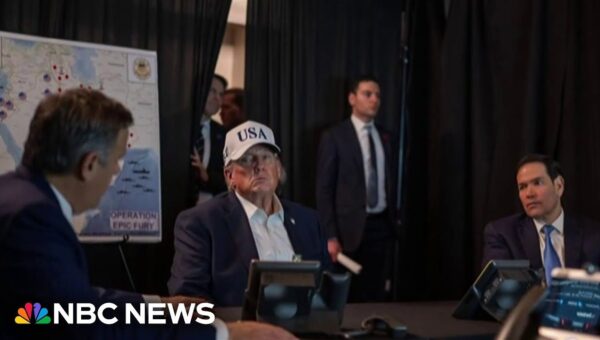
Trump: Iran Strikes Ahead of Schedule, Expects ‘Great Deal for World’
Three U.S. service members have been killed amid escalating conflict with Iran, President Trump confirmed. He stated that strikes are ahead of schedule, with senior Iranian leaders killed, and expressed optimism for a "great deal for the world" despite ongoing talks with Iranian officials.
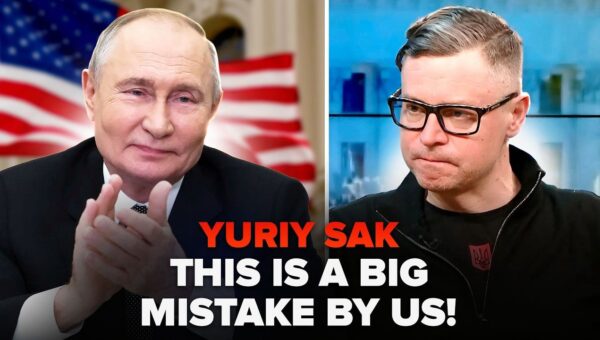
Trump’s Putin Stance: US Strategy and Global Implications
Analysis suggests Donald Trump's approach to the Ukraine war involves pressuring Kyiv, but US involvement is crucial for resolution. China's influence and the 'MAGA' agenda's geopolitical implications are key factors.


US Strikes Iran: Mounk and Fukuyama Discuss Unpredictable Conflict
Leading political scientists Yascha Mounk and Francis Fukuyama analyze the recent US strikes on Iran, warning of unpredictable outcomes and internal instability. They question the objectives of the "war of choice" and its potential to destabilize the region, while also discussing the shifting global perceptions of Israel.