Ukraine Offers Drone Defense Expertise Amid Iran Conflict
Ukraine is offering its hard-won expertise in defending against Iranian-made Shahed drones to the US and Middle Eastern countries. This strategic move leverages Ukraine's experience and could influence Western military aid. The offer highlights the growing interconnectedness of global conflicts and the evolving nature of modern warfare.

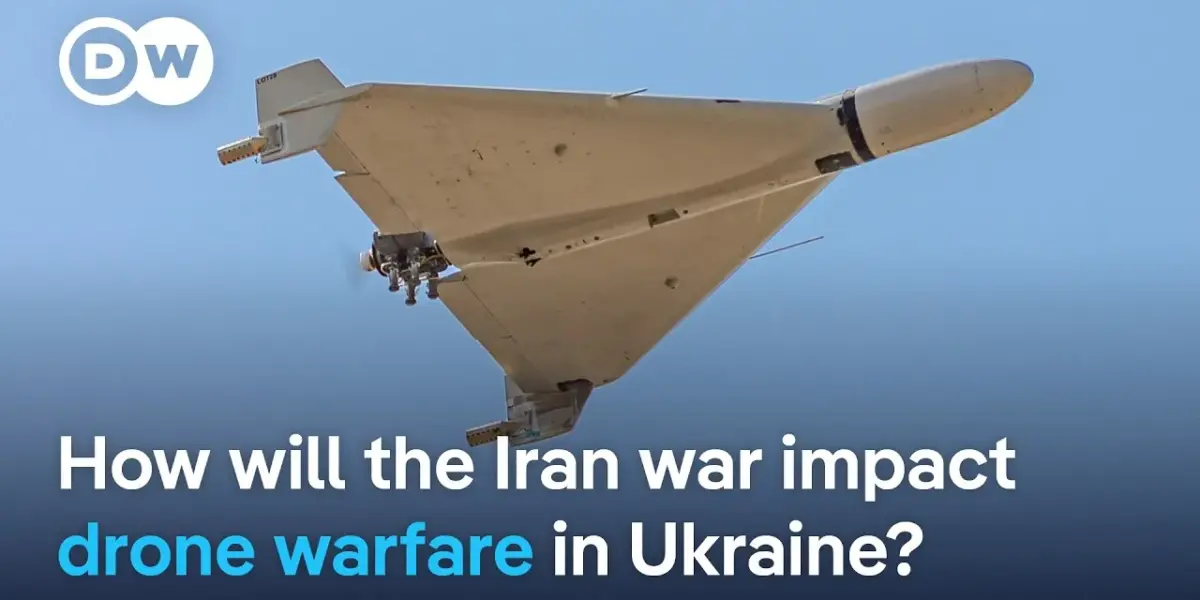
Ukraine Shares Drone Warfare Lessons Amidst Middle East Tensions
As the conflict in the Middle East intensifies, Ukraine has stepped forward to offer its hard-won expertise in defending against Iranian-made Shahed drones. Ukrainian President Volodymyr Zelensky announced on Sunday that his country would share its experience and send experts to advise the United States and Middle Eastern nations on repelling drone attacks. This offer comes as Iran has launched thousands of drones following attacks by the US and Israel over the past week.
Zelensky’s Strategic Offer: Leveraging Experience for Support
Speaking in Kyiv alongside the new Dutch Prime Minister Rob Jetten, President Zelensky stated, “As you all know, countries in the Middle East and the United States have asked Ukraine for support. We will provide them with the necessary means. First and foremost, expertise and the experience of our military in defending against Shahed drones and cruise missiles.”
Ivana Stratner, a research fellow at the Foundation for Defense of Democracies Russia program in Washington, highlighted the strategic importance of this move. “Zelensky understands perfectly that Russia and China and Iran are working together,” Stratner explained. “He experienced that axis of aggressors how they have been impacting Ukraine. Now he’s willing to use that expertise and to help the United States and America’s allies to defend themselves.”
The Economic and Strategic Calculus of Drone Warfare
Stratner elaborated on why this expertise is so valuable. “Drones are extremely cheap and to intercept them… It’s extremely expensive. So that’s precisely what Ukraine has developed quite, you know, cheap ways of defending itself from such weapons.” She also pointed out a crucial strategic benefit for Ukraine: “It is extremely important for Ukraine to use that also as leverage when it comes to negotiations.”
Ukraine has faced significant Russian attacks on its critical infrastructure, often employing ballistic missiles and drones. The West has sometimes cited capacity limitations or fears of escalation as reasons for hesitating to supply Ukraine with certain advanced weaponry, such as long-range missiles capable of striking Russian drone production facilities. Zelensky’s offer to share drone defense knowledge could shift this dynamic.
“The argument that the West had either we don’t have capacity to help you… which is exactly why Russia has been working very hard to ramp up that. So Zelensky can also now use his knowledge but also his expertise use that as leverage with the United States to… maybe ask the American president to help with all the weapons that Ukraine actually needs.”
Ivana Stratner, Research Fellow, Foundation for Defense of Democracies
A New Generation of Warfare and Russian Strategy
Stratner also discussed the broader implications of what she termed “new generation of warfare.” She described Russia’s approach as a form of hybrid warfare, operating below the threshold of direct conflict through activities like cyberattacks, sabotage, and disinformation. This strategy aims to test Western resolve and potentially create divisions within alliances like NATO.
The expert warned against underestimating Russia’s long-term goals. “Putin’s ultimate goal is truly to rewrite a global order and what he likes to talk about, put forward a multipolar world,” Stratner noted. “He does not need to send tanks and jets to any of the western capitals… All he really has to do is to push forward with his new generation of warfare.”
Russia’s Complicated Relationship with Iran
Turning to the conflict in Iran, Stratner addressed Russia’s position. While Russia and Iran are considered strategic partners, Putin’s primary focus remains the war in Ukraine. “Make no mistake, Putin is not willing to provide any meaningful support to Iran,” Stratner asserted, despite reports of intelligence sharing.
Stratner pointed out potential risks for the Kremlin, including the unpredictable consequences of regime change in Tehran and the damage to Russia’s reputation. She likened Putin’s approach to allies to a dangerous form of support: “With friends like Putin, who needs enemies?” She referenced Russia’s past actions in Syria and Venezuela, and its inaction during the conflict between Armenia and Azerbaijan, as examples of Putin potentially abandoning allies.
However, Stratner cautioned against excessive optimism, acknowledging that Russia still holds leverage over Iran. The dynamics with China and North Korea, forming an “axis of aggressors,” remain critical factors. Russia’s attempt to position itself as a mediator in the Iran conflict was dismissed as ironic, akin to “asking an arsonist to help with fire.”
Intelligence Sharing and Western Complacency
Regarding reports of Russia sharing intelligence with Iran, Stratner confirmed that while hard power support is unlikely, intelligence cooperation is expected to continue. She noted that the West is largely aware of such exchanges, suggesting that the intercepted information provides valuable insights.
Stratner expressed concern that the current focus on the Middle East could distract from Ukraine. “Russia is very happy about what’s happening with Iran… because we are now spending our weapons over there. We are focusing on what’s happening in Iran. And Putin is hoping that we are going to forget about Ukraine,” she stated. Putin’s long-term strategy relies on exhausting Western support for Ukraine, particularly in the event of a change in US leadership.
Ultimately, Stratner urged a more connected view of global events. “We have to always zoom out and to connect the dots because we like to think about all those events as separate events, but that’s actually not how things operate.”
Looking Ahead
As the geopolitical landscape continues to shift, the effectiveness of Ukraine’s drone defense expertise in the Middle East and its impact on Western military aid will be closely watched. The evolving strategies of the Russia-China-Iran axis and their implications for global stability remain critical areas for continued observation.
Source: What does the Iran war mean for Russia – and Ukraine drone warfare? | DW News (YouTube)

Related Articles


Iran Appoints New Leader Amid Escalating Global Tensions
Iran has appointed Mojtaba Khamenei, son of the former leader, as its new Supreme Leader amidst escalating international conflict. The war has driven oil prices to record highs, impacting global markets and American consumers. Meanwhile, the U.S. military toll rises, and travel faces significant disruption due to the government shutdown.
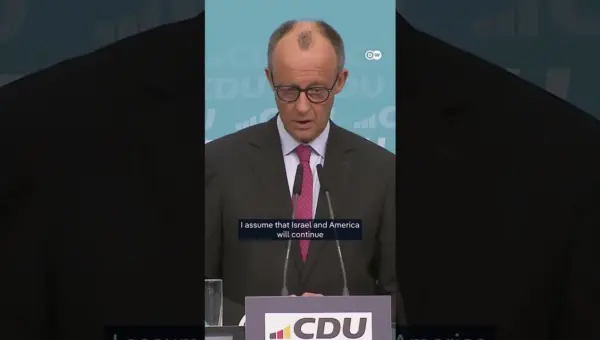
Merz: “Iran is the center of international terrorism, and must be shut down”
CDU leader Friedrich Merz has labeled Iran the "center of international terrorism" and called for the downfall of its current regime. Merz argued that regime change in Tehran is the quickest path to ending regional conflicts and that Iran's support for groups like Hamas and Hezbollah makes it a primary threat.

US Mulls Iran Ground Troops, Draft Amid Escalating Tensions
The White House is reportedly considering extreme military options against Iran, including the potential deployment of ground troops and even a military draft. Retired Colonel Jack Jacobs expressed skepticism about a draft but discussed limited scenarios for special forces raids.