Ukraine Jails Women Who Aided Russian Invasion
Inside a Ukrainian prison, women convicted of treason and collaboration with Russian forces serve lengthy sentences. While some express regret, others maintain their actions were justified, revealing complex motivations and a deep societal divide. The facility offers a rare glimpse into the lives of those who sided with the aggressor.

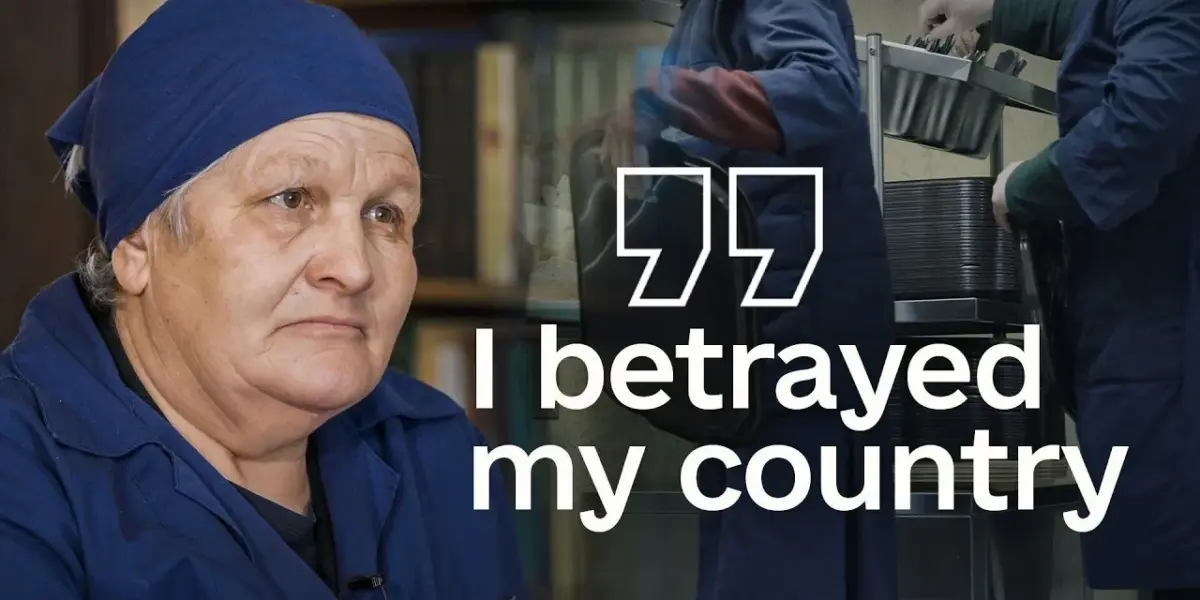
Ukraine Jails Women Who Aided Russian Invasion
In the southeastern region of Ukraine, a unique prison colony houses women convicted of treason and collaboration with Russian forces. These individuals, who voluntarily chose to assist the aggressor nation, are now serving lengthy sentences, often exceeding ten years. However, an alternative path exists: exchange for Ukrainian citizens held captive by Russia. This report offers an inside look into the lives of these prisoners and seeks to understand the motivations behind their choices.
The Rise of Collaboration Charges
Incidents of Ukrainians aiding Russian forces first surfaced following the initial territorial occupations in 2014. It wasn’t until Russia’s full-scale invasion in 2022, however, that Ukraine formally integrated collaboration charges into its criminal code. Since then, over 2,600 Ukrainian citizens have been convicted of collaboration. The severity of these crimes ranges from continuing employment as a teacher under occupation to providing intelligence that led to deadly attacks. While many convictions have occurred in absentia, some are now serving their sentences within Ukrainian correctional facilities. This specific penal colony is the sole institution in Ukraine exclusively for women convicted of treason.
Life Inside the Colony
Prisoners within the colony engage in unpaid work for two hours daily, a mandatory requirement under Article 118, Part 5 of the Criminal Executive Code of Ukraine. This labor includes self-service tasks and maintaining the cleanliness and order of the surrounding territory.
“As you can see, the convicted are working on a gratuitous basis for two hours, as provided for by the norms of the Criminal Executive Code, in particular Article 118, Part 5. It is their duty to perform self-service work and work to ensure the proper condition of the adjacent territory and improvement.”
One former resident, identified as Nelia, described her involvement. She was tasked with distributing flyers and conducting surveys, asking residents whether they wished to join the Kherson region. Her participation was brief, lasting only one day.
When questioned about payment for her work, Nelia remained evasive, stating only that everything was done officially. Her children had reportedly urged her not to participate, but she proceeded nonetheless.
Complex Motivations and Denials
Nelia, who is serving a one-year sentence, has a history of prior military service in Ukraine and spent a decade in Russia. She was convicted of acting as an agent for Russia’s Federal Security Service (FSB) in 2020.
When asked why her sentence was 15 years, Nelia initially responded, “Because I love Russia.” However, the court documents indicate her conviction was for disseminating information and passing it to a Russian operative, not solely for her personal sentiments.
Nelia contested the verdict, claiming it was fabricated by the prosecution and the Security Service of Ukraine (SSU). She questioned the fairness of the process, asking, “Who listens to us? Who listens to us? Did you see what kind of grandmothers are here?”
Court documents reveal that another inmate, Olena Chuyeva from the Donetsk region, not only shared information about the movement of Ukrainian troops but also provided Russian special services with the coordinates of local kindergartens and schools. One of these locations was targeted by Russian forces in August. In exchange, a Russian handler reportedly promised her a position in the Russian occupation administration. She was also sentenced to 15 years.
Olena explained her actions by stating, “Where were the Ukrainian military? I wrote it in emotion. It was just correspondence. I was just communicating with a person. Maybe he was from that side, but I didn’t think he was a military man or who was there, that I didn’t think about it.”
Judicial Perspective and Prisoner Psychology
Officials suggest that many convicted individuals struggle to accept the reality of their actions.
“Most likely, the convicted do not accept the crime committed, they cannot accept it in reality. Well, they write to the courts, they apply for legal assistance, they consult with representatives of legal aid bureaus. Lawyers also provide consultations, as they believe that they have not done anything significant. Well, in essence, their actions, they simply, I think, did not see the consequences of their actions. And it seems to them, well, what’s the big deal? Well, I talked, I called, I said, I said, but certain actions of theirs were assistance to the aggressor.”
A Glimmer of Hope: Exchange Program
Despite their convictions, these women have a chance to be released early through a state program that facilitates their transfer to Russia. This program, initiated in 2024, allows for the departure of collaborators to Russian territory in parallel with the return of Ukrainians from Russian captivity. Ukraine, under its legal framework, cannot officially exchange civilians for prisoners of war.
Approximately 50 individuals have been transferred to Russia under this program. However, the slim chances of release for most collaborators hinge on Russia’s willingness to accept them. The program serves as a stark warning to others considering collaboration.
“So, with this scientific example, we show everyone that even if you are thinking about cooperating with the enemy, it is a bad idea. It will not lead you to anything good.”
Contradictions and Reconciliation
Conversations with the interviewed prisoners revealed profound dissonance. Many expressed love for Ukraine and wished it well, yet their actions directly contributed to the war against it. For the Ukrainian reporter, engaging with these collaborators was a challenging but necessary task, highlighting the complex realities of the ongoing conflict.
The reporter noted the variety of toys made by the prisoners, including a unique cow sculpture, some of which visually represent remorse. “Several times a week, they can call their families, but calls require an additional fee.”
One prisoner, expressing a desire to return to Russia, stated:
“Ukraine is on a European path, you understand? In Europe, the mentality is completely different. And I was born in the Soviet Union. The mentality is the same as in Russia. You understand? The same faith, which is the Gregorian calendar. Well, I can’t, you understand? Holidays like March 8, February 23, May 9, Victory Day. That’s all. Well, what else is left for me, how much is left for me, I just want to live in such a world.”
She further elaborated on her perception of Ukraine changing after 2014, citing issues like same-sex marriage as contrary to her beliefs. “I don’t think I betrayed Ukraine. I want good for Ukraine. That’s how I’ll put it. Yes, I want to be with my people. Yes, I want to go to my homeland. Yes, I want to go to the Russians. I love Russia. I want to go home to Russia. I am Russian, although, forgive me, I loved Ukraine. The one that had two seas, the one that had forests and fields, and the one that spread black soil bread.”
Another prisoner acknowledged her guilt, stating, “I feel my guilt, that I kind of betrayed [Ukraine] immediately.” She added, “Of course, they said that you didn’t understand the country, all that. Well, now you probably understand. Before, you probably didn’t understand.”
Looking Ahead
The existence of this prison colony and the ongoing legal processes underscore Ukraine’s commitment to holding collaborators accountable. The potential for prisoner exchanges, while offering a route for some, also highlights the complex geopolitical dynamics at play. As the war continues, Ukraine remains focused on justice for those who aided the enemy, while also navigating the intricate pathways for the return of its own citizens.
Source: Inside a Ukrainian prison for women who sided with Russia (YouTube)

Related Articles
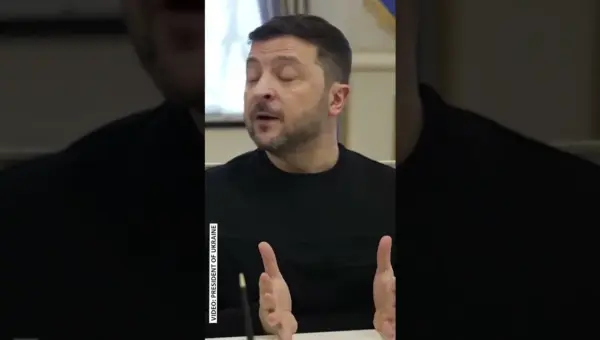
Zelensky’s Bold Stance: Refuses Russian Oil, Warns EU Blocker
Ukrainian President Volodymyr Zelensky has publicly refused Russian oil, citing ethical principles and the ongoing aggression against his country. He also issued a stark warning to any EU official blocking vital weapons aid, threatening to expose their address to the Ukrainian armed forces.

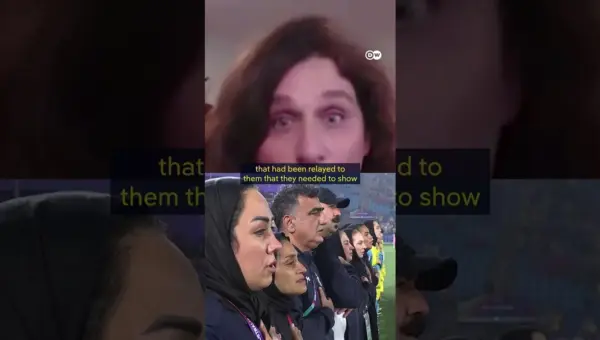
Iran’s Women Footballers Labeled ‘Traitors,’ Face Death Penalty Fears
Iran's women's national football team is reportedly facing death penalty threats after appearing to protest their national anthem. The team's subsequent change in behavior suggests intense government pressure, sparking international concern for their safety and calls for asylum.

Putin’s Grip Weakens: Internal Strife Rises Amidst Geopolitical Tensions
Vladimir Putin's regime faces unprecedented internal pressure as economic strain and elite infighting escalate. The Russian President is reportedly manufacturing external threats and domestic fear to consolidate power, while geopolitical maneuvers and crackdowns on dissent signal a weakening grip. Despite these efforts, Russia's ongoing losses in Ukraine cast doubt on the long-term stability of Putin's leadership.