Ukraine Hits Oil Terminals, Halting 40% of Exports
Ukraine has successfully targeted Russia's oil export terminals, disabling 40% of the nation's export capacity. This strategic shift follows an evolving campaign against Russian energy infrastructure, now focusing on the limited number of export facilities to maximize disruption.

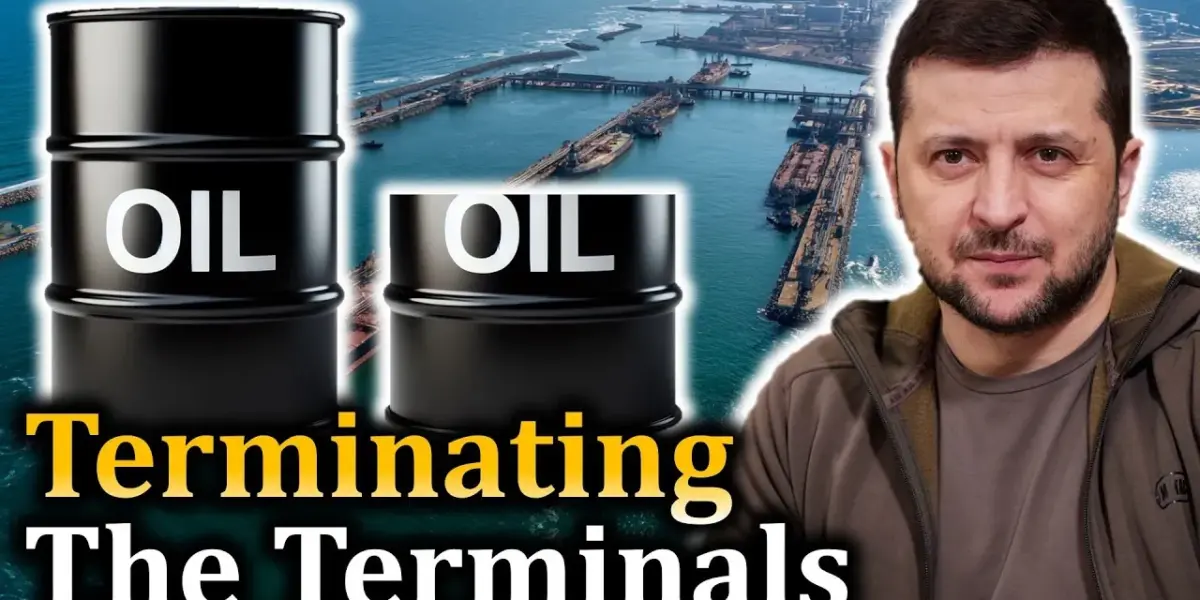
Ukraine Strikes Russian Oil Terminals, Disrupting 40% of Exports
Ukraine has launched a series of significant drone attacks targeting Russia’s vital oil export terminals. These strikes have effectively disabled approximately 40% of Russia’s oil export capacity. This action represents a major shift in Ukraine’s strategy and appears to counteract recent gains Russia may have expected from disruptions in global oil supply.
Evolving Ukrainian Strategy Targets Key Infrastructure
Ukraine’s campaign against Russian energy infrastructure has evolved over time. Initially, the focus was on oil refineries, which are critical for processing crude oil into usable fuel like gasoline. Destroying refineries wastes the resources and labor used to extract and transport the crude oil. These facilities, often containing large tanks of flammable liquids, were seen as relatively vulnerable targets for early long-range drone attacks. A small explosion could trigger a larger fire, disabling the facility.
Later, intelligence, reportedly with assistance from the CIA, helped Ukraine identify specific parts of refineries that were difficult for Russia to repair. This allowed for more precise targeting to maximize the impact of each strike. U.S. intelligence also aided in planning drone flight paths and understanding Russian air defense systems, helping Ukraine to avoid detection.
The United States viewed this strategy favorably, as it reduced the amount of Russian oil available on the global market. As a net oil exporter, the U.S. largely saw this as an economic neutralizer, even if it caused minor fluctuations in domestic gas prices.
Second Phase: Targeting Tankers and Shipping Routes
With refineries damaged, Russia sought to export its excess crude oil. However, the global tanker market was not prepared for this shift. Russia’s previous main export route was to Europe, involving shorter tanker journeys. Now, tankers were forced to travel much longer distances to markets like India and China.
This lengthening of supply lines was further complicated by the conflict in the Red Sea, where Houthi attacks threatened shipping through the Bab el-Mandeb Strait. Many tankers opted for the longer, safer route around Africa. Simultaneously, oil previously destined for China from the Middle East began rerouting to Europe, adding further strain to global shipping capacity.
To maintain previous shipping rates, a significant increase in the number of available tankers would have been necessary, which was not feasible. Ukraine’s strategy shifted to targeting these “shadow fleet” tankers. Destroying a tanker, even an empty one, could strand oil waiting at ports for shipment. The absence of readily available replacement tankers meant that oil could be effectively blocked from reaching its destination.
Hitting moving tankers at long distances presented a considerable challenge. The transcript suggests that European nations could have played a role by enforcing international sanctions and safety regulations on these tankers, a task Ukraine viewed as more suited to diplomatic partners.
Recent Strikes Target Export Terminals
The latest phase of Ukraine’s campaign, occurring in late March, has focused on Russia’s oil export terminals. While export terminals had been identified as targets earlier, hitting those along the Baltic Sea, such as Primorsk and Ust-Luga, is difficult due to the long distances involved. These terminals are also harder to damage than refineries or tankers, requiring larger explosive payloads on drones.
On March 22, Ukraine attacked the Primorsk oil terminal, targeting its loading berths and igniting several tankers. Primorsk typically exports one million barrels of oil per day, which is now accumulating on land. This was followed by a larger drone assault on March 25 against the neighboring Ust-Luga terminal, and potentially a secondary strike on Primorsk. These attacks suspended operations, possibly due to damage to the Ust-Luga rail system, and resulted in further suspended shipments, removing approximately 700,000 barrels per day from the market.
A subsequent strike on Ust-Luga on March 27 aimed to prolong the disruption. These combined attacks on Primorsk and Ust-Luga have halted 40% of Russia’s total oil export capacity. This disruption has more than offset the economic impact of Iran’s closure of the Strait of Hormuz on global oil prices.
Strategic Implications and Future Outlook
The disabling of 40% of Russia’s oil export capacity is a significant development. It not only impacts Russia’s revenue but also influences global oil markets. The price of West Texas Intermediate, a benchmark crude oil, has seen changes that suggest the Ukrainian strikes have counteracted the market effects of the Strait of Hormuz closure.
Questions remain about the extent of U.S. involvement in these latest strikes. While the current U.S. administration has shown reluctance to implement policies that could raise gas prices, intelligence agencies might still be providing information to Ukraine. The sustainability of these attacks is also a key consideration. Russia is likely to work to repair the damaged terminals and may bolster defenses, potentially including air defense systems in Belarus, given that some Ukrainian drones reportedly flew over the “Union State” territory.
Despite some drones going off course and causing minor incidents in Latvia and Estonia, the overall campaign demonstrates Ukraine’s ability to adapt and execute complex long-range strikes. The focus on export terminals represents a strategic shift to target Russia’s limited and hard-to-replace infrastructure, aiming for a more lasting impact on its war-fighting capability.
“Ukraine has adapted its energy infrastructure campaign as the war evolves. Currently, the export terminals are Russia’s weak point. Ukraine has temporarily taken 40% of that capacity offline, which more than offsets the economic gain from the Hormuz closure. But the work for Ukraine is not done.”
Source: How Ukraine Paralyzed 40% of Russia’s Oil Export Industry (YouTube)

Related Articles


Iran Hacks Trump Official Amid Escalating Global Tensions
Iran has reportedly hacked into the emails of a former Trump administration official, raising security concerns. Meanwhile, US intelligence questions the effectiveness of strikes against Iran, and reports suggest Donald Trump's interest in the conflict is waning. The situation is further complicated by global economic impacts and allegations of bias within the US military.

Trump’s ‘Game Show’ Diplomacy Sparks Mideast Chaos
Analysts are likening Donald Trump's "game show" approach to foreign policy to a natural disaster, arguing his unpredictable tactics have already caused significant damage to global markets and stability. The discussion highlights Iran's strategic advantage and raises concerns about "drift" in British politics regarding finances, energy, and national security.


US War Funding Faces Congress, Iran Conflict Looms
The Pentagon's request for $200 billion for operations against Iran faces significant opposition in Congress, driven by election year concerns and the war's economic impact on Americans. Diplomatic efforts are indirect, and public support remains low, raising questions about the conflict's sustainability and strategic direction.