Ukraine Exports Arms, Becomes Global Defense Player
Ukraine is transitioning from a recipient of military aid to a significant global exporter of defense technologies. Its cost-effective innovations, particularly in drone interception, are attracting partners in Europe and the Middle East, positioning Kyiv as a key player in international security.

Ukraine Shifts from Arms Recipient to Global Exporter
Ukraine is rapidly transforming its role in global defense, moving from a nation solely reliant on foreign aid to a significant exporter of its own military technologies. This strategic pivot, enabled by the lifting of export bans on Ukrainian-developed arms, marks a new era for the country’s defense industry and its geopolitical standing.
Kyiv’s Defense Tech Gains Global Traction
In a significant development, Ukraine has officially begun exporting its defense technologies and weapons. Previously blocked since the full-scale invasion, this move allows Ukraine to not only bolster its own defense capabilities but also to integrate its innovations into the systems of allied nations. This transition is seen as a testament to Ukraine’s rapidly growing military expertise, which some analysts suggest is outpacing even that of some European allies.
“Our army and our capabilities are growing with a speed that basically some of European allies cannot match even today.”
Europe Faces New Threats, Seeks Ukrainian Solutions
The changing nature of warfare, characterized by large-scale drone and missile attacks, poses a growing threat to European capitals. Recent warnings suggest cities like Helsinki and London could be vulnerable. Russia’s ability to launch hundreds, even thousands, of drones in a single day highlights the strain on existing air defense systems. European allies are reportedly struggling to replenish their stockpiles, as intercepting cheaper drones with expensive missiles proves economically unsustainable.
This vulnerability has spurred European nations to seek more cost-effective solutions. Ukraine’s experience in defending against these persistent attacks is proving invaluable. Countries like Germany, France, and Britain are actively seeking to incorporate Ukrainian systems and learn from their tactics, which often involve innovative, AI-assisted methods and multi-layered defense strategies.
Cost-Effective Drone Interception: The Ukrainian Advantage
A key area where Ukraine excels is in developing affordable methods to counter expensive threats. While a Shahed drone might cost around $30,000, Ukrainian interceptors can range from $1,000 to $3,000. This significant cost-benefit difference is a major draw for European partners. The development of technologies like the British-Ukrainian “Dragonfly” laser system, designed for drone interception, further illustrates this push for cost-effective defense.
Ukraine’s Export Partnerships Expand
Ukraine is actively forging defense partnerships beyond its traditional European and American allies. Contracts are in place with Germany, Denmark, the United Kingdom, Norway, Sweden, and the Baltic states. Notably, Ukraine has also signed defense agreements with Saudi Arabia, the UAE, and Qatar. These Middle Eastern nations are keen to acquire Ukrainian technology to defend against drone attacks, particularly those originating from Iran, which target critical infrastructure like oil and gas facilities.
The collaboration extends to joint production, with Ukrainian President Zelenskyy negotiating the construction of drone factories in Saudi Arabia. This signifies a deeper cooperation than mere arms sales, involving investment in technology, infrastructure, and personnel.
Strategic Implications: Ukraine as a Global Defense Hub
Ukraine’s emergence as a defense exporter has profound strategic implications. Firstly, it provides a vital new revenue stream and strengthens its own defense industrial base, crucial for sustained defense against Russian aggression. Secondly, it positions Ukraine as a key player in global security, influencing defense strategies and supply chains worldwide.
The ability to rapidly test and deploy new technologies on the battlefield within weeks provides an unparalleled advantage. This battlefield validation is something few other nations, perhaps only Israel with its decades of conflict experience, can match. For Europe, partnering with Ukraine offers a more affordable and agile alternative to traditional defense suppliers, helping to advance European defense autonomy.
Challenges and Risks in Defense Exports
Despite the opportunities, challenges remain. Ukraine must carefully manage its export strategy to avoid intellectual property theft. There is a concern that European or Middle Eastern partners might replicate Ukrainian technologies without fair compensation or adequate benefit to Ukraine. The influx of investment, such as an Emirati company reportedly seeking a 30% stake in a Ukrainian defense firm valued at $2.5 billion, raises questions about maintaining control over key national assets.
Furthermore, ensuring the rule of law and strengthening legal institutions are critical for Ukraine to protect its innovations and engage in fair international trade. Lawyers are reportedly interested in these partnerships, but Ukraine needs to enhance its legal expertise to navigate complex international agreements and defend its intellectual property effectively.
Russia’s Interference and Counter-Productive Tactics
Russia actively attempts to disrupt these developments through hybrid warfare, including infiltration, sabotage, and disinformation campaigns. By spreading narratives of Ukrainian weakness or corruption, Moscow aims to deter foreign investment and cooperation. However, these actions may be backfiring, inadvertently pushing European and Middle Eastern nations closer to Ukraine and solidifying their resolve to bolster Ukrainian defense capabilities.
Russia’s own attempts to copy Ukrainian innovations are hampered by its centralized, authoritarian system, which restricts free information flow and discourages talent. This contrasts sharply with the collaborative and innovative environment fostered in democracies.
The Future of European Defense and Ukraine’s Role
Ukraine’s eventual integration into the European Union is expected to further streamline defense cooperation. Its combat-tested soldiers and battle-hardened military are seen as invaluable assets for European security, particularly in the face of a long-term threat from Russia. Ukraine is increasingly viewed not just as a recipient of security support but as a vital contributor to collective defense.
The development of Ukraine’s own missile defense systems by 2027 could be a significant turning point, offering the potential for air dominance and fundamentally altering the strategic balance. As Ukraine continues to innovate and export, it is not only winning its own war but also fundamentally reshaping the global defense landscape.
Source: 💥Putin is scared! Kyiv is striking Russia hard. NATO has issued an urgent order (YouTube)

Related Articles

Ukraine Strikes Deep: Russia’s War Machine Falters
Ukraine's strategic strikes deep within Russia are crippling its war machine, leading to a 93% drop in Russian territorial gains over two months. Economic strain, infrastructure decay, and technological innovation by Ukraine are placing immense pressure on the Putin regime.
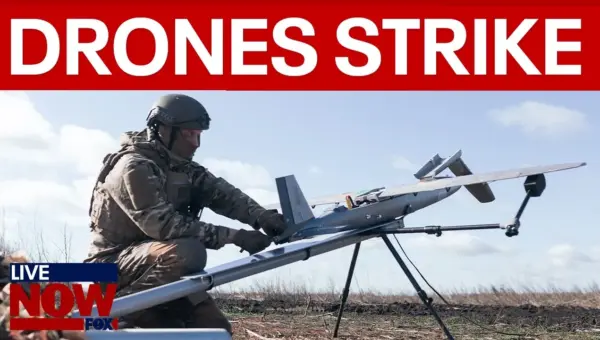
Ukraine Downs Iranian Drones, Signals Shifting Global Power
Ukrainian forces have successfully downed Iranian-made drones, marking a significant shift in the ongoing conflict. This development highlights Ukraine's evolving defensive capabilities and Iran's expanding role as a global arms exporter, while diplomatic talks face major challenges.
Russia Faces ‘Disaster’ as Ukraine Strikes Deep
Former CIA analysts suggest Russia is facing a "disaster" as Ukrainian drone strikes hit deep within its territory, challenging its security. They detail Putin's miscalculations, Russia's economic fragility, and Ukraine's strengthened national identity. The discussion also touches on the complexities of security guarantees and the potential long-term benefits of Middle East instability for Ukraine.