UK Water Firms “Lost Sight” of Public Service Duty
Britain's water companies have "lost sight" of their core purpose, prioritizing profit over public service, according to Alistair Carmichael MP. Amidst a sewage dumping scandal, Carmichael suggests special administration as a potential solution to reform struggling firms.

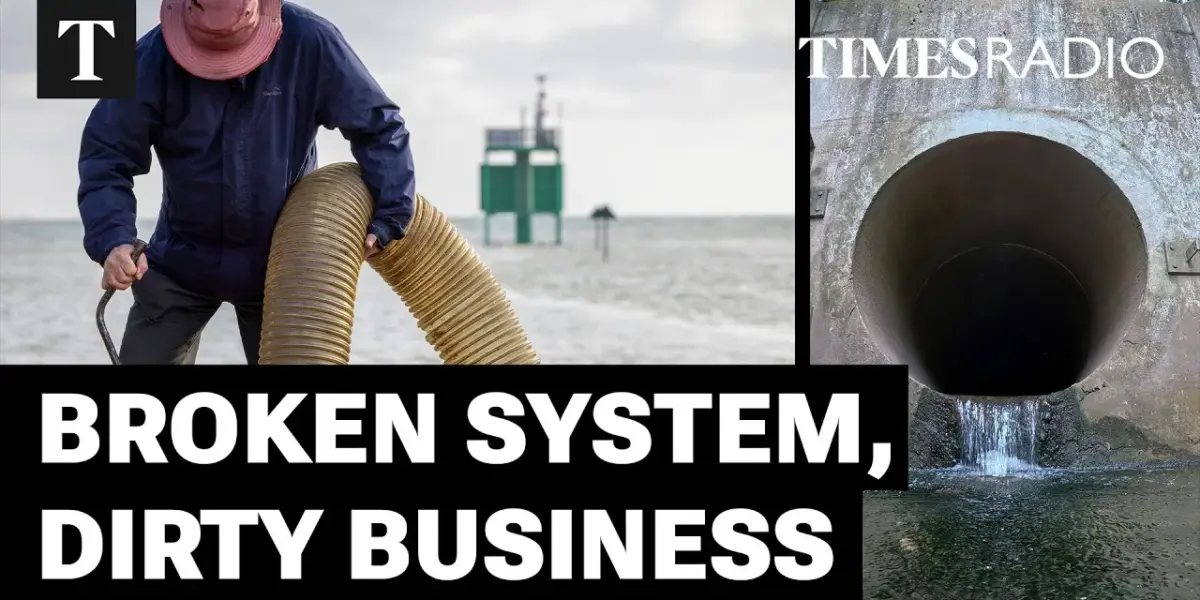
UK Water Companies Accused of Prioritizing Profit Over Public Service
Alistair Carmichael, a Liberal Democrat MP and chair of the Environment, Food and Rural Affairs Committee, has sharply criticized Britain’s water industry, stating that companies have “completely lost sight of its own core purpose.” Speaking on Times Radio, Carmichael argued that these essential service providers are behaving more like high-flying investment operations than public utilities responsible for a fundamental commodity vital for life.
Sewage Scandal Fuels Public Outrage
Carmichael’s comments come amid widespread public anger over the ongoing sewage dumping scandal in the UK’s rivers and seas, brought to light by Channel 4’s “Dirty Business” investigation. A petition demanding action against profit-driven pollution is gaining significant traction, highlighting the depth of public frustration.
While corporate greed and political inaction are seen as major factors, Carmichael suggests a more complex picture. He points to the challenges of maintaining Victorian-era infrastructure, decades of regulatory failures, and trade-offs the public has not yet fully confronted.
“Lost Sight of Core Purpose”: An Industry Out of Touch
Carmichael expressed strong understanding for the public’s call for nationalization, stating, “Oh, 100%.” He elaborated on his view of the industry’s misplaced priorities:
“What you have got here is an industry that has completely lost sight of its own core purpose. They behave like they are some sort of high-flying hedge fund investment banking operation instead of people who should be providing a public service. One of the most fundamental commodities utilities that we need for the maintenance of life.”
He criticized the current model where companies are allowed to reap high rewards for what should be low-risk investments. Carmichael advocates for a return to an industry focused on the long term, accepting lower rewards for lower risk.
Public Ownership: A Last Resort?
When asked about supporting public ownership, Carmichael described it as a potential “last resort.” He cautioned that nationalization would not be a quick fix and could prove expensive. While acknowledging figures in the tens or even hundreds of billions of pounds for public ownership and necessary investment, he dismissed some of the specific figures discussed for companies like Thames Water as “fanciful.”
Alternative Solutions: Special Administration
Carmichael proposed an alternative approach: special administration. This is an insolvency process for public utilities. He explained how this could work:
- A company like Thames Water, burdened with billions in debt, could be placed into special administration.
- The company would then re-emerge debt-free.
- It could be reconstituted as a not-for-profit organization or a mutual company.
This method, he believes, would avoid the complexity and historical issues of poor regulation, management, and debt. Carmichael also sees this as a signal to other companies whose parent firms extract money through loans at high interest rates, even if they claim not to take dividends.
A Culture of Avoidance and Lack of Accountability
Carmichael expressed skepticism about the government’s current approach, particularly the recommendations from Sir John Kliff’s review. He fears these may not fundamentally change the industry’s culture. Carmichael highlighted past government attempts to curb executive bonuses for underperforming companies, which were simply circumvented.
Describing his encounters with water company executives, Carmichael used the word “shifty” to characterize their demeanor. He recounted an instance where the non-executive chairman of Thames Water “misspoke” to a committee, providing information that was not true. After further questioning, significant information was eventually obtained.
Carmichael stated the prevailing culture views accountability as an inconvenience. These companies, he argued, see themselves as private entities accountable only to shareholders. However, he noted that even shareholders often fail to hold management accountable, indicating failures at all levels: management, regulation, and corporate governance.
He suggested that non-executive directors should play a more active role in protecting customer and investor interests. However, he described the system as an “old boy club,” where asking difficult questions might jeopardize future board appointments.
Fines and Infrastructure Investment
Regarding the effectiveness of fines, Carmichael agreed that there is public support for punishing bad practices. However, he warned that large fines paid to the treasury do not necessarily fund infrastructure improvements. He proposed a more sensible approach where fines are levied but then directed back into repairing the damage caused by the water companies.
What Comes Next?
Carmichael’s frank assessment underscores the deep-seated issues within the UK water industry. While the government’s preferred solutions are still being determined, the push for greater accountability and a return to public service values is gaining momentum. The effectiveness of regulatory measures and the potential for alternative structures like special administration will be crucial in determining the future of Britain’s water supply and environmental protection.
Source: Britain's Water Industry Has 'Lost Sight' Of Its 'Core Purpose' | Alistair Carmichael (YouTube)

Related Articles


Bitcoin Eyes $100K as Institutions Flood In
Bitcoin is showing strong signs of recovery, with predictions of reaching $100,000 within a year, driven by major institutional inflows and favorable regulatory changes. Charles Schwab's entry and BlackRock's ETF success highlight growing adoption, while concerns over U.S. debt may also boost Bitcoin's appeal as an inflation hedge.

Politicians Clash Over ‘Nazi Streak’ Comments and Leaks
A heated debate erupts over a political appointee's alleged "Nazi streak" comments and the leaking of private messages. Politicians clash over accountability, with accusations of hypocrisy and deflection flying. The incident highlights broader issues of ethical conduct in public office.


Wall Street Eyes DeFi: ETFs Trade Votes for Capital
Major asset managers are filing for billions in altcoin ETFs, promising huge capital inflows. However, this institutional adoption could lead to the concentration of voting power, potentially undermining the decentralized nature of these networks. The market celebrates the capital, but developers warn of a "centralization trap" that could lead to regulatory reclassification.