UK-US Military Ties Strained by Slow Response to Iran Crisis
The UK's slow response to U.S. requests for support in the Strait of Hormuz has reportedly strained military-to-military relations, raising concerns about the "special relationship." Experts point to significant defense capability gaps, particularly in maritime mine countermeasures, and the broader implications for NATO's European pillar.

UK-US Military Ties Strained by Slow Response to Iran Crisis
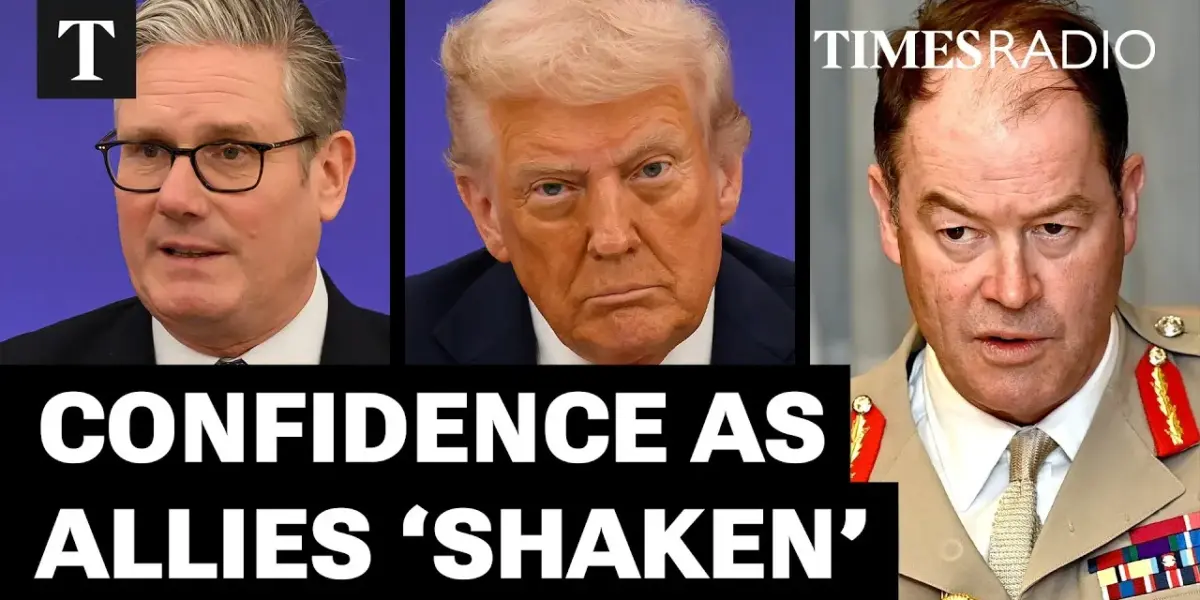
The United Kingdom’s response to urgent U.S. requests for military support in the Strait of Hormuz has reportedly caused significant concern within American defense circles, potentially tarnishing a cornerstone of the “special relationship.” Insiders suggest that Britain’s delayed commitment to providing critical basing, operational, and overflight access, particularly concerning facilities like Diego Garcia and RAF Fairford, has shaken confidence among U.S. military and establishment figures. This hesitation comes at a time when President Trump has publicly expressed frustration with allies’ contributions to maritime security in the vital shipping lane.
Erosion of Trust in a Key Alliance
General Sir Patrick Sanders, former Chief of the General Staff and a co-host of The Times’ “The General and the Journalist” podcast, voiced concerns about the implications of the UK’s perceived slow response. While acknowledging the deep and profound intertwined nature of the security institutions and armed forces between the two nations, he highlighted that the military-to-military relationships are now under strain. “Our failure to respond quickly to that has really shaken confidence in parts of the U.S. establishment,” General Sanders stated, adding that this is a “worrying sign.”
The urgency stemmed from requests for support in the escalating tensions with Iran. Despite some U.S. military successes, such as the elimination of key Iranian figures and disruption of capabilities, the broader strategic objective remains unclear, according to Casey BS, Washington Editor for The Times. The fluctuating U.S. stance on the necessity of allied naval support for the Strait of Hormuz underscores the complex geopolitical landscape. BS noted the shift from “too late to send me a ship” to “yes please send me a ship,” indicating a potentially more challenging situation than initially anticipated by the U.S. administration.
UK’s Defense Capability Gaps Exposed
The situation has also brought into sharp focus the UK’s own defense capability gaps, particularly in maritime mine countermeasures. The withdrawal of UK mine-sweeping vessels, partly due to gifting assets to Ukraine and a transition to newer autonomous systems, has left a void. General Sanders explained, “The Royal Navy has long been very good at it and it’s one of the capabilities in the Gulf that the United States really prized.” However, the current fleet is not at a sufficient level to surge into the Gulf for mine-clearing operations, a critical task for securing the Strait of Hormuz.
The reliance on emerging autonomous systems is acknowledged, but the availability of these new assets is limited, and existing capabilities are needed closer to home to counter Russian threats. This creates a dilemma where the UK’s ability to project power and contribute to international security operations is hampered by its domestic defense needs and a capability gap resulting from its transition strategy.
“Our failure to respond quickly to that has really shaken confidence in parts of the U.S. establishment and that now the miltomill relationships are under strain and and that is a worrying sign.”
– General Sir Patrick Sanders
Broader Implications for NATO and European Security
General Sanders emphasized the UK’s continued dependence on U.S. capabilities for the defense of the Euro-Atlantic area. This reliance extends to crucial areas like intelligence sharing and indispensable capabilities within the NATO alliance. The potential for a U.S. strategic re-prioritization away from Europe, a scenario acknowledged in UK defense documents, necessitates a thoughtful approach to maintaining the relationship and developing independent capabilities.
The logistical backbone of NATO’s European pillar, for instance, is heavily dependent on U.S. organizations like the 51st Theater Sustainment Command. As the U.S. potentially shifts its focus, the UK and other European nations must ensure a “graceful decline” of this dependency rather than a “catastrophic one.” This requires proactive contingency planning and investment to fill capability gaps, particularly in areas like air defense, where NATO has publicly acknowledged shortfalls. The current high consumption of air defense interceptors in the Middle East further exacerbates these issues.
A “Reckoning Moment” for UK Defense?
The current events are being viewed by some as a “reckoning moment” for the UK’s defense posture. For years, authoritative voices have warned of the erosion of defense capabilities. General Sanders echoed this sentiment, stating, “We are taking a surprisingly long time to realize to wake up to the fact that that our defense capabilities are are no longer sufficient to the task.” He cited former NATO Secretary General George Robertson’s assessment that the UK is “not safe” and at risk from Russia, particularly through hybrid warfare, cyber-attacks, and sub-threshold capabilities.
The need to bolster conventional capabilities to deter Russia is paramount. “The trick is to avoid ever having to go to war by being strong enough to to prevent it,” General Sanders asserted. The delay in implementing the strategic defense review and publishing a corresponding defense investment plan, which would provide the necessary funding and detail, is seen as a critical bottleneck.
Concerns Over U.S.-Russia Relations and Future Outlook
Adding another layer of complexity are concerns surrounding the relationship between President Trump and President Putin, particularly in light of a recent long phone call. General Sanders expressed worry about Trump’s perceived leniency towards Russia, especially given Moscow’s alleged direct support and intelligence sharing with Iran, which has reportedly led to American casualties. The idea of rehabilitating Russia in this context appears “inexplicable” to him.
Moving forward, the UK government faces pressure to expedite the implementation of its defense review and publish the associated investment plan. The ability of the UK to contribute effectively to international security operations, maintain its alliance with the U.S., and deter potential adversaries like Russia hinges on addressing these critical capability gaps and strategic uncertainties. The coming months will be crucial in determining whether the UK can regain the confidence of its closest allies and bolster its own defenses in an increasingly volatile world.
Source: Military Insiders Worried UK Response To US Requests Tarnishes Operational Relationship (YouTube)

Related Articles

G7 Leaders Clash Over Trump’s Iran Policy Amidst Global Crisis
World leaders at a G7 meeting voiced sharp criticism of Donald Trump's Iran policy, citing concerns over the Strait of Hormuz and a looming global recession. Disagreements emerged regarding strategy and accusations of misinformation, highlighting deep divisions.


Iran Extends Strait of Hormuz Deadline Amid Global Oil Tensions
The U.S. has granted Iran a 10-day extension to reopen the Strait of Hormuz, a critical global oil route. This move comes amid complex negotiations, military actions, and concerns over Iran's strategic leverage and resilience. Lawmakers express frustration over the lack of a clear strategy and potential escalation.


Iran: Regime’s Tactics Shift Global Power Dynamics
Iran's regime is employing strategic tactics, including control of the Strait of Hormuz, to counter U.S. military might. Meanwhile, a U.S. government shutdown paralyzes domestic services, highlighting deep political divisions. These geopolitical shifts, alongside profound personal tragedies, signal a turbulent global landscape.