UK Peer Warns of Ukraine Aid Diversion Amidst Middle East Tensions
Lord Ricketts warns that escalating Middle East tensions could divert critical military aid from Ukraine, exacerbating its air defense shortages. He also cautions against a blind following of US foreign policy and stresses the importance of diplomacy amidst global conflicts.

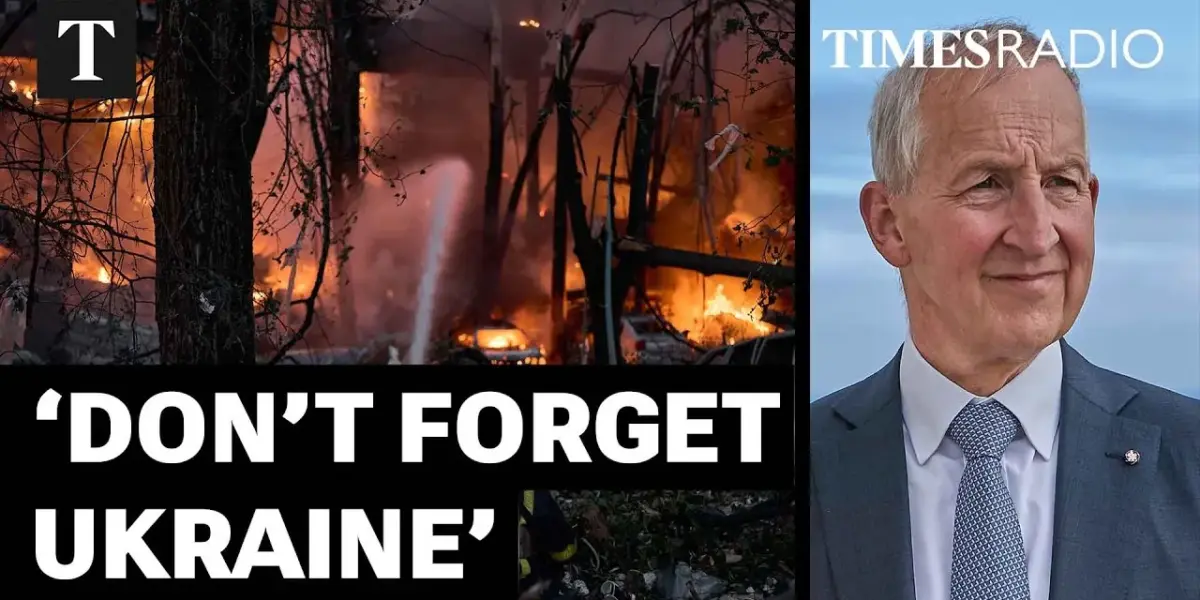
Lord Ricketts Cautions on Shifting Global Priorities
In a candid interview on Times Radio, Lord Ricketts, a distinguished geopolitical expert and crossbench peer in the House of Lords, has voiced significant concerns regarding the potential diversion of crucial Western military aid, particularly from Ukraine, due to escalating tensions in the Middle East. Lord Ricketts, who previously served as the UK’s National Security Adviser and Permanent Representative to NATO, emphasized that the current focus on conflicts involving Iran and its regional activities could have detrimental consequences for Ukraine’s ongoing defense efforts.
Air Defense Shortages and Shifting Alliances
Lord Ricketts highlighted the stark reality of dwindling resources, noting the substantial deployment of Patriot missiles to defend against drone attacks in the Gulf. “Billions of dollars of equipment being fired off, that’s not going to come to Ukraine now,” he stated, underscoring the immediate impact on Ukraine’s air defense capabilities. “And the Ukrainians are already desperately short of air defense missiles. An enormous number have been used in the Gulf. That can only be bad news.”
Adding a layer of irony to the situation, Lord Ricketts pointed out that the United States, after initially appearing to downplay Ukraine’s capabilities in dealing with drone warfare, is now reportedly seeking assistance from Ukraine in anti-drone technology for operations in the Gulf. “Having frankly belittled the Ukrainians for the last year as no hopers with no cards,” he observed, “the Americans are finding actually that the Ukrainians are the most capable country anywhere of dealing with massive drone attacks.”
Debate Over Military Intervention and International Law
The conversation also delved into the recent leak from a National Security Council meeting, with Lord Ricketts expressing his support for robust debate within government on critical national security issues. He recalled the establishment of the National Security Council under David Cameron to ensure comprehensive policy-making, integrating economic, military, foreign, and home affairs considerations.
Addressing the legality and wisdom of potential military strikes against Iran, Lord Ricketts drew parallels with the Iraq War, cautioning against blindly following American policy. “The special relationship cannot mean blindly following the Americans into any policy they decide to pursue,” he advised. He expressed reservations about the legality of attacking Iran without an imminent threat and a clear plan for the military action’s objectives and exit strategy, echoing concerns that have historically plagued such interventions.
While acknowledging that some peers hold a different view, citing Iran’s threat to the region and Israel, Lord Ricketts suggested that negotiations, even with Iran, are possible, referencing past agreements on its nuclear program. He argued that air campaigns are unlikely to topple the Iranian regime or benefit its suffering population, and instead called for renewed diplomatic engagement to de-escalate tensions and encourage better behavior from Tehran.
Economic Ramifications and Geopolitical Strategy
The potential economic consequences of prolonged conflict were also a significant point of discussion. Lord Ricketts acknowledged expert warnings about the profound impact on global economies, including rising inflation and energy prices, particularly if the Strait of Hormuz remains disrupted. He speculated that market pressures and domestic concerns might compel a swift resolution to the intensive air attacks.
However, he posited that Israeli Prime Minister Benjamin Netanyahu might have an interest in prolonging the conflict to bolster his electoral prospects by presenting himself as having neutralized a major threat to Israel. This geopolitical calculus, he suggested, could be a factor in the conflict’s duration.
UK’s Defense Capabilities and the Ukraine Context
Lord Ricketts also commented on remarks by the Deputy Prime Minister regarding Britain’s potential involvement in striking Iranian missile silos. While viewing the preemptive logic as sound, he noted the practical limitations of the UK’s current military capacity, suggesting such operations would likely fall to the United States. He underscored the strain on British armed forces, evidenced by the difficulty in deploying even a single warship to the Middle East, and called for increased defense spending to address critical asset gaps.
Crucially, he reiterated the need to remember Ukraine amidst these Middle Eastern crises. “We have been found that we’re very very short of the key assets you need in a crisis like this while also defending Ukraine and let’s not forget the poor people of Ukraine,” he urged. The conflict in the Middle East, he noted, not only diverts resources but also provides an economic boost to Russia through rising oil prices, further complicating the support for Ukraine.
International Law and Imminent Threats
Responding to listener questions about Iran’s history of international law violations, Lord Ricketts reiterated the high bar set by the UN Charter for justifying military action. He stressed that while Iran’s behavior has been problematic, the justification for war must be based on an imminent threat to national security to prevent a descent into a “world of strong men and might.” He acknowledged that Iran has been prepared to negotiate and abide by agreements, referencing the nuclear program deal that was in place before the US withdrawal.
Lord Ricketts concluded by emphasizing the importance of diplomacy and post-conflict settlements, expressing hope that London is actively considering these pathways. The overarching message is a call for strategic clarity, resource prioritization, and a renewed commitment to diplomatic solutions, even in the face of complex and multifaceted global security challenges.
Source: ‘Let’s Not Forget The Poor People Of Ukraine’ | Lord Ricketts (YouTube)

Related Articles


Presidential Slumber Amidst Global Conflict: A Nation’s Concern
A President's apparent struggle to stay awake during a conference, while regional conflicts escalate, raises serious questions about leadership and national security. This analysis explores the geopolitical context, contrasts administrations, and discusses the implications of perceived presidential disengagement.

Russia’s Failed Armored Assaults Reveal Shifting War Dynamics
Russia's return to large-scale armored assaults has been met with devastating Ukrainian drone and artillery fire, resulting in heavy losses. This shift signals a potential change in Russian strategy driven by unsustainable personnel attrition, while Ukraine solidifies its defensive gains and expands its role in regional security.

Presidential Slumber Amidst Escalating Global Conflict
Observed presidential fatigue during a critical period of escalating global conflict raises serious questions about leadership priorities and the human cost of war. As regional tensions surge, the commander-in-chief's apparent disengagement from vital meetings and dismissive attitude towards casualties sparks widespread concern.