UK Overhauls Special Education System: Major Reforms Announced
England is implementing a major overhaul of its Special Educational Needs (SEN) system, backed by £4 billion in funding. The reforms aim to create a more inclusive mainstream education by phasing out Education, Health, and Care Plans (EHCPs) for many and introducing a tiered support system, while addressing financial pressures on local authorities.


UK Overhauls Special Education System: Major Reforms Announced
In a significant move set to reshape the support landscape for children with special educational needs (SEN) in England, the government has unveiled a sweeping overhaul of the existing system. The comprehensive proposals, detailed in a new white paper, promise a “generational shakeup” backed by £4 billion in funding over the next three years. This initiative aims to address long-standing issues of financial unsustainability, inconsistent support, and prolonged waiting times that have plagued families and local authorities alike.
Current System Under Strain
The current Special Educational Needs and Disabilities (SEND) system in England supports 1.7 million pupils, approximately one in five children. However, it is widely recognized as being under immense pressure. Families often face lengthy battles to secure vital support for their children, with many waiting beyond the legal 20-week limit for an Education, Health, and Care Plan (EHCP). These plans, which can be up to 30 pages long, are legally binding documents outlining a child’s needs and the support they must receive across education, health, and social care. Disputes frequently arise over the specificity of the support detailed in Section F of these plans, leading to protracted legal challenges.
The financial burden on local authorities has become unsustainable. The National Audit Office has described the system as “broken” and “financially unsustainable.” High costs, including extensive home-to-school transport and placements in independent special schools, often run by private equity firms charging significant fees, have led to spiraling deficits. Councils are legally obliged to find places for these children, but the lack of local provision forces expensive out-of-area placements. Furthermore, local authorities spend approximately £150 million annually fighting parents in court, even when losing 99% of cases, adding to the crisis.
Key Reforms and New Funding
The government’s reform package aims to create a more inclusive mainstream system, equipping schools with the resources and training to support children with mild to moderate needs early on. A central pillar of the reform is a new £1.6 billion “inclusive mainstream fund” designed to channel money directly to schools and colleges to support children at the first sign of difficulty. Additionally, £1.8 billion will establish an “experts at hand” service, a national pool of educational psychologists, specialist teachers, speech and language therapists, and occupational therapists to be deployed locally.
A significant structural change involves the phasing out of EHCPs for many children. Instead, a new tiered system will be introduced. Children with less complex needs, including many with autism or ADHD, may no longer be eligible for an EHCP. These children will receive individual support plans managed by their school, categorized as “targeted” or “targeted plus” depending on their needs. Only those with the most complex needs, which cannot be met in mainstream classrooms, will qualify for the “specialist” category, potentially attending special schools or specialist bases within mainstream settings.
From 2030, existing EHCPs will be reassessed at key transition points, such as moving from primary to secondary school or secondary to college. This reassessment could lead to thousands of children and young people moving out of the statutory system. Schools will also be required to produce an “inclusion strategy,” which Ofsted will evaluate.
Potential Winners and Losers
The reforms present a mixed picture for stakeholders. Children with less complex needs could benefit from a well-implemented individual support plan, offering tailored assistance and smoother transitions. Mainstream schools receiving additional funding and training are also set to gain. However, concerns remain about the funding for additional teaching assistants and the capacity of schools to manage these new responsibilities.
Potential “losers” include children with intermediate needs who may fall between the targeted support and full EHCPs. Families who rely on tribunals to enforce support may find their legal safeguards weakened under the new system, as tribunals may only be able to identify an incorrect placement rather than mandate a specific alternative. Teachers and school staff are also expressing concerns about the increased workload and the impact on their well-being.
Parental Perspectives and Concerns
Haley Harding, a mother of two sons with special educational needs, shared her experiences. Her youngest son, Connor, eight, has seen significant academic and social improvements since receiving support through the SEND system. Her elder son, Matthew, 11, who has autism, ADHD, dyspraxia, and dyslexia, has thrived in a specialist base attached to a mainstream school. Harding emphasized the life-changing difference appropriate support can make, contrasting her sons’ positive experiences with the “never-ending battles” and “harsh system” she has encountered trying to secure that help.
Harding, who participated in government consultations on the reforms, expressed a mixed view. She believes the changes could be beneficial for children with lower-level needs, potentially reversing the trend of EHCPs being issued for needs that could be met through simpler support plans. However, she voiced significant worry about children with higher-level needs, particularly concerning the appeals process and the potential for prolonged disputes without clear resolution, citing her own experience of fighting for an appropriate placement for Matthew.
“The difference between him getting that support and not is literally him going to school and not going to school. He’s a bright boy. It’s it’s I feel like it would be such a waste if that ever happened because he’s clearly capable and will end up doing something fantastic one day when he grows up.”
Haley Harding, Mother of two
Consultation and Future Outlook
The proposed reforms are now subject to a 12-week consultation period, ending in May. The government faces scrutiny over the long-term funding of these changes, with experts predicting a significant annual overspend by 2029. The success of the reforms will hinge on effective implementation, adequate funding, and the willingness of various stakeholders to adapt to a fundamentally restructured system. While the aim is to create a more inclusive and equitable environment for all children, the coming months will be crucial in determining the precise shape and impact of this “generational shakeup.”
Source: The Biggest Shake-Up of Special Educational Needs in A Decade (YouTube)

Related Articles

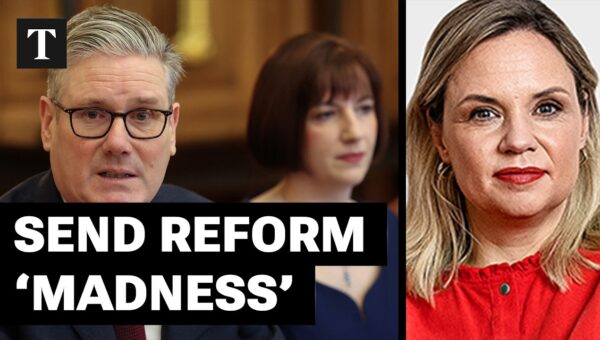
SEND Reforms Spark Outrage: Fears Grow Over Removal of Crucial Support for Vulnerable Children
Controversial new SEND reforms in England could see vital support removed for children with special needs during critical school transitions. Experts warn this is 'madness' and could undermine legal rights, despite government promises of increased funding and mainstream inclusivity.


Heated TV Debate Unpacks Education Crisis, Student Protests, and Government Accountability
A recent television debate on NewsNation between Brian Tyler Cohen and host Katie Pavlich delved into contentious issues surrounding national literacy rates, education funding, student protests, and the accountability of federal agencies like ICE. The exchange saw Cohen fact-check claims on illiteracy, highlight education disparities between red and blue states, and defend First Amendment rights while challenging perceived hypocrisy on government overreach and the use of force by federal agents.


America’s Fading Alliances: Munich Conference Signals a Global Realignment
The Munich Security Conference revealed a growing chasm between U.S. rhetoric and allied perceptions. Observers noted a cold reception for the American delegation, signaling a potential decline in U.S. influence and a strategic pivot by European nations towards greater self-reliance.