UK Navy ‘Woefully Underprepared’ for Iran Conflict, Warns Andrew Neil
Andrew Neil has declared the UK "woefully underprepared" for potential conflicts, citing a lack of naval presence in key regions and questioning the government's defense strategy. His critique highlights concerns over military readiness and the influence of legalistic approaches within the Foreign Office.

Britain’s Naval Readiness Questioned Amidst Middle East Tensions
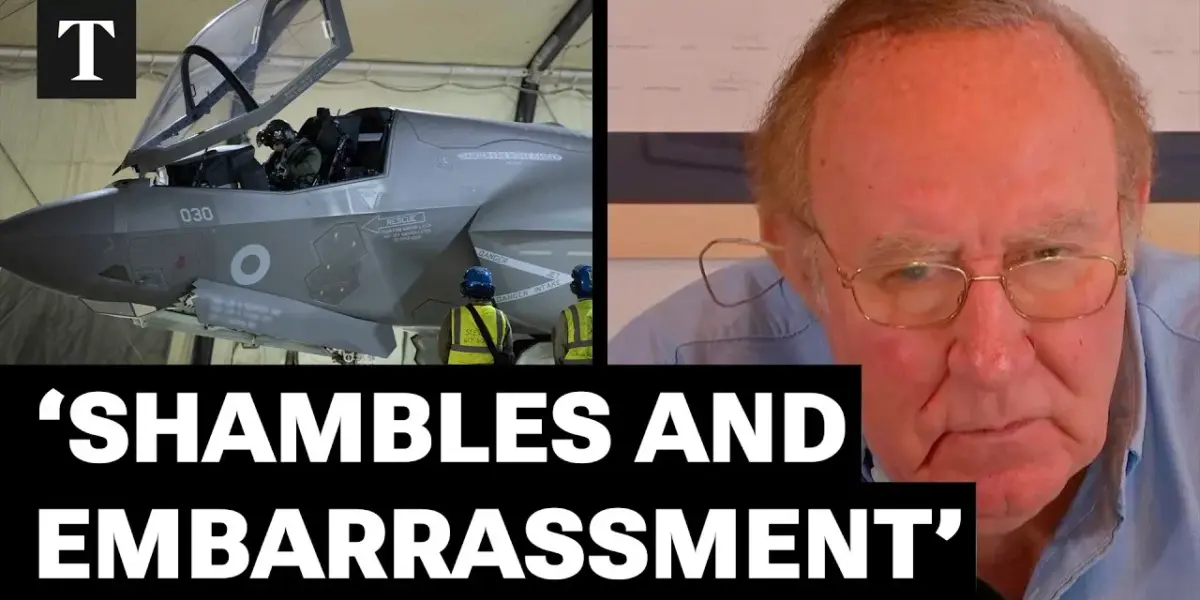
Veteran broadcaster Andrew Neil has issued a scathing critique of the United Kingdom’s defense capabilities, particularly its naval readiness, stating that the nation is “woefully underprepared” for escalating conflicts in the Middle East, such as the ongoing tensions involving Iran. Speaking on Times Radio, Neil argued that a protracted delay in publishing the government’s defense investment plan, coupled with perceived missteps by the Foreign Office, highlights a critical national security failing.
“A National Scandal” of Defense Preparedness
Neil did not mince words, labeling the state of the UK’s defense preparedness as a “national scandal.” He asserted that successive governments, including Labour, Conservative, and Liberal Democrat administrations from the past decade, share culpability for this situation. Despite the UK remaining one of the world’s top defense spenders, Neil contends that the country lacks the forces necessary to defend its own borders or project power effectively on the global stage.
“It beggars belief that a nation that once ruled the waves, ruled Britannia, is now got a navy that rules the dry docks.”
Andrew Neil
His remarks come in the wake of heightened geopolitical activity in the Gulf. Neil pointed out the apparent lack of preparedness, noting that while the US and its allies were engaging with Iran, the UK had no warships stationed in the Gulf. He further highlighted the irony of having a naval base in the region with no vessels present, and a similar absence of naval presence in the Eastern Mediterranean, a region strategically significant due to its proximity to Cyprus and the Levant.
Government Defends Preparedness Amidst Criticism
The government, however, has pushed back against these assertions. James Murray, a government minister, stated on the same program that the government was “very well prepared.” He cited the deployment of F-35 fighter jets to counter drones over Jordan and the interception of a drone near Cyprus as evidence of the UK’s operational capacity. Yet, Neil questioned the efficacy of these actions, particularly the reported use of a $250,000 missile to shoot down a $20,000 drone, raising concerns about resource allocation and strategic value.
Furthermore, Neil suggested that the United States did not request UK military participation in direct actions against Iran, but rather sought permission to use two US bases located on British sovereign territory. He posited that the US did not ask for UK involvement because, in Neil’s view, Britain would have “nothing to bring to the table.”
The “Rule of Lawyers” and the Foreign Office
A significant portion of Neil’s critique focused on the perceived influence of legalistic considerations within the Foreign, Commonwealth & Development Office (FCDO). He suggested that the FCDO has become overly reliant on legal interpretations, sometimes at the expense of national interest. Neil referenced an anecdote from a former Foreign Office official who noted the necessity of having at least two lawyers present at departmental meetings during a previous Conservative government.
This trend, Neil argued, has reached its peak under the current administration, led by a Prime Minister who is himself a lawyer and is reportedly surrounded by advisors with backgrounds in international law and human rights law. Neil elaborated on a specific instance where the UK reportedly delayed allowing the US to use its bases in the region, citing legal advice obtained by the Labour leader, Keir Starmer, from Lord Hameed, who Neil characterized as coming from an “international law culture.” This decision, Neil contended, was contrary to the national interest, only for the government to reverse its stance approximately 24 hours later.
“Under this government, when the choice came between a somewhat nefarious international law and the national interest, the international law won, and then lo and behold, 24 hours later, there’s a U-turn and we say to the Americans, you can’t use our bases. I mean, shambles and embarrassment doesn’t do it justice.”
Andrew Neil
Broader Implications for UK Defense Policy
Neil’s commentary raises profound questions about the strategic direction of the UK’s defense policy. The perceived gap between defense spending and operational capability, coupled with what he describes as an overemphasis on legalistic frameworks over pragmatic national interest, could have significant long-term consequences. In an era of increasing global instability, the UK’s ability to respond effectively to threats and maintain its standing on the international stage is paramount. The debate highlights a potential disconnect between the perceived needs of national security and the operational realities of the modern British military.
Looking Ahead
The forthcoming publication of the government’s defense investment plan will be closely watched for any indications of a strategic shift or a renewed commitment to bolstering the UK’s military capabilities. As geopolitical tensions continue to simmer, the effectiveness of the UK’s defense posture and its foreign policy decision-making processes will remain under intense scrutiny. Andrew Neil’s stark assessment serves as a critical wake-up call, urging a comprehensive re-evaluation of Britain’s readiness to face contemporary security challenges.
Source: Andrew Neil: UK ‘Woefully Underprepared’ For Iran Conflict (YouTube)

Related Articles
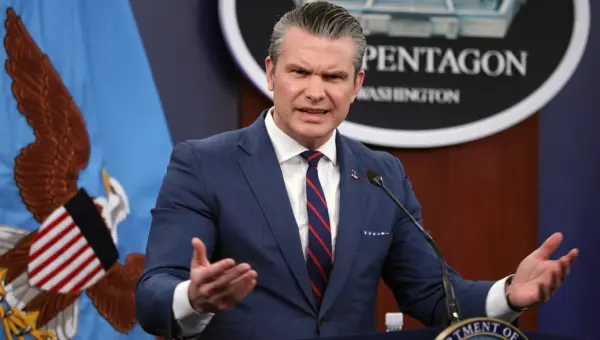
Hegseth Briefs on Iran Conflict Amid Escalating Tensions
Defense Secretary Pete Hegseth provided a critical update on the ongoing conflict involving Iran during a Pentagon briefing. The U.S. strategy emphasizes de-escalation, protecting national interests, and promoting regional stability through strong alliances and diplomatic efforts.


UK Defense Woes & Influencer Outcry Dominate Panel Discussion
A panel discussion featuring Giles Coren and Edwina Currie sharply criticized the UK's defense capabilities and its global standing. The conversation also addressed the ethical concerns surrounding fast-food chicken welfare, with Coren condemning major chains for abandoning welfare commitments.
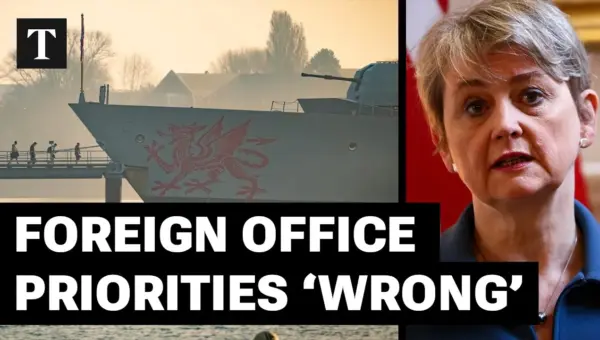
Ex-Diplomat Slams UK’s ‘Unforgivable’ Iran Strike Response
A former senior UK diplomat has resigned, citing the Foreign Office's "broken system" and "unforgivable" unpreparedness for US-Israeli strikes on Iran. Amed Ketcha criticized the department's distraction by "peripheral issues" and a rigid adherence to international law.