UK Navy Struggles as Iran Conflict Escalates
Vice Admiral Duncan Potts has raised alarms about the UK's declining naval readiness, drawing parallels to the Falklands War amidst escalating tensions with Iran. Meanwhile, experts analyze Iran's degraded military capabilities and the uncertain path of its nuclear ambitions.

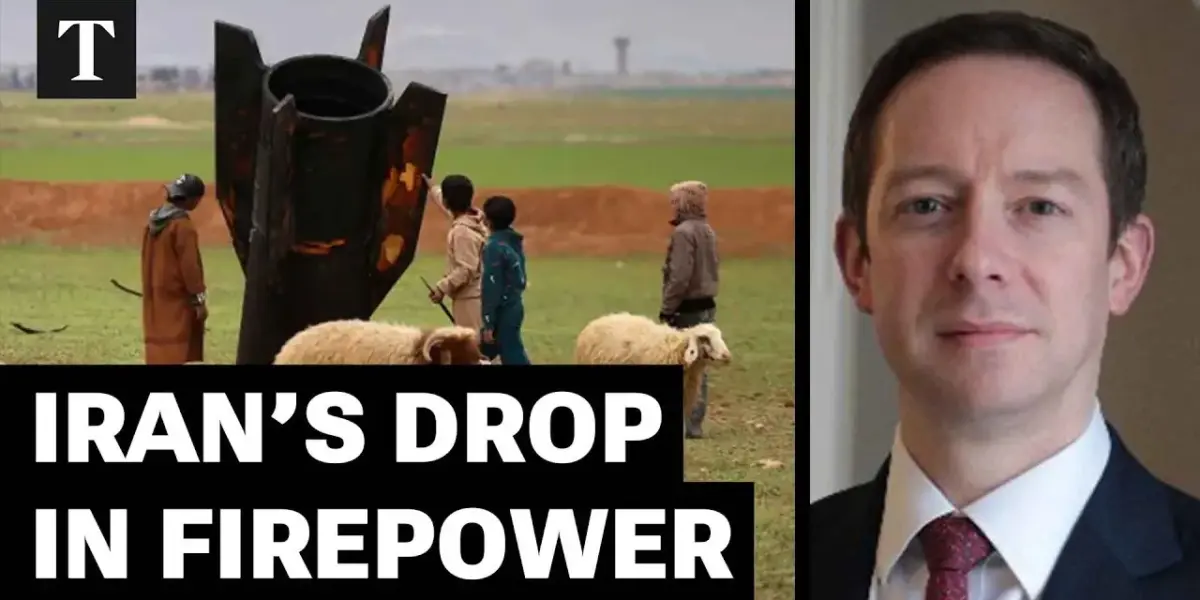
Royal Navy’s Readiness Questioned Amidst Rising Tensions
In a stark assessment of Britain’s naval capabilities, Vice Admiral Duncan Potts, a former senior naval officer, has highlighted significant concerns about the UK’s ability to rapidly deploy assets to protect national interests. The commentary comes as the UK grapples with geopolitical instability in the Middle East, particularly concerning Iran’s regional influence and its implications for vital shipping lanes like the Strait of Hormuz.
The immediate catalyst for these concerns appears to be the delayed deployment of HMS Dragon, a warship intended to safeguard British interests in the Mediterranean and the Gulf. Vice Admiral Potts expressed that “shock’s quite the right word” for the situation, emphasizing a critical difference between the theoretical size of the fleet and its actual availability. He noted that while initial plans involved a different vessel, HMS Duncan, issues arose, pushing the deployment of HMS Dragon back, with the ship not expected to be operational until the following week. This delay, coupled with the five days it will take to reach its station once deployed, underscores a perceived decline in the UK’s rapid response capabilities.
Historical Context: From Falklands to Present Day
Vice Admiral Potts drew a pointed comparison to the Falklands War, where Britain swiftly dispatched a formidable force of 43 warships within three days of Argentina’s invasion. He contrasted this historical agility with the current struggle to deploy even a single vessel effectively. This historical analogy serves to underscore the perceived erosion of Britain’s naval readiness over the decades.
The underlying reasons for this shift are complex, rooted in the post-Cold War era’s strategic re-evaluation. “The argument since the early 90s when of course the Cold War ended,” Potts explained, “was that it wasn’t logical to spend a huge amount of money maintaining a fleet of warships when realistically we are probably not going to be asked to use them.” During the initial period of his service, ships were maintained at a high state of readiness, often on 12 or 24 hours’ notice. However, the geopolitical landscape began to shift significantly in 2008 with Russia’s actions in South Ossetia, followed by the annexation of Crimea in the early 2010s. These events, coupled with Iran’s continued role as a “destabilizing force across the region through its proxies,” have fundamentally altered the global security environment.
The Strategic Importance of the Strait of Hormuz
The Gulf, and specifically the Strait of Hormuz, remains a critical chokepoint for global energy supplies, with approximately 20% of the world’s oil passing through it. Potts described the Gulf as a “really congested and cluttered space,” approximately 500 miles long and 100 miles wide. It is densely populated with offshore oil and gas infrastructure, high volumes of commercial traffic, and a significant amount of small boat activity. The operational environment is further complicated by challenging weather conditions, including high humidity and poor visibility, especially during the Shamal season when dust and sand storms are prevalent.
The Royal Navy has historically maintained a continuous patrol in the region since the formation of the Islamic Republic in 1979. However, this unbroken presence, maintained 24/7, 365 days a year until earlier this year, has been curtailed. Potts lamented this decision, stating, “the reality is we just don’t have the assets to support it and the time we really need it is the time after 45 years we decide not to be there.” This withdrawal has not gone unnoticed by regional allies, particularly the United States, with whom the UK has historically shared a strong level of trust and operational cooperation in the area.
Assessing Iran’s Military Capabilities and Strategy
Matthew Savile, Director of Military Sciences at the Royal United Services Institute (RUSI) and former government policy adviser on Iran, provided insights into the current state of Iran’s military capabilities and the broader strategic objectives of the ongoing conflict. He noted that the United States and Israel appear to have achieved “almost total air superiority,” significantly degrading Iran’s air threat and reportedly operating Reaper drones unhindered within Iranian airspace.
A key area of focus has been Iran’s ballistic missile and drone production capabilities. Savile highlighted the uncertainty surrounding the effectiveness of strikes on these assets. “The unknown is is that because the missile launchers in particular have been destroyed when they emerge and fire,” he posited, “and that means that it doesn’t matter what’s left in stock piles. They mostly can’t launch them. Or are the Iranians trying to play it cute and hold stuff back whilst they launch drones and exhaust regional air defenses?” While the prevailing suggestion is that launchers are being destroyed, the danger remains that Iran might be strategically withholding assets. The observed drop in outgoing ballistic missile and drone fire is a key indicator, but its underlying cause remains a subject of analysis.
The Nuclear Dimension and Future Ambitions
The nuclear threat posed by Iran has been a significant factor in the recent escalations. Savile explained that while military actions can disrupt Iran’s nuclear program by targeting facilities and personnel, they cannot erase the underlying knowledge. The current assessment suggests that Iran had been developing a “latent threshold capability” – accumulating the knowledge and materials to produce a nuclear weapon quickly if the decision were made. However, it does not appear that Iran had definitively decided to pursue weaponization, instead using this capability as a deterrent.
The effectiveness of this deterrent strategy is now in question, particularly after the US withdrawal from the nuclear deal and Iran’s subsequent non-compliance. A critical question for the future is whether a surviving Iranian regime might conclude that pursuing overt nuclear weaponization, rather than a threshold capability, is the necessary path forward, potentially adopting a North Korean model. The ultimate trajectory of Iran’s nuclear ambitions remains intrinsically linked to the survival and strategic calculus of its leadership.
Uncertainty Surrounding Civilian Casualties
The discussion also touched upon an incident involving a suspected US strike on a girls’ school, which reportedly resulted in significant casualties. Savile acknowledged the lack of clarity regarding the investigation’s progress, noting that it is an internal US matter. Open-source analysis suggests the presence of military targets in the vicinity of the school. While initial speculation pointed towards Israeli involvement, the analysis of surrounding targets raises the possibility of an errant missile or misidentification of the location. Definitive answers, he concluded, are contingent on further information emerging from US and Israeli government sources.
Looking Ahead
The ongoing conflict raises critical questions about the future posture of Western powers in the Middle East, the readiness of key military assets, and the long-term strategic implications for Iran’s regional and nuclear ambitions. The coming weeks will likely see continued scrutiny of naval deployments, further analysis of Iran’s military capacity, and efforts to ascertain clarity on contentious incidents, all set against a backdrop of heightened global geopolitical tension.
Source: How Much Of Iran’s Military Capabilities Have Been Destroyed? | RUSI Military Expert Analyses (YouTube)

Related Articles


US Military Language on Iran Sparks Concern, Experts Analyze
US forces have destroyed 18 Iranian ships in Operation Epic Fury, highlighting the diminished state of the UK's Royal Navy, now at its smallest size in centuries. Experts analyze the aggressive US military rhetoric and its departure from traditional prestige-based power projection, raising concerns about long-term geopolitical implications.

Global Conflict Ignites: Iran War Risks Escalation
Retired General Ben Hodges argues that current US actions against Iran lack clear objectives, risking escalation into a global conflict. He highlights the IRGC's true power, divergent US-Israeli aims, and parallels to World War III, urging for strategic clarity and allied cooperation.

House Votes on Trump’s War Powers Amid Iran Tensions
The House of Representatives is poised to vote on a resolution limiting President Trump's war powers concerning Iran. Congressman Joe Neguse highlighted constitutional concerns and contrasted current actions with past presidential military engagements. The interview also addressed allegations of misused taxpayer funds in a DHS contract.