UK Naval Fleet ‘Parlous State’ Amid Iran Crisis, Warns Admiral
A former Royal Navy commander has warned the UK's fleet is in a "parlous state" as tensions rise in the Strait of Hormuz. Amidst concerns over Iran's threats and a lack of modern vessels, the government is considering deploying mine-hunting drones. The admiral cited decades of underinvestment as the root cause of the critical shortage.

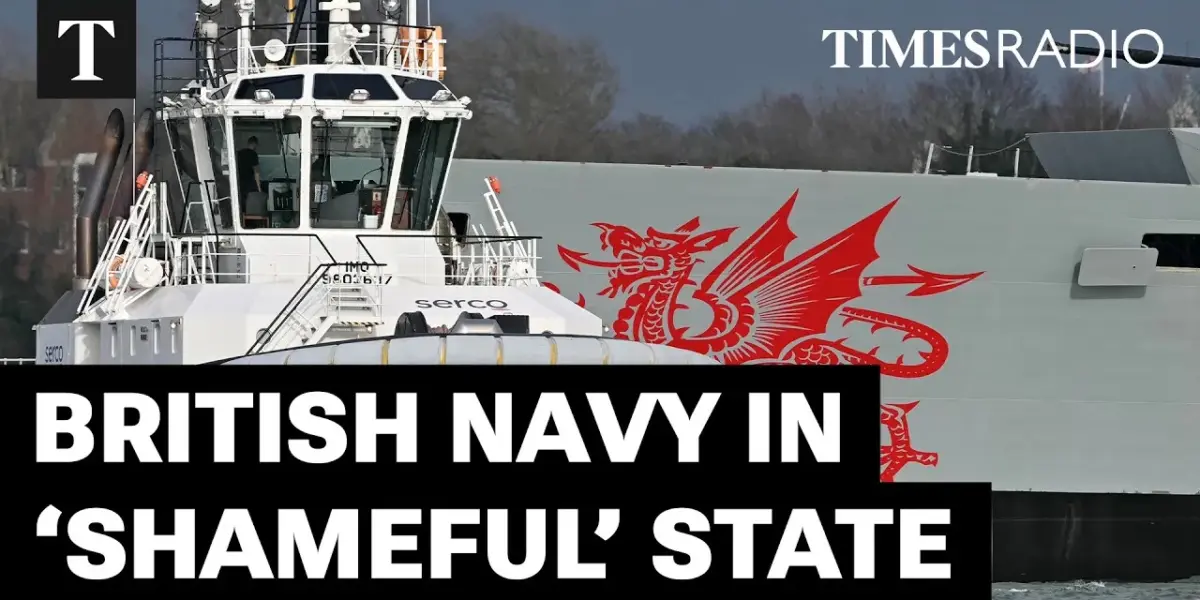
UK Naval Fleet In Crisis As Tensions Rise In Strait of Hormuz
The United Kingdom’s Royal Navy is in a “parlous state,” with a significant shortage of modern frigates and destroyers, according to a former senior naval commander. Admiral Sir James Burnell-Nugent issued the stark warning amidst escalating tensions in the Strait of Hormuz, a vital global oil shipping route, where several vessels have reportedly been attacked. The government is considering deploying mine-hunting drones to the region in response to a request from U.S. President Donald Trump for international naval support.
A ‘Shameful’ Decline in Naval Capabilities
Admiral Burnell-Nugent, who has held senior command positions including Commander-in-Chief of the Fleet, described the current state of the Royal Navy as “pretty shameful.” He attributed this decline to a lack of investment by both major political parties, noting that no new frigates or destroyers were ordered between 2002 and 2017. During this period, ships were decommissioned at roughly the same rate they were built, leading to a steady reduction in fleet numbers.
The admiral highlighted the dire situation of the current fleet. “We’re now down to six Type 45 destroyers, half of which are in refit. So actually only three are available,” he stated. “And there are seven Type 23 frigates, which were designed for a life of 18 years. The oldest one, HMS Richmond, is now 31 years old.” He drew a parallel to modern technology, observing, “I don’t think your mobile phone will be working in 31 years time, nor your car, nor your boat.” The admiral concluded, “We are in a parlous state across all three services, and this is coming home to roost.”
Strait of Hormuz: A Critical Chokepoint
The Strait of Hormuz, through which approximately 20% of the world’s oil supply passes, has become a focal point of international concern. Recent attacks on ships transiting the narrow waterway have prompted calls for action to ensure freedom of navigation and the uninterrupted flow of oil. U.S. President Donald Trump has requested that allied nations contribute naval assets to protect shipping in the region.
Government Weighs Options Amidst International Scrutiny
In response to the unfolding crisis, the UK government is actively exploring options. Ed Miliband, the Secretary of State for Energy Security and Net Zero, confirmed that discussions are underway with allies, including the United States, and that the Prime Minister has engaged with European leaders. “We want to work with our partners on this. I think it’s a priority for the world that the strait is reopened,” Miliband said.
Among the potential contributions being considered are mine-hunting drones. “All of these things are being looked at, but in concert with our allies,” Miliband added, emphasizing the need for de-escalation as the primary solution.
Concerns Over Entanglement and National Interest
Not all political factions are in favor of aligning with U.S. policy. The leader of the Liberal Democrats, Daisy Cooper, expressed reservations, stating, “I don’t think we should be at Donald Trump’s beck and call. He’s got no plan. He’s thrashing around.” Cooper urged a clear-eyed focus on British national interests, cautioning against being “dragged into a war that we didn’t start and is damaging our country and our economy.”
Iran Issues Warning Over Hormuz Operations
Iran has responded assertively to the prospect of international intervention. Esmail Baghaei, a spokesman for the Iranian Ministry of Foreign Affairs, warned that any attempt by the UK to keep the Strait of Hormuz open would be considered “complicity in the crime of aggression” and would be met with a response from Iran. He urged responsible nations to avoid becoming involved in what Iran views as an act of aggression by the United States and Israel against its country.
Operational Challenges and Strategic Lapses
Admiral Burnell-Nugent underscored the significant operational challenges involved in securing the Strait of Hormuz. He noted that the closure of the strait was an “almost inevitable consequence of attacking Iran” and expressed surprise that preparations were not made beforehand. “It would obviously have been a smart move to have thought about that beforehand, got some escorting capability in place, preferably with a coalition of those who depend upon the oil, but that hasn’t been done. So, we’re on the back foot on this issue,” he stated.
The admiral described the Iranian capabilities as difficult to counter, citing a vast coastline and a large fleet of high-speed boats that can be deployed with explosives or anti-ship missiles. He also pointed to the increased threat from drone warfare, making any operation in the strait “three-dimensional,” involving threats from mines, surface attacks, and airborne assaults. He recalled the tanker war of 1981-1988, where the U.S. deployed 30 frigates and destroyers for escort duties, emphasizing the need for a substantial coalition effort.
Regarding the strategic planning, Admiral Burnell-Nugent suggested that the U.S. and Israel might not have fully considered all consequences. “It does look as though these issues weren’t thought through,” he remarked, referencing war-gaming and desktop analysis techniques that should have anticipated such a response before initiating conflict.
Economic Pressures and Defense Spending
The crisis arrives at a difficult time for the UK economy, which is already grappling with low growth and concerns over energy costs. The potential need for increased defense spending is set against a backdrop of financial strain. Admiral Burnell-Nugent criticized the perceived muddle in government policy regarding energy, with conflicting signals on reducing hydrocarbon dependency and potentially subsidizing consumption.
He argued that improving defense capabilities is intrinsically linked to economic growth. “We can’t fix our defense expenditure and our defense capability without growth,” he asserted. He advocated for policies that stimulate growth, such as tax cuts, reduced bureaucracy, and a smaller government, suggesting that raising taxes would further damage the economy and hinder defense investment.
Capacity for Investment and Future Outlook
Despite the fleet’s current limitations, Admiral Burnell-Nugent pointed out that there are new frigates under construction, including Type 26 and Type 31 classes, with 13 frigates in total being built. The Royal Navy is also constructing new classes of nuclear submarines. However, he cautioned that even with increased funding, the pace of industrial capacity limits how quickly new assets can be deployed.
“Industry can only build ships at a certain pace,” he explained. “Unless we’re talking about getting onto a war footing, which of course is a whole another step up.” For other services, like the Air Force, rapidly increasing aircraft numbers is also constrained. While the Army could potentially increase numbers through recruitment, equipping new soldiers takes time.
The admiral concluded that enhancing defense capability is a “national endeavor” requiring greater industrial output and less government interference to foster economic growth, which in turn would allow the nation to afford the necessary defenses.
Looking Ahead
As international efforts continue to de-escalate tensions and ensure safe passage through the Strait of Hormuz, the UK faces a critical juncture. The government must balance diplomatic pressures, potential military contributions, and the pressing need to address its own defense capabilities and economic challenges. The coming weeks will likely see further diplomatic maneuvering and a clearer indication of the UK’s role in safeguarding this vital global waterway, alongside a renewed focus on bolstering its naval strength for future contingencies.
Source: Iran Crisis: UK Naval Fleet Is In A ‘Parlous State’ | Sir James Burnell-Nugent (YouTube)

Related Articles

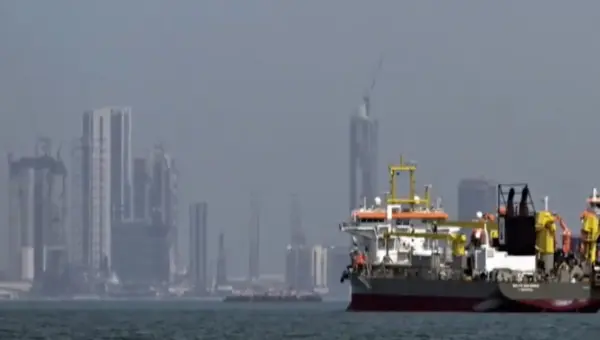
Iran Blocks China Ships, Exposing Beijing’s Weak Grip
Iran's recent decision to block Chinese ships at the Strait of Hormuz is exposing the limits of Beijing's influence in the Middle East. This action is causing delays and cancellations for Chinese manufacturers, turning a perceived geopolitical win into an economic strain.
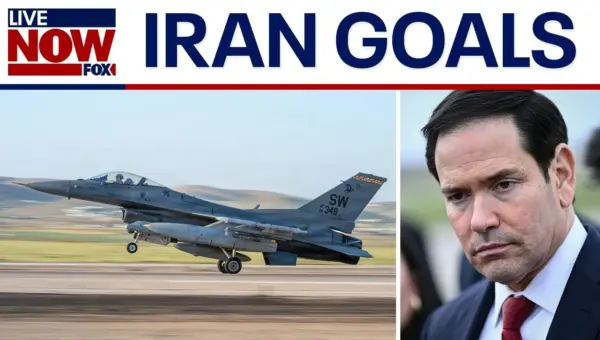
Rubio: US Can Achieve Iran War Goals Without Troops
Senator Marco Rubio outlined a strategy to counter Iran without deploying U.S. ground troops, focusing on weakening the regime and enhancing maritime security. He also criticized Cuba's economic system and expressed concerns about West Bank violence.


Israel Escalates Iran Strikes, Warns of Wider War
Israel has launched significant strikes inside Iran following continued missile fire, warning of further escalation. The conflict risks wider regional instability and economic disruption, especially concerning the Strait of Hormuz.