UK Military ‘Scandal’: Armed Forces Hollowed Out, Warns Andrew Neil
Andrew Neil has branded the UK's military decline a 'national scandal,' highlighting severe hollowing out of armed forces due to decades of mismanagement and underinvestment. The current Middle East conflict has exposed critical shortages in naval deployments and operational readiness, despite substantial defence budgets.

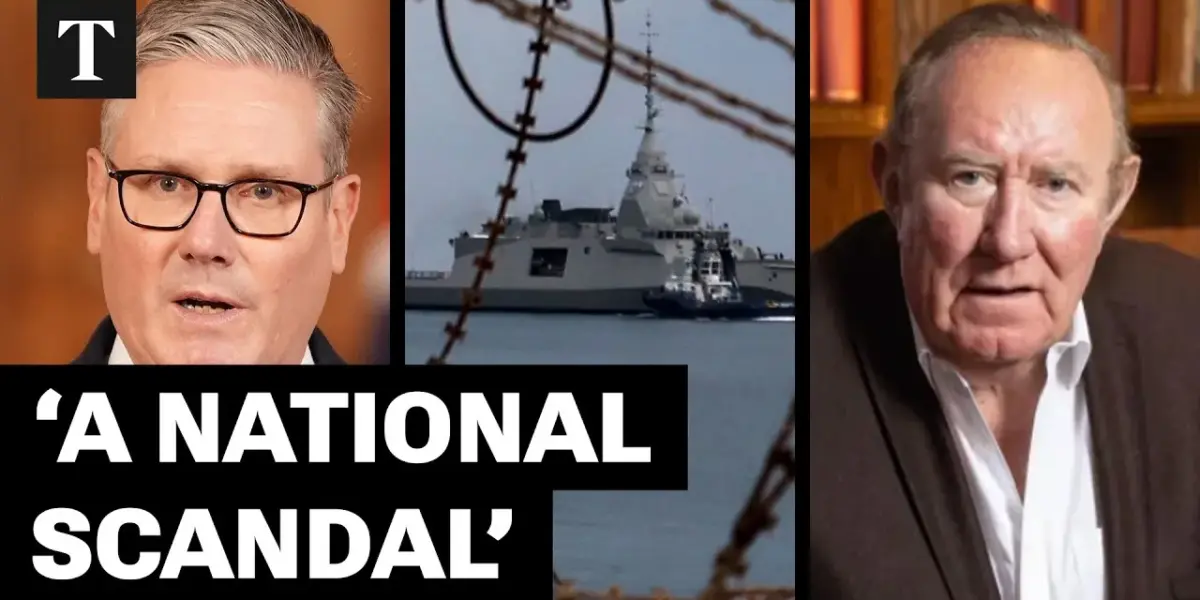
UK Military Faces ‘National Scandal’ Amid Deep Hollowing Out
LONDON – Britain’s military capabilities have been severely degraded, revealing a “national scandal” of “hollowed out” armed forces under successive governments, according to a scathing assessment by Andrew Neil on Times Radio’s “The Times at One.” The current geopolitical climate, marked by hostilities in the Gulf, has starkly exposed the diminished state of the UK’s defense readiness, leading to embarrassment and a perceived irrelevance on the international stage.
“Hollowed Out” Forces Exposed by Middle East Conflict
The recent “US-Israeli onslaught on Iran” has laid bare the extent of the UK’s military shortcomings. Neil highlighted the nation’s inability to deploy a single warship to the Mediterranean, Gulf, or Red Sea to protect vital commercial interests and maintain open sea lanes. This lack of immediate response capability, even when US-Israeli action was “well telegraphed,” underscores a failure in both political and military leadership.
“Their political masters were too ignorant of military matters to ask why not,” Neil stated, criticizing the lack of foresight that has resulted in a “scramble to catch up” with a “pretty bare” cupboard.
Decades of Underinvestment and Mismanagement
The current crisis is not a sudden development but a consequence of “long in the making” strategic blunders. Neil pointed to a significant 22% real-terms cut in defense spending during the 2010-2015 coalition government, involving both Conservative and Liberal Democrat parties, as a pivotal moment that precipitated the current decline.
Despite the Ministry of Defence (MOD) boasting an annual budget of over £60 billion and the UK remaining one of the world’s largest military spenders, the tangible results are meager. Neil described the army as “pathetically small,” the navy as possessing “far too few warships, most of them laid up,” and the air force as lacking “sufficient fighter jets.” This stands in stark contrast to the bloated civil service within the MOD, numbering over 55,000, a figure nearly as large as the army itself.
“The MOD’s hallmark has been to preside over expensive procurement programs that invariably run away, over budget, deliver years late, and in many cases produce stuff that doesn’t work.”
Procurement Failures and Officer Overload
The procurement process within the MOD has been a consistent source of failure, with projects like the Ajax armored personnel carrier cited as examples of expensive endeavors that have failed to deliver. Furthermore, Neil observed a disproportionate number of senior officers compared to operational assets: “We have more admirals than warships, more generals than brigades, more air commodores than squadrons.” This surplus of high-ranking personnel, while the ranks of soldiers, sailors, and pilots are depleted, highlights systemic inefficiencies.
Critique of Naval and Submarine Capabilities
The state of the Royal Navy and its submarine fleet was particularly scrutinized. Neil noted the struggle to deploy even one Type 45 destroyer, with only two of the current five operational. The original plan for twelve such destroyers was reportedly halted by the “Blair Brown government.” Even the new, expensive aircraft carriers, intended as symbols of global power projection, are reportedly “in dock for various reasons, and they can’t be deployed.”
The nuclear-powered attack submarines are in an even more dire condition, with four out of five currently out of commission. The single operational submarine was in Australia, with no apparent plan to recall it despite escalating tensions in the Gulf.
Deterrent Credibility Undermined
The Vanguard submarines, responsible for the UK’s Trident nuclear deterrent, are also in a precarious state. Neil stated they “should have been sent to the Knacker’s yard years ago,” and the delayed development of their successors means the UK struggles to keep even one aging Trident submarine at sea. This situation “undermines the credibility of our deterrent on which our security depends.” The decision by David Cameron to delay the development of the Dreadnought-class submarines, which are not expected until the next decade, is seen as a critical failure.
Labour’s Defence Spending Claims Debunked
Neil also addressed recent claims by Labour, specifically Rachel Reeves, regarding defense spending. He dismissed the assertion that defense spending is rising faster than at any time since the Cold War as “statistical slight of hand” and “dishonest.” The reality, according to Neil, is that defense spending is rising minimally under the current Labour leadership, with only a projected increase from 2.5% of GDP to 3% and then 3.5% in the future, lacking a concrete plan.
“The truth is defense spending is barely rising at all under Starmer, Reeves this year and next. A couple of billion at most.”
Radical Reform Needed, But Unlikely
The analysis concludes that the MOD requires “major overhaul” to become more efficient. Neil proposed the creation of a new procurement agency responsible for developing and purchasing future weapon systems, with accountability for delays and cost overruns. He also suggested merging the Army, Navy, and Air Force into a single “British Defence Force” (BDF), similar to the US Marine Corps, to reduce inter-service rivalry and streamline operations, including culling surplus senior officers.
However, Neil expressed pessimism about the likelihood of such reforms being implemented. “There’s no political appetite for it,” he stated, predicting a future of continued “embarrassment and irrelevance” for the UK’s military on the global stage.
Looking Ahead: The Future of UK Defence
The stark revelations about the state of the UK’s armed forces raise critical questions about national security and the country’s role in international affairs. As geopolitical tensions continue to rise, the lack of a robust and ready military presents a significant challenge. The upcoming period will be crucial for observing whether political will materializes for the radical reforms Neil advocates, or if the UK’s defence capabilities will continue their downward trajectory, further diminishing its global standing.
Source: UK Defence: Hollowing Out Of Armed Forces Is A ‘National Scandal’ | Andrew Neil (YouTube)

Related Articles

PM Overruled by Cabinet on Iran Attack Bases
The UK Prime Minister was reportedly overruled by his own cabinet on approving the use of British bases for a US strike on Iran. The decision-making process involved significant internal debate and a delay in authorization until after hostilities commenced.

China Spy Fears: Tugendhat Slams ‘Hostile State’ Reach
Conservative MP Tom Tugendhat has strongly criticized China's alleged espionage activities in the UK, demanding "action" instead of "deep concern." He also questioned the UK's defense posture in the Middle East, suggesting a failure to protect allies.


UK Navy “Raging” Amidst Fleet Shortages and Ally Frustration
Former UK military personnel are reportedly "raging" over the Royal Navy's current state, citing fleet shortages and extended maintenance periods. The UK's Defence Secretary is in Cyprus amid rising regional tensions and criticism from allies regarding the nation's naval capabilities and response to recent security incidents.