UK Military Insiders Fear US Ties Strained by Slow Response
UK military insiders are expressing concern that a slow response to U.S. requests is straining the vital defense relationship, potentially impacting future cooperation. The UK's reliance on American capabilities and a perceived gap in its own defense readiness are highlighted as critical issues that need urgent attention.

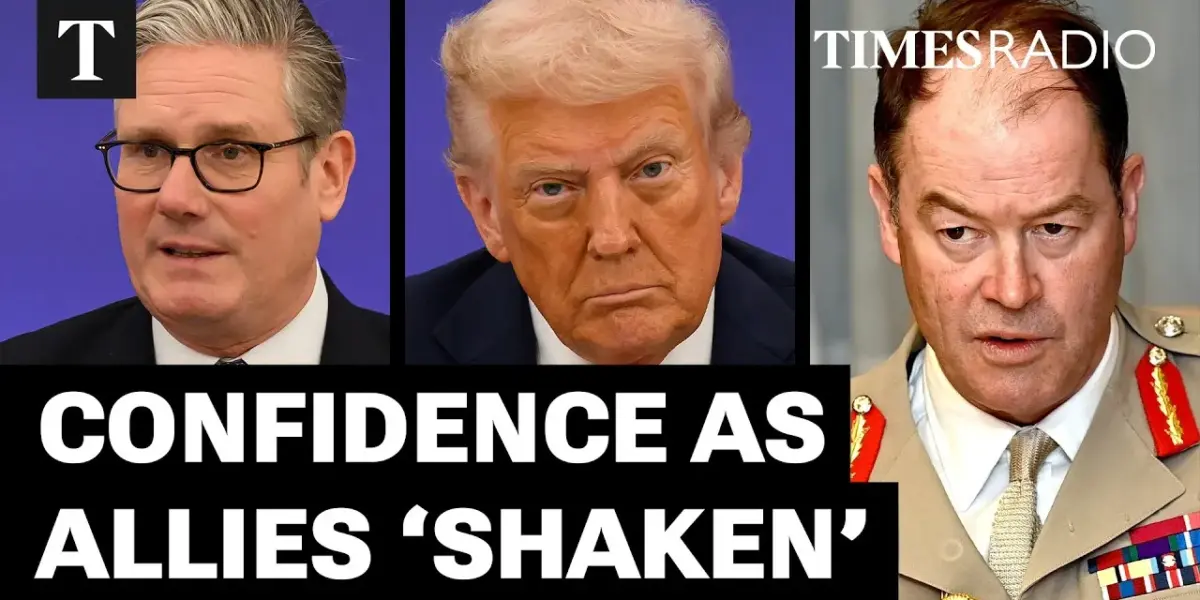
UK Military Insiders Fear US Ties Strained by Slow Response
LONDON – Concerns are mounting within the UK military establishment that a slow and hesitant response to U.S. requests for assistance, particularly concerning operations in the Strait of Hormuz, is damaging a crucial defense relationship. Military insiders suggest that the perceived unreliability of the UK’s support has shaken confidence within parts of the U.S. establishment, potentially impacting future cooperation and access to vital American defense capabilities.
Strained Special Relationship Amidst Geopolitical Tensions
The remarks from General Sir Patrick Sanders, former Chief of the General Staff and co-host of The Times’ “The General and the Journalist” podcast, highlight a growing unease. While acknowledging that the deep-rooted military-to-military relationship between the UK and the U.S. remains a strong bedrock, General Sanders indicated that recent events have introduced significant turbulence. He noted that commentary and conversations with insiders suggest the UK’s response to U.S. requests for access, basing, and overflight rights – essential for contingency scenarios, particularly against Iran – has been slower than anticipated. This has reportedly “shaken confidence” among U.S. counterparts.
“I’m just picking up commentary conversations with insiders that suggests that our our response to US requests around what we would call access basing and operation an overflight so that’s the use of Diego Garcia that’s the use of RAF Fairfoot has always been taken as a given for any contingency scenario against Iran and our failure to respond quickly to that has really shaken confidence in parts of the US establishment and that now the miltomill relationships are under strain and and that is a worrying sign.”
General Sanders emphasized that while the “special relationship” is a political term, the underlying security and armed forces cooperation is profound and intertwined. However, the current situation, where the UK’s commitment has been questioned, is causing worry about the strain on these military-to-military connections.
Dependence on U.S. Capabilities and Potential Repercussions
The UK’s reliance on American defense capabilities is a long-standing reality, acknowledged in strategic defense reviews. This dependence spans intelligence sharing and indispensable contributions to the NATO alliance, particularly in the Euro-Atlantic area. General Sanders stressed the need for the UK to be “thoughtful about how we maintain that relationship with the US and about what and at what pace we can replace some of those capabilities.”
A stark example cited is the European pillar of NATO’s critical dependence on U.S. logistics, specifically mentioning the 51st Theater Sustainment Command. The concern is that if the U.S. begins to disengage or reprioritize its focus away from Europe, the UK and its European allies must have a measured and graceful plan to transition, rather than face a “catastrophic” decline in capability.
Capability Gaps and the Urgency of Defense Investment
The transcript also touches upon specific capability gaps that have become apparent. The UK’s ability to rapidly deploy naval assets, such as mine-sweepers, to critical regions like the Persian Gulf has been hampered. While acknowledging the development of new autonomous boat capabilities, it’s noted that these are either not yet available in sufficient numbers or are critically needed domestically to counter Russian threats. This has led to suggestions that the UK is more exposed than previously realized.
General Sanders echoed sentiments that the UK has for too long run down its defense capabilities. He referenced warnings from figures like George Robertson, author of a past strategic defense review, who has stated that the UK is not safe and is at risk from Russia through hybrid warfare, cyber-attacks, and sabotage. The call is for an increase in conventional capabilities to deter potential adversaries.
The Need for a Defense Investment Plan
A significant point of concern raised is the delay in implementing the government’s strategic defense review, published nearly a year prior. General Sanders stressed the urgent need for a defense investment plan that provides the financial and practical means to support the outlined strategy. The current situation, particularly the strain on mine-countermeasure capabilities due to gifting vessels to Ukraine and the transition to new systems, highlights the critical need for a clear roadmap and adequate funding.
Broader Implications and Future Outlook
The discussions also briefly touched upon wider geopolitical concerns, including the relationship between former President Trump and President Putin, and its potential implications. However, the core focus remains on the tangible impact of perceived unreliability on the UK-U.S. defense alliance. The UK faces a critical juncture where it must urgently address its defense capabilities, invest strategically, and demonstrate a commitment to its allies to maintain its standing and security in an increasingly volatile world.
Looking ahead, the UK government’s swift action on finalizing and implementing a comprehensive defense investment plan is paramount. Continued dialogue and reassurance with U.S. military and political leadership will be essential to repair any damage to confidence. Furthermore, addressing the identified capability gaps, particularly in naval power and air defense, will be crucial for the UK to meet its commitments to NATO and its bilateral partners, ensuring it can contribute effectively to collective security when needed.
Source: Military Insiders Worried UK Response To US Requests Tarnishes Operational Relationship (YouTube)

Related Articles

G7 Leaders Clash Over Trump’s Iran Policy Amidst Global Crisis
World leaders at a G7 meeting voiced sharp criticism of Donald Trump's Iran policy, citing concerns over the Strait of Hormuz and a looming global recession. Disagreements emerged regarding strategy and accusations of misinformation, highlighting deep divisions.

Iran Extends Strait of Hormuz Deadline Amid Global Oil Tensions
The U.S. has granted Iran a 10-day extension to reopen the Strait of Hormuz, a critical global oil route. This move comes amid complex negotiations, military actions, and concerns over Iran's strategic leverage and resilience. Lawmakers express frustration over the lack of a clear strategy and potential escalation.


Iran: Regime’s Tactics Shift Global Power Dynamics
Iran's regime is employing strategic tactics, including control of the Strait of Hormuz, to counter U.S. military might. Meanwhile, a U.S. government shutdown paralyzes domestic services, highlighting deep political divisions. These geopolitical shifts, alongside profound personal tragedies, signal a turbulent global landscape.