UK Faces Potential Fuel Crisis Amidst Iran Tensions
The UK faces potential fuel restrictions reminiscent of the COVID-19 pandemic due to rising global tensions involving Iran and the U.S. While the government urges calm, experts warn of possible fuel shortages by month's end if disruptions in the Strait of Hormuz persist. Authorities are considering demand-reduction measures as a precaution.

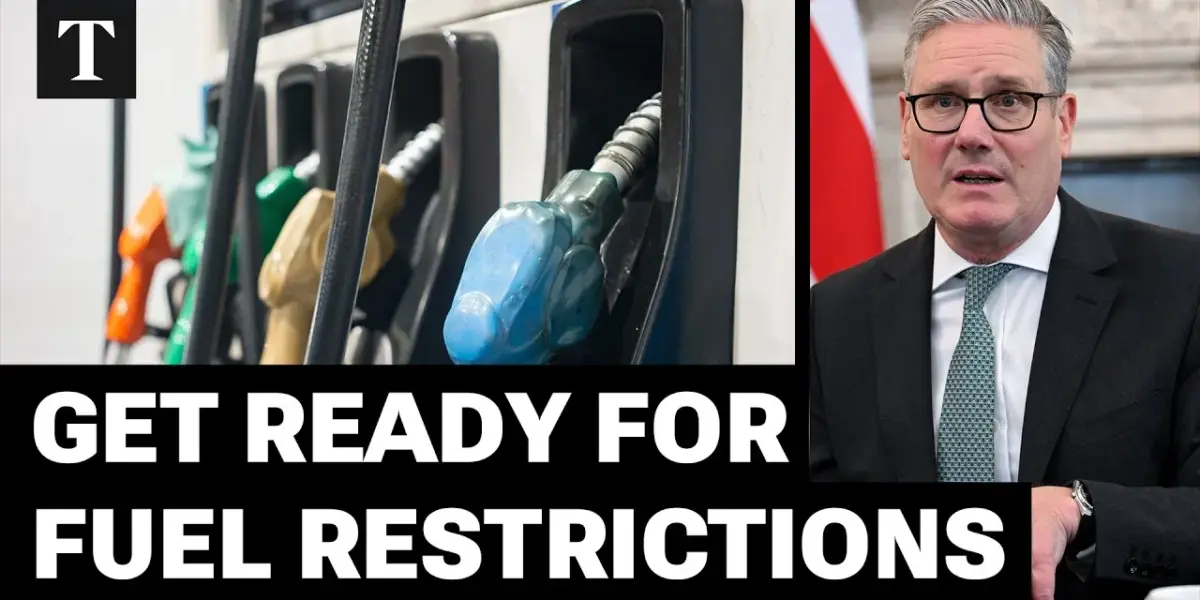
UK on Alert for Fuel Shortages as Global Tensions Rise
The United Kingdom is facing a potential fuel crisis that could bring about restrictions similar to those seen during the COVID-19 pandemic. Rising tensions involving Iran and potential actions by the United States have created uncertainty in global oil markets. While the government assures the public that there is no immediate need to change driving habits, experts warn that the situation could escalate quickly, impacting fuel availability by the end of the month.
Mixed Signals from Global Powers
Recent statements from former President Donald Trump have added to the complex geopolitical situation. Trump has indicated discussions with the “new Iranian regime” aimed at ending the current conflict. However, he also issued a stark warning: the Strait of Hormuz must reopen for business immediately, or the U.S. will “blow up and completely obliterate all of the country’s electricity generating plants, oil wells, and Car Island.” This creates a confusing mix of diplomatic overtures and threats, leaving many uncertain about future developments.
Government Urges Calm Amidst Uncertainty
In response to the developing situation, Prime Minister Rishi Sunak has invited energy and shipping executives to Downing Street for discussions. The meeting, described as not being an emergency, aims to gather information from industry leaders about their outlook and potential impacts. “These sorts of meetings happen every so often during a crisis,” explained Adam Bell, a partner at consultancy firm Stonehaven who formerly worked for the Department for Business, Energy and Industrial Strategy. “They are mostly for the prime minister to understand what’s going on, to hear from industry… and to know what’s likely to happen.” Following the meeting, the Prime Minister stated there would be no rationing, but Bell cautioned that this might change if disruptions in the Strait of Hormuz occur.
Potential for Demand Reduction Measures
While current fuel stocks are adequate for at least the next two weeks, the global nature of the oil market means shortages could eventually reach the UK. “Oil is almost a just-in-time business, and ultimately, if there is a global shortage, it will find its way at the fuel courts eventually,” Bell noted. He suggested that by the middle of the month, if the conflict persists, the government might need to consider measures to reduce fuel demand. These could include encouraging people to drive slower or work from home, similar to strategies employed in other countries facing similar pressures.
Lessons from the Past and Innovative Solutions
The current situation has drawn comparisons to the early days of the COVID-19 pandemic, when initial government assurances were followed by significant disruptions. “We are fine for now, but we could very well not be fine very quickly,” Bell warned, echoing sentiments from that period. In Australia, some states are offering free public transport to reduce car usage, an approach Bell described as “very pragmatic.” However, he acknowledged that such measures are most effective in areas with well-functioning public transport systems, like London, and may be less practical in rural areas with limited services.
Balancing Preparedness and Public Confidence
Navigating a potential crisis requires a delicate balance between government preparedness and public reassurance. Bell believes this can be achieved by introducing measures gradually rather than implementing drastic actions that could cause panic. “If you think there’s going to be a shortage, but you know that you are fine in the short run, it’s reasonable to ask people to use less just to make existing stocks last longer,” he stated. While government contingency plans are likely in place, they are not yet being activated, reflecting a current confidence in existing fuel supplies.
Diesel Shortages: A Growing Concern?
While petrol supplies are currently stable, there are concerns about potential diesel shortages emerging relatively quickly. Although Bell has only heard rumors, some suggest shortages could appear by mid-April. He remains cautious, noting that much of the oil in transit is crude oil, and while some refined products come from the Gulf, it does not constitute the entirety of the UK’s inventory. Further information is needed to confirm the extent of this potential issue.
Geopolitical Volatility and Energy Security
The unpredictable nature of international relations, particularly concerning statements from figures like Donald Trump, presents a significant challenge for governments. Bell advised assuming that public statements are intended for social media rather than for foreign governments, noting that behind-the-scenes communications might be more constructive. The UK government’s exposure to such geopolitical shifts underscores the need for rapid adaptation. “That does mean using fewer fossil fuels more generally,” Bell stated, highlighting how the UK’s push towards decarbonization could inadvertently enhance its energy security in a more volatile world.
Market Reactions and Future Outlook
The price of oil has fluctuated, recently hovering above $100 per barrel, largely in response to geopolitical statements. Markets are operating in an “information poor environment,” reacting strongly to any news that might suggest a resolution or further conflict. Bell expects oil prices to remain above $100 for the remainder of the week, with potential spikes due to unpredictable announcements. He believes significant price falls or increases are unlikely in the immediate short term.
Drilling for More: A Long-Term Solution?
The idea of increasing domestic oil and gas production, often summarized as “drill baby drill,” is not a quick fix. Bell explained that ramping up oil rig operations takes years, not months. While the government could potentially open the Jacko gas field, this would provide only a small amount of gas in the short run and would not significantly impact oil supply or consumer bills in the immediate future.
Public Anxiety and Government Guidance
Despite official advice to remain calm and continue normal habits, public anxiety is palpable. Some individuals are already altering their behavior, such as adding extra fuel to their vehicles during regular fill-ups to ensure they have enough for work. This proactive approach, while understandable, highlights the challenge for the government in managing public perception and preventing panic-driven actions. The question of whether government vehicles are being topped up remains a point of speculation, suggesting a potential disconnect between public guidance and official practice.
What’s Next?
As the geopolitical situation evolves, the UK government will continue to monitor global oil markets and diplomatic developments. The effectiveness of its strategy to balance public reassurance with necessary preparations will be crucial. Attention will be on whether demand-reduction measures become necessary and how quickly they might be implemented if global supply disruptions worsen. The long-term implications for energy security and the transition to cleaner fuels will also remain a key focus.
Source: UK Faced With Covid-Style Restrictions From Iran Oil Crisis (YouTube)

Related Articles


Global Oil Spikes Squeeze Small Businesses Worldwide
Rising oil prices are causing significant challenges for small businesses globally, forcing owners to make difficult decisions about costs, staffing, and supply chains. The impact is felt from raw material sourcing to final product delivery.


Trump’s ‘On Your Own’ World: Allies Abandoned, Economy Suffers
As gas prices surge and global tensions rise, the U.S. under Trump is telling allies they are "on their own." This shift leaves nations to fend for themselves, impacts the American economy, and raises serious questions about U.S. foreign policy and leadership.
Iran War’s Wobbly Goals Threaten Global Stability
The shifting objectives of the Iran conflict and the ongoing disruption of the Strait of Hormuz pose significant global risks. Sir Bill Browder discusses how Iran's 'trump card' could lead to economic instability, while political pressures mount for leaders. Ukraine's expertise in blockade warfare offers a potential solution, but geopolitical complexities abound.