UK Faces Iran Retaliation Risk Over US Stance
The UK faces significant risks of Iranian retaliation if it aligns too closely with US actions in the Middle East. Experts question the legality and long-term strategy behind recent preemptive strikes, warning of potential regional destabilization and increased extremism.

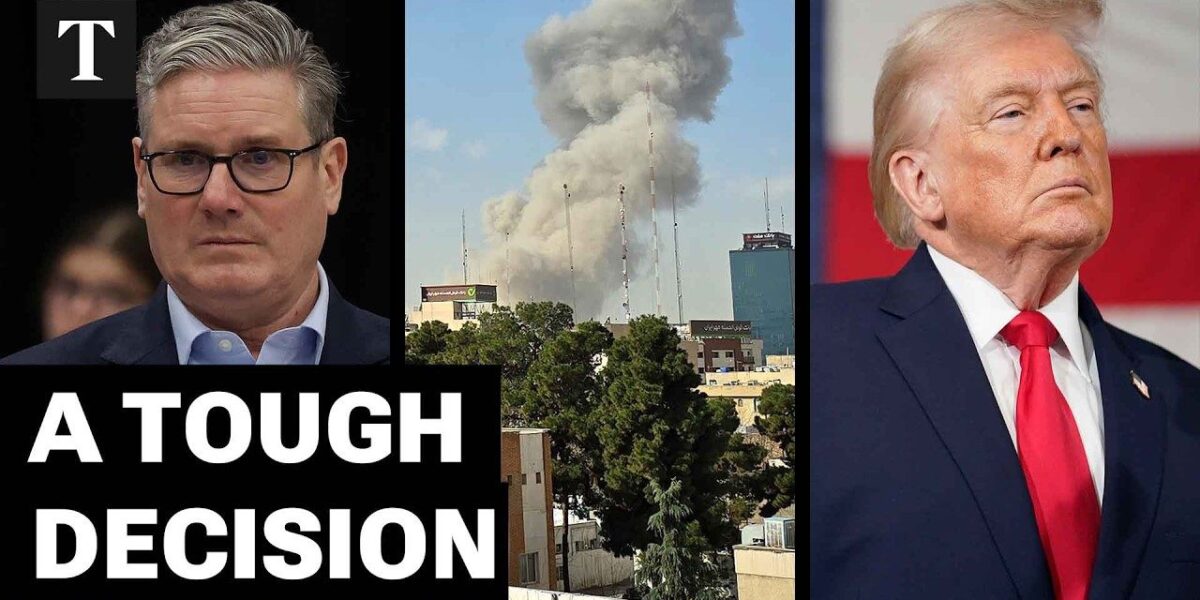
Middle East Tensions Escalate as Iran Faces Preemptive Strikes
The Middle East is on edge following a significant escalation of tensions, with reports of preemptive strikes impacting Iran and potential retaliatory actions looming. The unfolding events have raised critical questions about international law, the stability of the region, and the UK’s potential involvement and exposure to Iranian retaliation.
Assessing the ‘Preemptive’ Nature of the Strikes
Guto Harri, former Downing Street director of communications, expressed his reaction to the recent developments, describing them as more than a “token gesture” and potentially an “endgame” to decades of conflict. While acknowledging that Iran is an “extremist regime” responsible for considerable violence, Harri questioned the “preemptive bit” of the action. He stated, “I don’t see the preemptive bit of that. I don’t see and I haven’t sensed that Iran were about to attack anyone in, you know, in a different way to what they have.”
Harri voiced concerns about the potential consequences, particularly for innocent Iranian civilians. “My fear and no one will cry if they manage to topple the regime, but I will cry for innocent Iranians that get killed,” he said. He drew a parallel to the toppling of Saddam Hussein, warning of the creation of a “great big vacuum in the Middle East, the biggest vacuum since the toppling of Saddam Hussein.” This vacuum, he cautioned, could be filled by extremists, leading to “two decades of absolute carnage that hemorrhaged out of there.” The danger, Harri concluded, is that such actions could make the Middle East “even more crazy than it is in terms of violence and and and and terrorism.”
Legality and Strategic Goals Under Scrutiny
Sonia Sodha, a columnist and broadcaster, echoed the sentiment that the situation raises more questions than answers. “I think it raises just so many more questions uh than it provides answers at the moment,” Sodha commented. She agreed with Harri’s assessment of Iran’s problematic role on the global stage, citing its funding of proxies and “appalling abuses in human rights.” However, she stressed the need to ask serious questions about the legality of the action within the “international rules-based order,” even if that order is perceived by some as becoming less relevant.
Sodha also questioned the strategic goal of the unilateral action by the US and Israel. “Is it to topple the regime in Iran? We’ve seen before what happens when the US does that without a plan um without international legitimacy. look at where Iraq and Afghanistan and in general the whole region are at the moment,” she argued. She noted that such actions have historically been taken under more “stable and mainstream presidents” than Donald Trump, making it difficult to comment definitively without more information.
Reports of Interceptions and Attacks
Amidst the discussion, breaking news emerged of significant developments on the ground. A Qatari official confirmed to Sky News and Reuters that a missile over the country had been intercepted by air defenses. The Qatari government issued a mobile warning urging citizens to stay away from military installations. Simultaneously, AFP news agency reported explosions in Bahrain’s capital, Manama, with the Interior Ministry issuing alerts and urging residents to remain calm and seek safety.
Further reports indicated that the Israeli air force was intercepting missiles over Jerusalem, with “gray plumes of smoke” visible in the sky. The Times Radio broadcast also reported that a US base in Bahrain, home to 9,000 US personnel and the US Navy’s Fifth Fleet, had been hit in a missile attack, though initial reports did not detail any damage.
Downing Street’s Dilemma: Distance or Involvement?
Guto Harri discussed the likely conversations occurring within Downing Street, highlighting the immediate need for the UK government to decide its stance. “Do we need distance from this or do we need to be part of this because this is going to go on for a while and it’s going to be a major redrawing, you know, of of the sort of geopolitical reality in the Middle East,” Harri posited. He questioned whether the UK wants to be a “passerby impotent, you know, irrelevant, or do we want part of this?”
A significant concern for the UK, Harri emphasized, is the risk of retaliation from Iran if it is perceived as a supporter of the strikes. “The big consideration is in the end is if we become sort of cheerleaders for it, does that mean that in their retaliation from Iran that they go for British assets as well and that what we see are perhaps Iranians extremists in the UK, but also in countries where we have troops and we have bases and all that that they start attacking the UK,” he stated. He suggested a strategic consideration would be to avoid appearing to invite further attacks, asking, “Do we really want to say hit me too rather than just say blame this on Israel and America?”
The UK’s Relationship with a Changing US Administration
Sonia Sodha addressed the difficult position the UK finds itself in when dealing with the current US administration, particularly under Donald Trump. “It is really difficult I think for Karma at the moment to um handle the relationship with the US in a consistent way given how changeable Donald Trump is, how difficult his actions are to predict,” Sodha observed. She contrasted the current situation with five years ago, when US actions would have involved “really long and in-depth conversations, consultation with an ally that’s very, you know, historically been very close to it like the UK.” She recalled that in the past, such as during the intervention in Iraq, “the US took the UK’s role extremely seriously.” However, she concluded, “We are not living in that world anymore.” Sodha admitted uncertainty about how the UK should respond, suggesting that a definitive answer requires more behind-the-scenes intelligence.
Looking Ahead: A Volatile Geopolitical Landscape
As the situation rapidly develops, the Middle East faces an increasingly volatile and uncertain future. The implications of the recent strikes and potential Iranian responses will undoubtedly reshape regional dynamics and international alliances. The UK, like other global players, must navigate this complex landscape, balancing its relationships with allies against the significant risks of escalating conflict and potential direct retaliation. The coming days and weeks will be critical in determining the extent of the fallout and the long-term consequences for global security.
Source: The UK Risks Facing Retaliation From Iran If They Stand By The US | Guto Harri (YouTube)

Related Articles
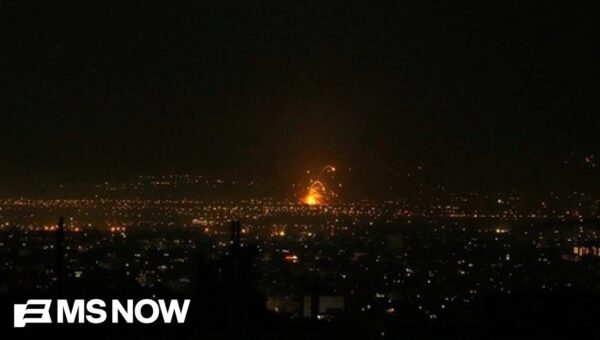
Trump’s Shifting Iran Stance: From Dealmaker to War Talk
President Trump's rhetoric on Iran has undergone a significant shift, contrasting his past calls for diplomacy with recent threats of military action. This shift follows a period of escalating tensions, withdrawal from the Iran nuclear deal, and renewed indirect negotiations.
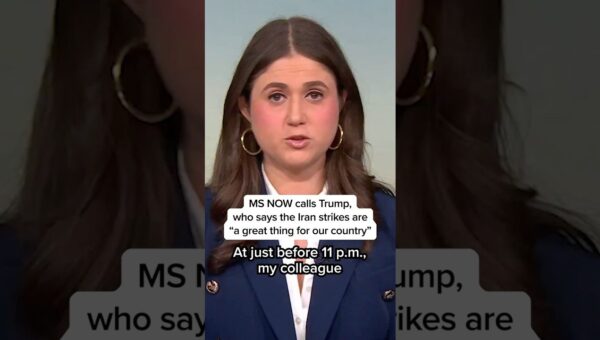
Trump Hails Iran Strikes as ‘Great Thing for Our Country’
President Donald Trump described the recent strikes in Iran that killed the country's supreme leader as "a great thing for our country." In a call with MS NOW, Trump also called celebrations in both Iran and the U.S. "fantastic."
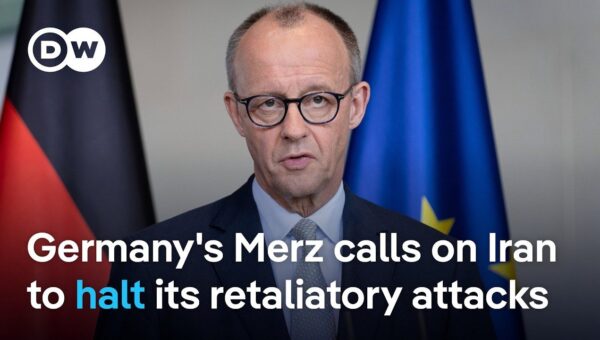
Germany on US-Israel Strikes: No “Lecturing” Partners
Germany's Chancellor Scholz calls on Iran to end its attacks and nuclear program but refrains from "lecturing" US-Israel on international law regarding recent strikes. Berlin increases security for Jewish institutions amid fears of retaliation.