UK Faces Economic Woes as Legal Migration Falls
The UK is facing potential economic repercussions as legal migration figures decline, with projections indicating a significant shortfall in government revenue. Experts debate the true economic impact of migration, with concerns raised about labor shortages in key sectors and the long-term consequences of educating foreign nationals in critical STEM fields.


UK Grapples with Economic Impact of Declining Legal Migration
New government figures reveal a significant drop in legal migration to the UK, a trend that, while potentially aligning with public sentiment, is raising serious economic concerns. Projections indicate that net migration could turn negative by year’s end, prompting warnings from economic analysts about a substantial shortfall in government revenue. The Institute for Fiscal Studies (IFS) estimates a potential £30 billion gap in Treasury funds, threatening to erode the borrowing headroom available to the government.
The Economic Paradox: Poorer Nation or Perceived Gain?
The unfolding situation presents a complex paradox for policymakers and the public. While the reduction in migration figures may satisfy a segment of the electorate seeking tighter border controls, the economic ramifications are becoming increasingly apparent. As argued by commentator Matthew Parris, a decrease in migration, particularly of working-age individuals, could lead to a less prosperous nation. “Migration makes us richer,” Parris stated, highlighting the potential for reduced economic output if the flow of migrants ceases. However, this perspective is challenged by others who question the direct per capita economic benefit of all forms of migration.
Debate Over Migration’s Economic Contribution
The extent to which migration bolsters the UK’s economy is a subject of intense debate. Juliet Samuel, writing for The Times, expressed skepticism about the claim that all migration leads to increased national wealth. She differentiated between highly skilled migrants, such as those with PhDs in critical fields, whose contributions are undeniable, and other groups. “If you have a huge wave of people coming in, you know, like the Boris wave, for example, where only one in five of those people even had permission to work in this country, then it seems extremely unlikely that that makes us richer,” Samuel contended. This suggests that the composition and skill level of migrants are crucial factors in determining their economic impact.
Conversely, Parris countered that many migrants are inherently motivated to work and contribute economically. “Most migrants are likely to be more productive than most of the native population because they’ve come here to work; they do work and they tend to leave before or at the age of retirement so they don’t cost as much in pensions,” he noted. He also pointed to the critical roles migrants fill in essential sectors, such as healthcare and agriculture, implying that their absence would create significant labor shortages.
Addressing Labor Shortages: Wages vs. Immigration
The potential vacuum left by reduced migration raises the question of how essential jobs will be filled. Samuel argued that the persistent shortage of workers in sectors like social care is not due to a lack of potential migrants, but rather to poor pay and conditions. “The reason why we have a shortage of social care workers is that the pay and conditions for those jobs are appalling,” she stated. She suggested that relying on migration to fill these roles merely masks underlying systemic issues within the sector, leading to high staff turnover and an unsustainable system. The implication is that improving wages and working conditions would attract domestic workers.
However, this approach presents its own set of challenges. Increasing wages significantly in sectors like social care would necessitate greater government expenditure or higher costs for care recipients. This is particularly pertinent at a time when government revenue may be constrained by lower migration figures. The issue of funding social care, especially with an aging population, remains a contentious political and economic hurdle.
Costing Migration: A Complex Equation
Matthew Parris raised concerns that the economic models used to assess the impact of migration often fail to account for the full spectrum of costs. He argued that the assumption that migrants are solely economic contributors overlooks potential burdens on public services and infrastructure. “When those people become entitled to benefits, uh, they will be receiving them because they’re in many cases below the threshold where you become a net uh contributor to the system,” Parris explained. He also pointed out the costs associated with dependents, education for children, and the strain on housing and infrastructure, suggesting that initial cost-benefit analyses might be “bogus” if these factors are omitted.
The Small Boats Dilemma: Political Dividend or Futility?
Beyond legal migration, the issue of illegal immigration, particularly the rise in small boat crossings, continues to be a significant political challenge. Despite government efforts and proposed solutions like the Rwanda scheme, crossings have increased. Parris questioned whether the government is achieving any political gain from this situation, suggesting that it primarily benefits reformist parties who can highlight the failures of the major parties to control illegal immigration. “No. No. This is this is good for reform and for reform only,” he stated, emphasizing that the continued flow of boats undermines the credibility of established political forces.
Both Parris and Samuel expressed support for the Rwanda scheme, believing it could have been effective in deterring illegal crossings if implemented. They view the ongoing situation as a “social civic catastrophe” with worsening practical problems and societal divisions.
Educating Future Rivals: Chinese Students in UK Universities
A distinct, yet related, concern highlighted by Samuel revolves around the significant increase in Chinese students pursuing postgraduate STEM (Science, Technology, Engineering, and Mathematics) courses in UK universities. Her research indicates that top UK universities are now educating as many Chinese postgraduate STEM students as British students, and in some cases, more. “We’re basically cannibalizing our future. Instead of producing the next generation of British scientists who are going to contribute to innovation, plug skills shortages, uh, we’re just importing Chinese students on mass from abroad,” she warned.
Samuel expressed alarm at the potential security risks and the lack of transparency regarding these students’ affiliations with the Chinese state. She described an environment where Chinese students often remain within their own communities, and even research materials are being produced in Mandarin, potentially excluding British students and researchers. This situation, she argues, is “changing the fabric of our science system.” The dual issues of national security and the financial reliance of UK universities on international student fees, particularly from China, are seen as critical factors that could be crowding out domestic talent.
Looking Ahead: The Economic Tightrope
As the UK navigates the complex interplay of migration policy, economic prosperity, and national security, the coming months will be crucial. The government faces the challenge of balancing public demand for reduced migration with the economic necessity of a robust workforce and tax base. The effectiveness of current policies in addressing illegal immigration and the long-term implications of international student recruitment strategies will be closely watched. The economic models forecasting potential shortfalls will likely be scrutinized, and debates over investment in public services versus fiscal prudence are set to intensify.
Source: Stopping Migration Makes Us Poorer | Matthew Parris (YouTube)

Related Articles


US Launches Iran Operation Alone as Allies Distance Themselves
The United States has launched a major military operation in Iran, "Operation Epic Fury," without the backing of NATO allies, who have publicly distanced themselves. Critics argue this unilateral action highlights America's growing international isolation and economic instability, while ordinary citizens face increasing domestic hardship.


Tariffs Squeeze Automakers: Price Hikes and Feature Cuts Loom
Automakers face unsustainable tariff costs, forcing difficult decisions between raising prices, cutting features, or absorbing significant profit losses. Toyota, for example, incurred nearly $8 billion in tariff costs in its 2026 fiscal year, leading to a 25% drop in profits.

Tariff Reversal Sparks Economic Ripples
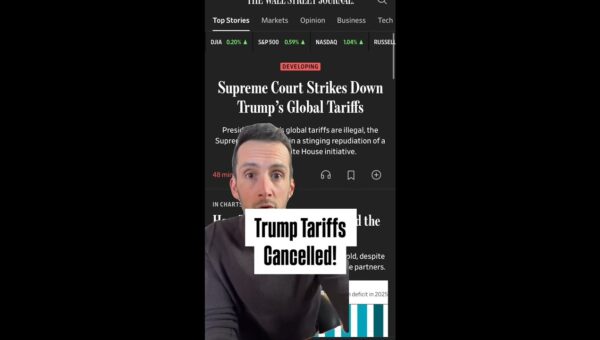
The Supreme Court's decision to strike down key Trump-era tariffs as unconstitutional has significant implications for trade and inflation. While expected to ease some cost pressures, the ruling leaves questions about tariff refunds unresolved.