UK Defence Minister: Britain Must Prepare For War In 3-5 Years
Britain must prepare for war within three to five years, warns UK Armed Forces Minister James Heappey. He calls for accelerated defence spending to 3% of GDP by 2029, citing the growing Russian threat and lessons from Ukraine. However, Defence Secretary John Healey reiterates the commitment to 3.5% by 2035, leading to concerns about a 'say-do gap' in national security readiness.

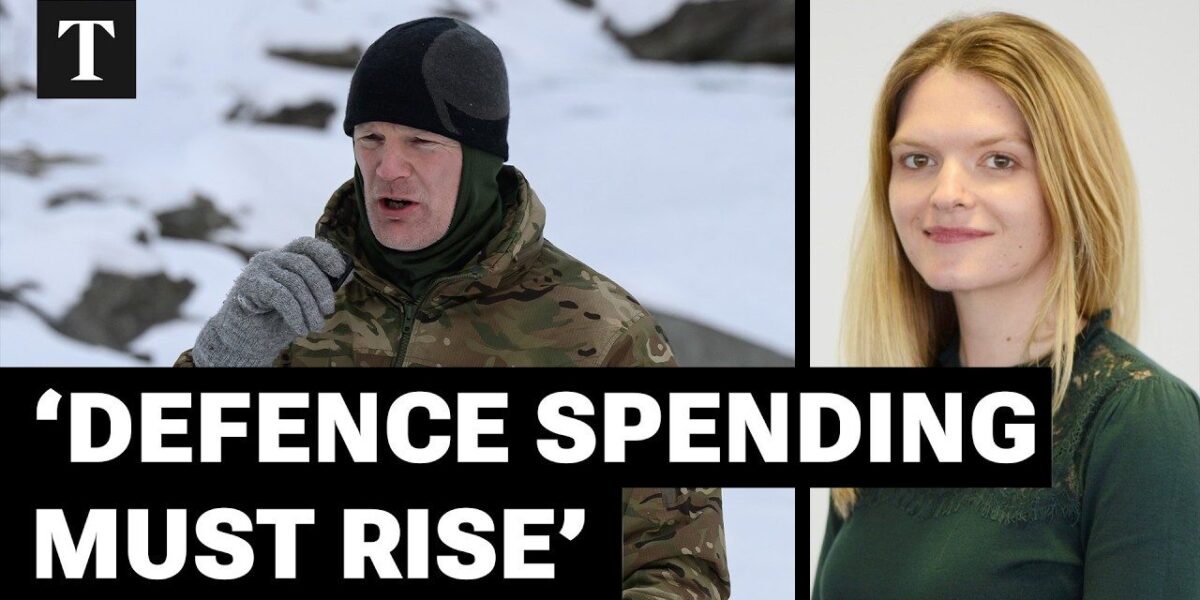
UK Defence Minister Warns of Imminent War Risk
Britain must be prepared for the possibility of war within the next three to five years, a stark warning has been issued by the UK’s Armed Forces Minister, James Heappey. Speaking on The Times’ ‘General and the Journalist’ podcast, Heappey articulated a pressing need for the nation to bolster its defence capabilities, citing the escalating threat posed by Russia.
Heappey stated, “We need to be ready.” He believes the military is currently fit to fight but emphasized the urgent requirement to adopt lessons learned from the conflict in Ukraine, particularly in equipping the army with advanced drone technology and integrated systems. “Warfare isn’t just about hardware. It’s about resilience,” he asserted, highlighting the multifaceted nature of modern conflict.
Call for Increased Defence Spending
Beyond immediate operational readiness, the Armed Forces Minister advocated for a significant and accelerated increase in defence spending. He expressed a desire to see the UK align with other European allies by committing up to 3% of national earnings to defence by 2029, within the current parliamentary term. “I would back it,” Heappey remarked, referencing his earlier allusions to this goal at the Munich Security Conference.
His focus, he clarified, is on ensuring that any increased funding is strategically allocated to procure the most effective capabilities for soldiers, sailors, and airmen. He also pointed to Germany’s proactive approach to adopting new warfare doctrines as a model, noting that while Germany may not be starting from a low base, they are embracing modern warfare concepts with significant momentum.
Defence Secretary’s Stance on Spending Targets
In contrast to Heappey’s direct call for accelerated spending, Defence Secretary John Healey adopted a more cautious tone when questioned about reaching the 3% target within the current parliament. During an interview marking the four-year anniversary of Russia’s full-scale invasion of Ukraine, Healey reiterated the government’s commitment to the NATO pledge of spending 3.5% of GDP on defence by 2035. This commitment, he noted, was agreed upon by all 31 NATO nations last summer and serves as a robust signal to Russia and other adversaries.
Healey described defence as the “central organizing principle of this government” and asserted that “hard power is the currency of this age.” However, his response to the immediate 3% target by 2029 was perceived by some as a deliberate avoidance of a direct commitment, a stance described by The Times’ Defence Editor, Lissa Brown, as “playing a very straight bat.”
Expert Concerns Over ‘Say-Do Gap’
Lissa Brown expressed surprise at the bluntness of Heappey’s remarks, considering them a significant statement from a serving minister. She noted that Heappey’s background in special forces likely informs his understanding of the potential future threats faced by British soldiers. Brown also highlighted comments from the Estonian ambassador, who urged the UK to reach the 3% spending target by 2029, and echoed the sentiment that “Russia might not wait until NATO is ready to face it.”
Columnist Edward Lucas, writing for The Times, articulated a deep concern over the UK’s inaction, labelling it a “say-do gap.” He argued that while Ukraine’s resistance has bought the West time, countries like Britain have failed to use this period effectively for rearmament. Lucas pointed out that Russia, despite its struggles in Ukraine, has rapidly modernized its forces, particularly in drone warfare and electronic countermeasures, while the UK lags behind, even lacking significant domestic air defence capabilities.
“We have, for example, effectively no air defences in this country. We rely entirely on our NATO allies to intercept anything heading our way before it gets here. I think that’s a very rash assumption to make that that’s going to work,” Lucas warned. He contrasted the UK’s approach with that of frontline NATO states like Estonia and Finland, who are demonstrably scaling up their military spending and capabilities.
Vulnerability and Readiness for Large-Scale Conflict
General Sir Rory Walker, a high-ranking commander in the British Army, has issued a stark warning about the UK’s potential vulnerability to “large-scale combat operations” as early as next year. This implies a conflict involving significant troop numbers and equipment, a scenario for which the British Army, according to Lucas, is ill-prepared. “We have no reserves effectively in the British army. We have no second echelon. Um, we have some excellent weapons but once they run out of munitions or get destroyed in the first week of the war um what then?” Lucas questioned, underscoring the lack of depth in current British military readiness.
Former NATO Deputy Supreme Allied Commander Europe, General Sir Richard Sheriff, concurred with the assessment of a “covert war” currently being waged below the threshold of conventional conflict. He stressed that the primary requirement is deterrence, which can only be achieved through readiness. “This is not about being prepared being wanting in any way to go to war. But but it’s not crying wolf. The reality is the wolf is firmly at the gate,” Sheriff stated.
Challenges to Increased Defence Investment
The prospect of significantly increasing defence spending faces considerable political and economic hurdles. Labour figures, including Shadow Chancellor Rachel Reeves, are reportedly hesitant due to the substantial financial implications. Furthermore, unions like Unite have pointed to the delay in a Defence Investment Plan as a sign of internal wrangling over spending, impacting job security within the defence industry.
General Sheriff acknowledged that the “say-do gap is getting wider and wider,” noting resistance from Labour backbenches and the Treasury to accelerated spending. He argued that achieving the necessary scale of rearmament would require the British public to accept potential sacrifices in other public services, a difficult proposition that necessitates sober public education on the realities of the current security landscape.
He concluded by emphasizing that defence is not a choice between “warfare or welfare,” but rather a prerequisite for all other aspects of a functioning society. “Without proper defence, there’s no welfare. There’s no national health service. there’s no there’s no education,” he asserted, reinforcing defence as the “first responsibility of government.” The debate over defence spending and readiness highlights a critical juncture for the UK as it navigates an increasingly volatile global security environment.
Source: Defence Spending Must Rise To Meet Russian Threat Says Defence Minister (YouTube)

Related Articles

Trump: Iran Strikes Ahead of Schedule, Expects ‘Great Deal for World’
Three U.S. service members have been killed amid escalating conflict with Iran, President Trump confirmed. He stated that strikes are ahead of schedule, with senior Iranian leaders killed, and expressed optimism for a "great deal for the world" despite ongoing talks with Iranian officials.

Trump’s Putin Stance: US Strategy and Global Implications
Analysis suggests Donald Trump's approach to the Ukraine war involves pressuring Kyiv, but US involvement is crucial for resolution. China's influence and the 'MAGA' agenda's geopolitical implications are key factors.


US Strikes Iran: Mounk and Fukuyama Discuss Unpredictable Conflict
Leading political scientists Yascha Mounk and Francis Fukuyama analyze the recent US strikes on Iran, warning of unpredictable outcomes and internal instability. They question the objectives of the "war of choice" and its potential to destabilize the region, while also discussing the shifting global perceptions of Israel.