UK Defence Delays Risk Groundbreaking Helicopter Hub, Jobs
Delays in a crucial £1 billion defence contract for medium helicopters are putting Leonardo's Westlands facility at risk, threatening over 3,000 jobs and the future of the UK's first autonomous helicopter, the Proteus. The company has been the sole bidder for 18 months, with a decision now expected in March.

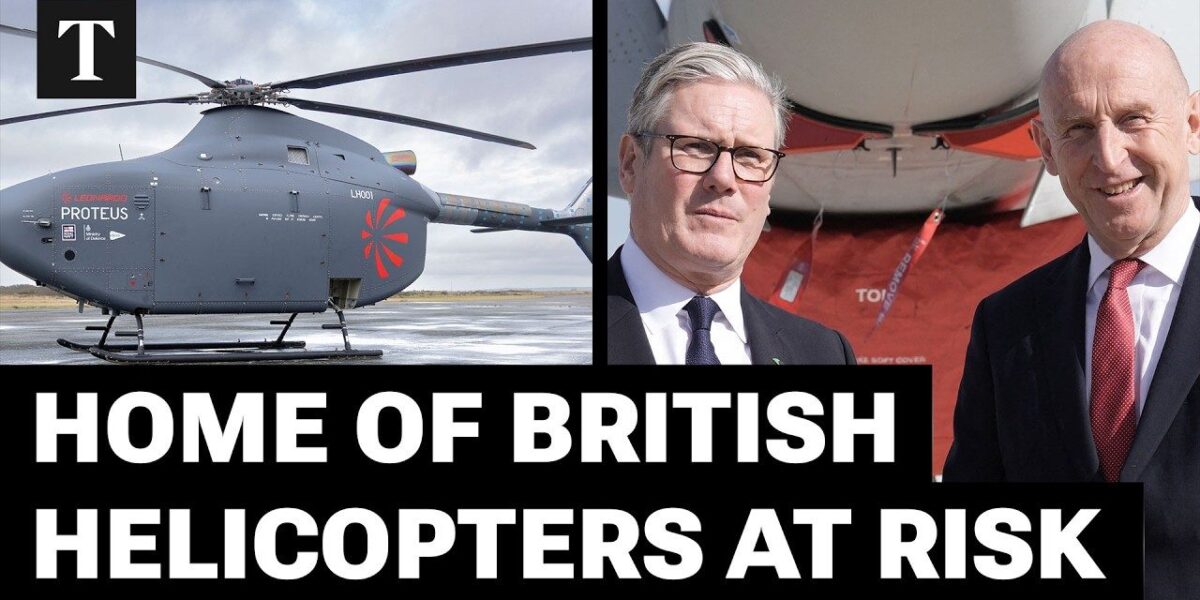
Defence Spending Delays Threaten UK’s Autonomous Helicopter Hub and 3,000 Jobs
A critical one-billion-pound defence contract for medium-sized helicopters, vital for the future of the UK’s autonomous aviation capabilities and the jobs of thousands, faces significant delays. Leonardo, a leading military aircraft manufacturer, is awaiting a decision from the Ministry of Defence (MOD) on a contract for which it has been the sole bidder for nearly 18 months. The protracted decision-making process, now extended until March, puts the company’s Westlands facility in Yeovil, and its groundbreaking Proteus helicopter project, at risk of closure or substantial scaling back, potentially impacting over 3,000 direct jobs and an additional 12,000 in the supply chain.
The Proteus: A Leap in Autonomous Aviation
At the heart of the controversy is the Proteus, hailed as the UK’s first autonomous helicopter. Developed through a collaboration between Leonardo, the MOD, and the Royal Navy, the Proteus represents a significant advancement in military aviation technology. Its maiden voyage took place in January of this year. Unlike remotely piloted drones, the Proteus is an experimental platform designed to ‘think for itself,’ making autonomous decisions without direct human input during flight. This capability is crucial for modern naval operations, particularly in roles such as anti-submarine warfare and persistent surveillance.
“It’s not an unmanned helicopter… It’s an autonomous test bed… a platform that thinks for itself, will fly for itself, it will make decisions by itself without a human being actually telling it what to do at any particular point.”
Adam Wardrop, Leonardo’s Vice President of Market Development, explained the sophisticated nature of the Proteus, emphasizing its role as an advanced testbed rather than a simple drone. The autonomous capabilities are intended to augment existing manned aircraft and warships, offering a cost-effective way for the Royal Navy to enhance its operational capacity amidst ongoing recruitment and retention challenges.
Potential Roles and Operational Advantages
The Proteus is envisioned for missions currently classified as ‘dangerous, dirty, and dull’ – tasks that require lengthy periods of operation, such as hovering over the sea to detect submarines. By deploying an autonomous platform for these roles, human crews could be reallocated to more dynamic missions requiring complex judgment. The Proteus could remain airborne for significantly longer durations than manned helicopters, reducing the need for crew support like feeding and watering, and crucially, minimizing risk to life.
Furthermore, the Proteus has been designed with challenging operational environments in mind. Wardrop highlighted that the helicopter was built from the ground up to operate in harsh conditions, including the North Atlantic and potentially the Arctic. This resilience is vital, especially considering the UK’s armed forces have acknowledged difficulties operating in extreme cold, as noted by the head of the RAF.
Economic Stakes for Yeovil and the UK
The potential closure or scaling back of Leonardo’s Westlands facility carries severe economic consequences for Yeovil and the wider South West region. The site directly employs over 3,000 individuals, with an average wage of £58,000 per year, a significant contribution to the local economy. Beyond direct employment, an estimated 12,000 jobs in the supply chain are also at risk. Adam Dance, the MP for Yeovil, expressed grave concern, stating that the economic impact on the town would be ‘huge’.
The social value generated by Leonardo’s presence is also substantial. The company contributes approximately £1.2 million annually in social value and apprenticeships to Yeovil College. Dance stressed that the loss of these skilled jobs would be irreparable, making it difficult for the UK to rebuild its expertise if the government later decides to invest in autonomous helicopter technology.
“The real risk I have is that if we don’t get this new medium helicopter contract, then protest could be lost… if we don’t get this new medium helicopter contract, then protest could be lost because you have not it’s not the fact that protest couldn’t be there, but the money isn’t there for protest at the moment.”
He urged the government to act decisively, characterizing the contract as a ‘win-win’ situation with a single bidder already identified.
Frustration and Uncertainty Amidst Defence Review
Leonardo’s leadership has expressed frustration over the prolonged delay. While acknowledging the importance of the contract, they maintain that the Westlands site is not solely dependent on this single deal, having operated there for over 80 years. However, the lack of a recent UK government contract for 14 years has created financial strain.
The delay is intrinsically linked to the government’s ongoing Defence Industrial Strategy and the broader Defence Investment Plan. Leonardo remains optimistic that funding will materialize, given the global trend towards autonomous and uncrewed aviation, and their position as a world leader in this technology. However, the uncertainty cast by the delayed decision looms large.
An MOD spokesperson confirmed that the medium helicopter program is active and that no final procurement decisions have been made, with outcomes to be confirmed in due course. The outcome of this decision will not only shape the future of Leonardo’s operations in the UK but also influence the nation’s strategic defence capabilities and its standing in the global aerospace sector.
Looking Ahead
With the decision deadline set for March, all eyes are on the Ministry of Defence. The coming weeks will be critical for Leonardo, its employees, and the UK’s defence industry. The government faces a choice: secure a vital domestic defence capability and safeguard thousands of jobs, or risk losing a crucial technological edge and significant economic investment due to protracted indecision.
Source: Defence Spending Delays Put Groundbreaking Helicopter Hub And 3,000 Jobs At Risk (YouTube)

Related Articles


UK Defence Minister: Britain Must Prepare For War In 3-5 Years
Britain must prepare for war within three to five years, warns UK Armed Forces Minister James Heappey. He calls for accelerated defence spending to 3% of GDP by 2029, citing the growing Russian threat and lessons from Ukraine. However, Defence Secretary John Healey reiterates the commitment to 3.5% by 2035, leading to concerns about a 'say-do gap' in national security readiness.


America’s Fading Alliances: Munich Conference Signals a Global Realignment
The Munich Security Conference revealed a growing chasm between U.S. rhetoric and allied perceptions. Observers noted a cold reception for the American delegation, signaling a potential decline in U.S. influence and a strategic pivot by European nations towards greater self-reliance.


Europe Faces Post-Cold War Order Collapse After Munich Security Summit
Western leaders at the Munich Security Conference acknowledged the end of the post-Cold War security order, raising concerns for Europe's future. Ukrainian President Zelenskyy urged continued support against territorial concessions, while transatlantic tensions underscored the shifting geopolitical landscape.