UK Criticized for ‘Dereliction of Duty’ in Iran Crisis
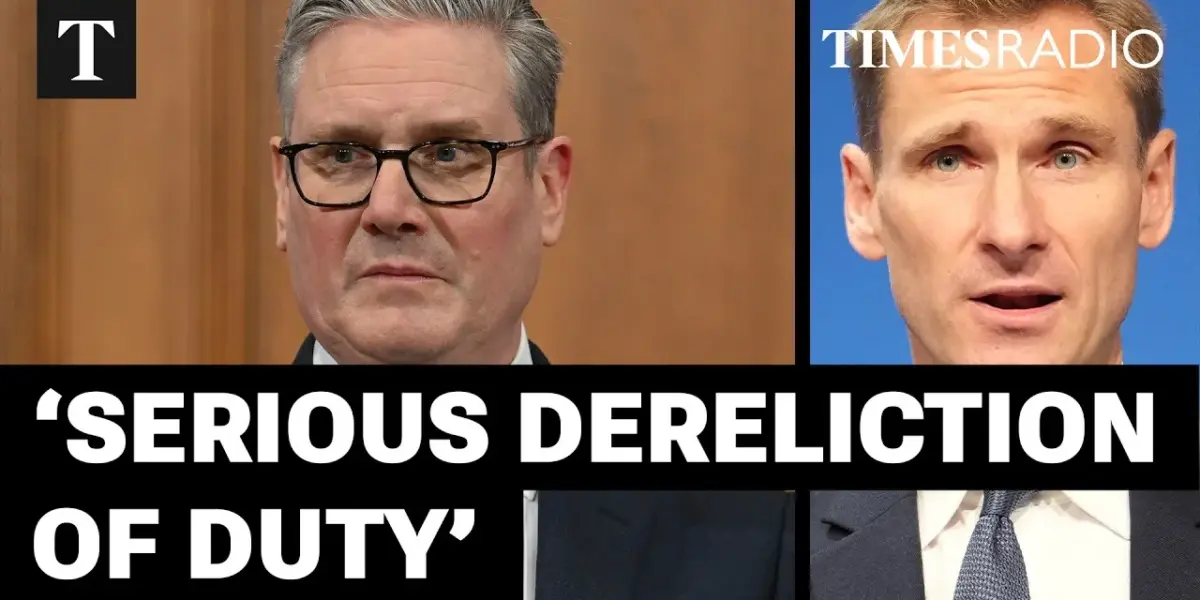
Shadow Home Secretary Chris Philp has accused the UK government of a "serious dereliction of duty" in its response to the Iran crisis, citing a failure to deploy naval assets and undermining the US alliance. Philp also outlined Conservative plans for increased policing and a tougher stance on crime.

UK Faces Scrutiny Over Response to Iran Tensions
London – The United Kingdom’s handling of the escalating crisis involving Iran has come under sharp criticism, with accusations of a “serious dereliction of duty” leveled against the current government. Shadow Home Secretary Chris Philp, speaking on Sunday, argued that the government failed to take timely and appropriate action to protect British interests and allies in the Gulf region and Cyprus, potentially undermining the crucial relationship with the United States in the process.
Allegations of Missed Opportunities to Deploy Naval Assets
Philp asserted that the government was aware of the impending escalation in Iran approximately three weeks prior to the recent attacks. This awareness, he suggested, stemmed from requests made by the United States to utilize British bases, including Diego Garcia and RAF Fairford, for operations related to the region. The refusal to grant access to these bases, according to Philp, has damaged the “special relationship” with the US, a partnership vital for trade, commerce, and defense.
More critically, Philp highlighted the perceived inaction regarding the deployment of British naval assets. “He should have moved British ships into the theater to protect British assets, British citizens and Gulf States,” Philp stated, referring to the Prime Minister. He specifically mentioned the potential deployment of the HMS Dragon, an air defense destroyer, and the aircraft carrier HMS Prince of Wales, suggesting they could have been positioned weeks ago to safeguard Cyprus and Gulf States. “But he didn’t do that. That was a serious dereliction of duty,” he added.
The Shadow Home Secretary pointed out that as of the interview, these significant naval assets were still in Portsmouth, undergoing preparation, rather than actively engaged in defense operations in a volatile region. “They could have done that weeks ago, but they didn’t. Big mistake. Dereliction of duty,” he reiterated.
Gulf States Express Dismay Over Lack of UK Support
The criticism is amplified by the reported dismay from Gulf States regarding the UK’s perceived lack of assistance in their defense. Philp emphasized the strategic importance of the Gulf region, particularly the Straits of Hormuz, a critical shipping lane for oil. He noted that drones and munitions from Iran have been reaching Gulf states like the UAE, Kuwait, and Oman, causing damage and posing a threat to British citizens living in the area.
“If we had that defense air defense destroyer in the Gulf, we could have helped prevent those missiles and drones getting through,” Philp argued. He contended that the government’s alleged inaction, described as being “asleep at the wheel,” has left these regions vulnerable.
Iran’s Record and Justification for Action
Philp detailed Iran’s controversial record as a justification for a more robust response. He cited the regime’s alleged killing of 35,000 of its own citizens during protests, its sponsorship of terrorism including Hamas, its pursuit of nuclear weapons, and its support for Houthi rebels in Yemen. He also mentioned Iranian actions impacting British soil and attacks on shipping in the Red Sea and the Gulf.
“They’ve also sponsored attacks on British soil. They’ve um helped they’ve sponsored and funded the Houthi rebels in Yemen where there’s a bloody civil war. Uh they’ve taken shots at shipping transiting I think the Red Sea as well as the Gulf. Uh so, you know, they’re a regime who has exported terrorism, murdered their own people and uh and even taken action on British soil as well,” Philp stated.
“And I think when that happens, it’s reasonable um to take uh, you know, take action against it.”
Debate on Diplomacy vs. Military Intervention
The discussion touched upon the historical approach to Iran, with Philp contrasting the current stance with that of the previous Conservative government, which he said was party to the Joint Comprehensive Plan of Action (JCPOA) and believed in diplomacy. He suggested that the current “gung-ho” attitude is influenced by the US’s decision to take military action.
Philp acknowledged that while he has not seen the intelligence assessments guiding the US actions, he assumes there is justification for their military involvement. He also drew a distinction between the current situation and the 2003 invasion of Iraq, arguing that the scale and immediacy of Iran’s actions against its own people, and potentially against allies, necessitate a different response than historical interventions.
“What we saw in Tehran and across Iran in the last two or three or four weeks was 35,000 people being being slaughtered and and doing nothing when that happens. And it is happening. It’s a current, you know, current thing. It’s not historic. It’s happening now,” Philp asserted. He explicitly stated that British forces should be used to destroy Iranian military installations responsible for launching missiles and drones at Gulf countries where British citizens reside.
Ground Forces and Regime Change: A Different Calculus
When questioned about the potential deployment of ground forces for regime change, Philp expressed caution. He described it as a “whole different story” requiring careful forethought and a well-constructed plan, citing the mixed results of troop deployments in Iraq and Afghanistan. He indicated that such a move is not currently being proposed and is certainly not something to be rushed into.
Shift to Domestic Policy: Police Numbers and Crime Fighting
The conversation then pivoted to domestic policy, specifically proposals from the Conservative party regarding policing. Philp outlined a plan to recruit 10,000 additional police officers, funded in part by welfare reductions. He accused the Labour government of overseeing a decline in police numbers, a claim contested by the interviewer who cited government figures.
Philp countered by stating that while the previous Conservative government left office with record numbers of police officers, Labour has since overseen a reduction. He detailed a proposal to target these new officers towards “hotspot patrolling” in high-crime areas, utilizing measures such as increased stop-and-search tactics and live facial recognition to combat crimes like shoplifting, mobile phone theft, burglary, and robbery.
Response to Ian Huntley’s Death
In response to a question about the death of convicted child murderer Ian Huntley, Philp stated he would not mourn his death, describing him as an “evil man.” While acknowledging that inmates should not be attacked, he reiterated that Huntley was an evil individual and his passing would not be mourned.
The interview concluded with Philp’s sharp critique of the government’s foreign policy and his party’s domestic agenda, setting the stage for continued political debate on national security and law and order.
Source: Iran Crisis: Starmer Committed ‘Serious Dereliction Of Duty’ | Chris Philp (YouTube)

Related Articles

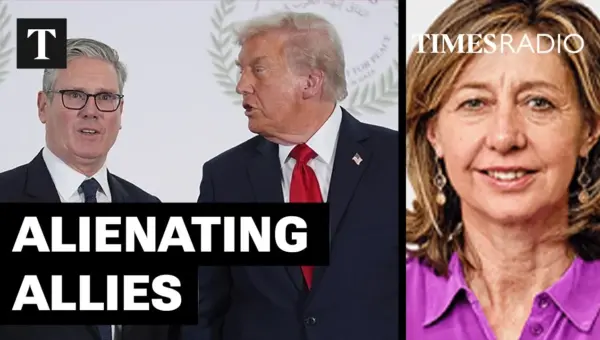
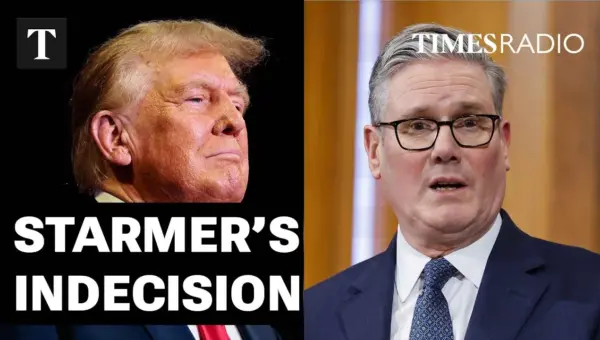
Starmer’s Iran Stance Angers Trump, UK-US Allyship Strained
Prime Minister Keir Starmer's handling of the Iran crisis has reportedly strained relations with the US and President Trump, who criticized the UK's 'belated' involvement. Meanwhile, Iran faces internal turmoil with the selection of a new Supreme Leader amidst escalating regional attacks and intelligence breakthroughs.
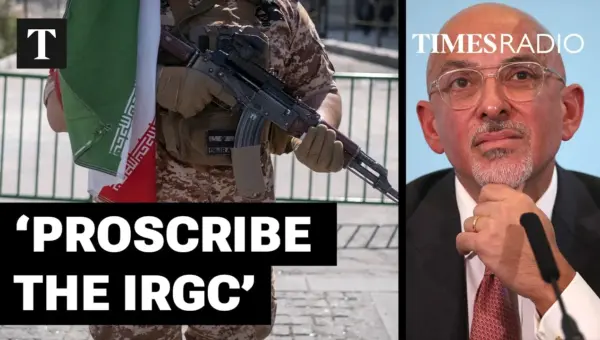
Ex-Chancellor Urges UK to Designate Iran’s IRGC as Terrorist Group
Former Chancellor Nadhim Zahawi urges the UK to designate Iran's IRGC a terrorist group and fully support the US amid escalating regional tensions. He criticizes the government's perceived inaction and highlights Iran's nuclear program as a critical threat.

UK Must Clarify Iran Stance, Ex-Minister Urges
Former Security Minister Tom Tugendhat urges the UK to clarify its stance on the Iran conflict, emphasizing logistical challenges and the need to maintain the crucial US alliance. He argues against direct UK involvement in offensive strikes while stressing the importance of supporting allies defensively.