UK Asylum Hotels: Government Off Track, Migration Expert Warns
A leading migration expert warns the UK government is failing to meet its target of ending asylum hotel use, as small boat arrivals rise by 13%. Maline Sumpion highlights challenges in tackling smuggling gangs and reliance on France, while noting the slow progress on alternative accommodation and a strained asylum appeals system.

Government Faces Uphill Battle on Asylum Hotel Promise
The United Kingdom government is not on track to fulfill its pledge to eliminate the use of asylum hotels by the end of its parliamentary term, according to a leading migration expert. Despite a recent dip in the number of asylum seekers housed in hotels, the overall trajectory suggests the target remains elusive, with challenges rooted in fluctuating asylum claims, a strained appeals system, and slow progress on alternative accommodation.
Small Boat Arrivals Increase Amidst Gang Crackdown Concerns
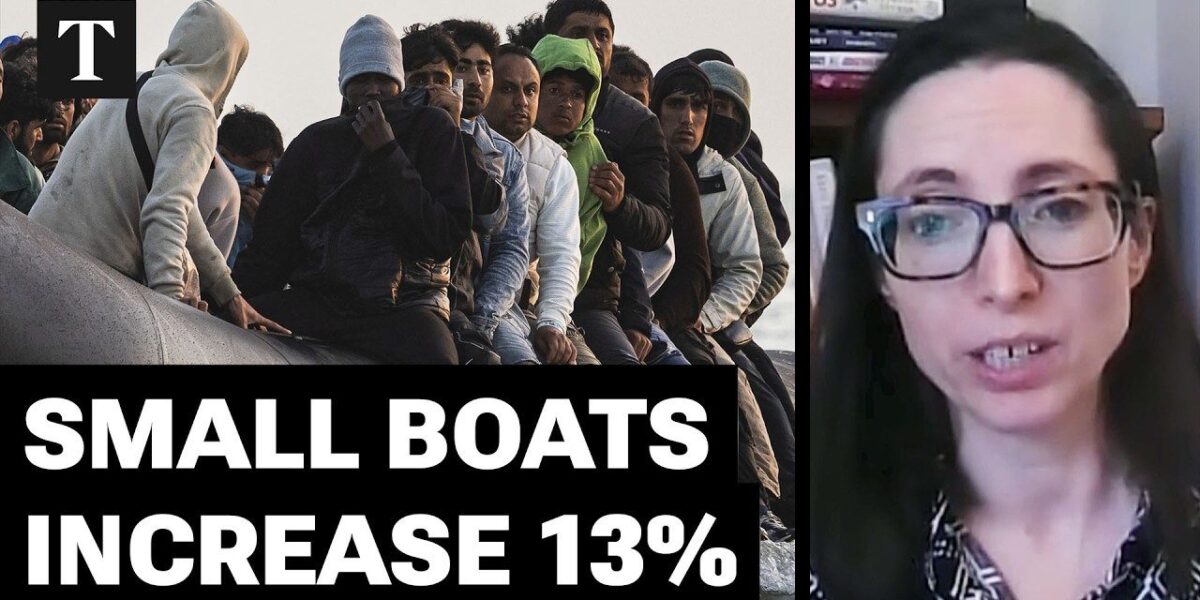
Official figures for 2025 reveal a concerning rise in small boat arrivals, with a 13% increase compared to the previous year, bringing the total to 41,472 individuals. This trend casts doubt on the effectiveness of the government’s strategy to dismantle smuggling gangs. Maline Sumpion, Director of the Migration Observatory, stated, “It’s clear so far that the efforts to smash the gangs are not going that well.” She explained that an enforcement-based approach struggles to stem the flow across the Channel, as the market for smuggling is resilient. “If you take down one smuggling gang, this is a thriving market and new people will move in to fill the space as long as there is still very high demand for people wanting to come to the UK,” Sumpion noted.
The expert pointed to factors such as an increase in Eritrean nationals arriving and indications of a decreased smuggling price as evidence that the situation is complex, influenced by both policy and global events. The notion that a more determined effort could simply stop these arrivals is challenged by the reliance on international cooperation, particularly with France.
France’s Role and the Asylum System’s Strain
Sumpion highlighted the significant reliance of the UK government on France to curb small boat crossings. “The really big challenge for the government here is that they are quite reliant on France,” she commented. “There is a lot of stuff actually that France could do if they were really committed to ending or at least significantly reducing the small boats phenomenon.” This includes enhanced enforcement and, crucially, a willingness to accept back individuals who have crossed the Channel. However, France, which receives a comparable or higher number of asylum applications, does not perceive the issue with the same political urgency as the UK, making robust cooperation difficult.
“France has receives more asylum applications in most years than the UK does, and so they don’t, quite reasonably, they don’t see it as their problem,” Sumpion elaborated. While acknowledging that organized criminal gangs operating on French coastlines are detrimental to France, the political pressure remains significantly higher in the UK.
Asylum Applications and Hotel Occupancy
In contrast to the rise in small boat arrivals, the number of people claiming asylum in the UK saw a 4% drop in 2025, reaching 101,000. Sumpion cautioned against interpreting this as a definitive downward trend, noting that such figures fluctuate. The decrease in asylum applications appears to be driven by fewer arrivals via small boats and a reduction in individuals arriving on student visas who then claim asylum. This latter point could be attributed to a general decline in student numbers or stricter measures on certain visa applications, particularly those involving family members.
At the end of 2025, 30,657 asylum seekers were being housed in temporary UK hotels. While this figure represents the lowest level in 18 months, it remains substantial and far from the government’s goal of complete elimination. “The government is not on track to eliminate the use of asylum hotels by the end of the parliament because the numbers are sort of fluctuating up and down but not really going in any clear direction,” Sumpion asserted.
Pathways to Reducing Hotel Use
For the government to significantly reduce or eliminate its reliance on hotels, Sumpion outlined three essential conditions: a substantial decrease in the overall number of asylum claims, a reformed and more efficient asylum appeals system, or the successful provision of alternative accommodation. The government has expressed intentions to address the appeals system, which is currently overwhelmed by the volume of refused asylum seekers appealing decisions. However, implementing such institutional changes is a complex and lengthy process.
“The big challenge I think that what would have to happen in order for the government to be able to significantly reduce or eliminate the use of hotels by the end of the parliament, you need one of three things basically: either you would need a significant reduction in the number of people claiming asylum, or you need to find some way of enabling the asylum appeals… or they’d need to find some other form of accommodation for people to to stay.” – Maline Sumpion, Migration Observatory Director
Progress on securing accommodation beyond hotels has been notably slow, adding another layer of difficulty to the government’s objectives. Regarding the composition of immigration judges and their potential influence on asylum decisions, Sumpion noted that while many judges have backgrounds in immigration law, it is challenging to definitively link this to specific outcomes in an evidence-based manner. Nevertheless, she acknowledged that a perception of high grant rates for asylum, both at initial decision and through the courts, can influence individuals’ decisions to seek entry to the UK.
Looking Ahead
The coming months will be critical in observing whether the government can accelerate progress on alternative accommodation and reform the asylum appeals process. The continued reliance on international cooperation, particularly with France, to manage Channel crossings remains a significant variable. Without tangible shifts in these areas, the promise of ending the use of asylum hotels appears increasingly distant, with the complex realities of migration continuing to challenge policy objectives.
Source: Government Not On Track To Eliminate Asylum Hotels | Migration Expert (YouTube)

Related Articles

Ex-Russian Soldier Seeks UK Asylum After Ukraine War Ordeal
A former Russian army conscript, Alisha Hassanov, has claimed asylum in the UK after a harrowing experience fighting in Ukraine. Arrested in Russia for an expired work permit, he was forced to choose between prison and fighting, ultimately escaping to Europe and then crossing the Channel.


Congressman Swalwell Slams Trump’s Iran Strikes, Cites ‘No Plan’
Congressman Eric Swalwell has strongly condemned the recent U.S. military strikes in Iran, deeming them illegal and lacking a clear strategic plan. He joins Democrats in demanding a War Powers vote, asserting that the administration has failed to present evidence of provocation or a post-strike strategy. Swalwell criticizes the move as a distraction from domestic issues and a departure from campaign promises.


Iran Celebrates After Israeli Strikes Eliminate Top Leaders
Following Israeli airstrikes that reportedly killed Iran's Supreme Leader and top staff, celebrations have erupted among the Iranian diaspora. While a "monumental event," analysts caution against immediate expectations of a smooth democratic transition due to the IRGC's power and a divided opposition.