Two Trillion Galaxies: Unveiling the Universe’s True Scale
The James Webb Space Telescope's advanced capabilities have revealed that the universe likely contains at least two trillion galaxies, a significant increase from previous estimates. This discovery reshapes our understanding of cosmic evolution and the potential for life beyond Earth.

Two Trillion Galaxies: Unveiling the Universe’s True Scale
The question of how many galaxies populate the cosmos has long captivated astronomers. While we can never claim to have a definitive, final count, recent observations, particularly from the revolutionary James Webb Space Telescope (JWST), suggest that our previous estimates were a significant underestimate. The universe, it appears, is teeming with far more galaxies than we ever imagined, with current figures pointing to at least two trillion, and likely many more.
The Challenge of Counting the Cosmos
Counting galaxies is not as simple as pointing a telescope at the sky and tallying up what you see. The fundamental challenge lies in the vastness of space and the limitations of our observational tools. Galaxies are not uniformly distributed, nor do they all emit the same amount of light. Some are close and luminous, making them relatively easy to detect. Others are intrinsically smaller, with fewer stars, or are so incredibly distant that their light has traveled for billions of years, becoming faint and redshifted by the expansion of the universe.
Deep Field Observations: Peering into the Darkness
To overcome these challenges, astronomers employ a technique known as “deep field imaging.” This involves dedicating a telescope to stare at a single, seemingly unremarkable patch of sky for an extended period, often accumulating data over multiple exposures. By combining these exposures, astronomers can amplify the faint signals from distant and dim objects, bringing them into view. These deep field images are crucial for galaxy surveys, allowing us to push the boundaries of our observable universe.
Hubble’s Glimpse: A Universe of Billions
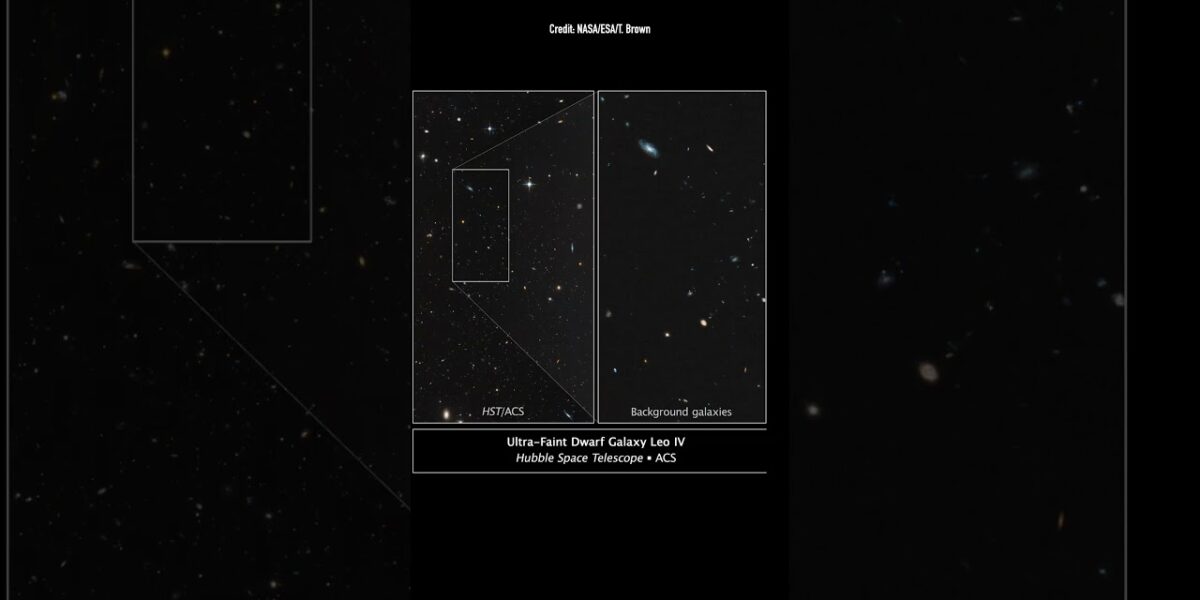
For decades, the Hubble Space Telescope has been our most powerful eye on the distant universe. Its iconic deep field images, such as the Hubble Deep Field and the Ultra Deep Field, have revealed thousands of galaxies in just a tiny fraction of the sky. Based on these observations, the estimated number of galaxies in the observable universe stood at around 200 billion. This was a monumental figure, reshaping our understanding of cosmic scale.
The James Webb Space Telescope: A New Era of Discovery
The advent of the James Webb Space Telescope has ushered in a new era of astronomical discovery. With its significantly larger mirror and its ability to observe in infrared light, JWST can detect fainter objects and peer further back in time than Hubble ever could. Infrared light is crucial for observing the very early universe because the light from the first stars and galaxies has been stretched to longer, redder wavelengths by the expansion of space.
JWST’s Revelation: The Two Trillion Galaxy Estimate
Recent analyses of data from JWST have led to a dramatic revision of our galaxy count. By observing deeper and with greater sensitivity, JWST has identified galaxies that were previously invisible to Hubble. These observations suggest that many more smaller, fainter, and more distant galaxies exist than previously accounted for. This has led to the astonishing revised estimate of at least two trillion galaxies in the observable universe. This number represents not just an increase in quantity, but a profound shift in our perception of the cosmos.
Why the Discrepancy? Understanding Faint and Distant Objects
The significant difference between Hubble’s estimate and JWST’s revised figure highlights the critical role of telescope sensitivity and wavelength coverage. Fainter galaxies might be small and nearby, or they could be incredibly ancient and distant. JWST’s infrared capabilities are particularly adept at capturing the redshifted light from these early, distant galaxies. This means that the number of galaxies we detect is directly tied to the capabilities of our instruments. As our telescopes become more powerful, our census of the universe expands.
The Implications of a More Populous Universe
The realization that there are potentially twenty times more galaxies than previously thought has profound implications for astrophysics and cosmology. It suggests that the processes that led to galaxy formation in the early universe were even more prolific than our models predicted. This could influence our understanding of:
- The evolution of the first stars and black holes.
- The chemical enrichment of the universe over cosmic time.
- The distribution of dark matter and dark energy.
- The potential for life beyond Earth.
A universe populated by trillions of galaxies increases the statistical probability of habitable planets existing and, therefore, the possibility of extraterrestrial life. Each of these galaxies is a potential home to billions or trillions of stars, each with its own planetary system.
What Comes Next?
The work with JWST is far from over. Astronomers will continue to analyze its data, conduct further deep field observations, and refine their galaxy counts. Future telescopes, both ground-based and space-based, will undoubtedly push these limits even further, revealing even fainter and more distant objects. This ongoing quest to understand the full extent of the universe is a testament to human curiosity and our drive to explore the unknown.
A Universe of Wonder
The discovery of two trillion galaxies is not just a number; it is an awe-inspiring revelation about our place in the cosmos. It underscores the vastness and complexity of the universe and reminds us that our exploration is just beginning. Each new observation brings us closer to understanding the grand tapestry of existence and our own origins within it. The universe is a place of unparalleled wonder, and we are only just scratching the surface of its infinite mysteries.
Source: How do we know we've counted ALL the galaxies? (YouTube)

Related Articles


Vera C. Rubin Observatory Begins Sky Survey
The Vera C. Rubin Observatory has officially begun its 10-year sky survey, promising to generate millions of astronomical alerts nightly. Meanwhile, new Webb images reveal Uranus in unprecedented detail, and the Artemis program faces timeline adjustments.


JWST Unveils Distant Galaxy’s Surprising Maturity
The James Webb Space Telescope has detected an ancient galaxy, JADES-GS-z13-0, existing just 320 million years after the Big Bang. Its surprising maturity challenges current theories about the rapid formation of early galaxies.


Earth’s Planetary Status Questioned, Figure-8 Orbits Debunked
Exploring Earth's planetary status, the impossibility of figure-8 orbits, the ongoing debate about dark matter's composition, and the future of human spaceflight.