Tucker Carlson’s CIA Spy Claims: Truth or Manufactured Crisis?
Tucker Carlson's explosive claims of CIA surveillance and a potential criminal referral have ignited a firestorm within the MAGA media world. This analysis delves into the allegations, their internal disputes, and the broader implications for press freedom and political discourse.

Tucker Carlson’s CIA Spy Claims: Truth or Manufactured Crisis?
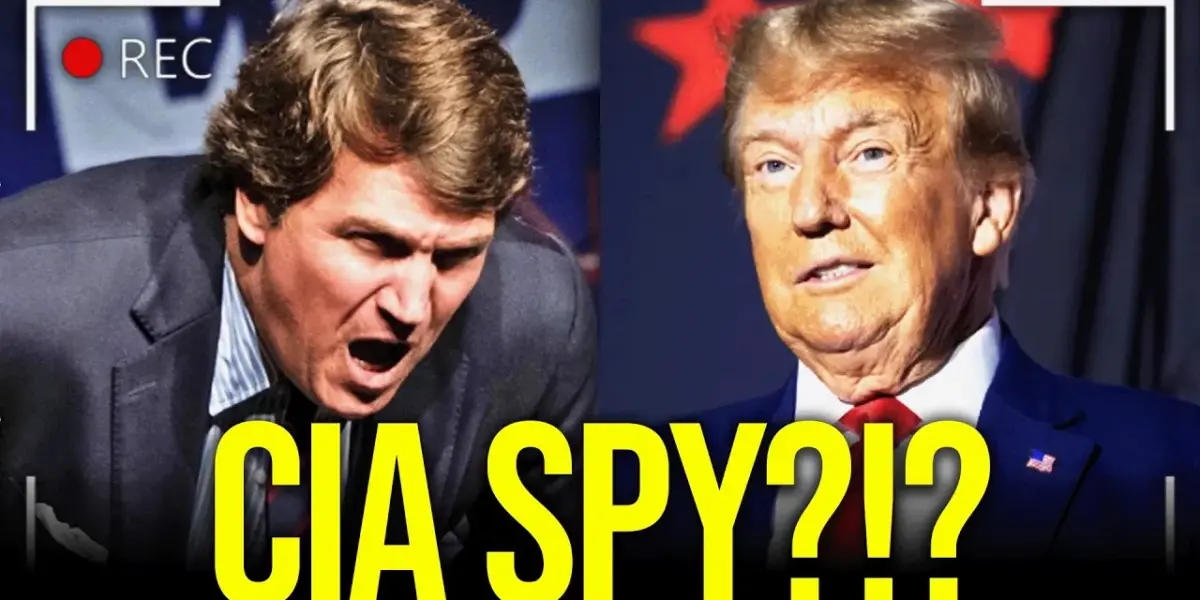
In a dramatic turn of events that has sent ripples through the MAGA media landscape, conservative firebrand Tucker Carlson has publicly accused the Central Intelligence Agency (CIA) of reading his text messages and potentially preparing a criminal referral against him. This explosive claim, amplified across social media and right-wing news outlets, has ignited a firestorm of debate, pitting Carlson against other prominent figures in the conservative sphere, such as Laura Loomer. While Carlson frames this as a grave threat to free speech and an act of government overreach, the situation raises critical questions about the veracity of his claims, the motivations behind them, and the broader implications for political discourse in America.
The Accusation and Its Fallout
The core of Carlson’s accusation stems from his assertion that the CIA surveilled his private communications. He alleges that this surveillance occurred while he was preparing to interview Russian President Vladimir Putin. Carlson has presented this as evidence that the agency is not only overstepping its bounds but is actively targeting him for his journalistic endeavors. This narrative has been eagerly embraced by his supporters, who view it as further proof of a deep state actively working to silence dissenting voices.
However, the situation is far from straightforward. The narrative has become entangled in internal disputes within the MAGA media ecosystem. Laura Loomer, another conservative commentator, has publicly challenged Carlson’s account, suggesting that his claims might be exaggerated or even fabricated. This internal conflict adds a layer of complexity, raising questions about whether Carlson’s allegations are a genuine concern or a strategic maneuver to control the narrative and garner sympathy.
Navigating the Allegations: A Pattern of Controversy
Tucker Carlson has long been a polarizing figure, known for his provocative statements and his ability to command a significant audience on the right. His departure from Fox News was itself a major media event, and his subsequent independent ventures have continued to push boundaries. His willingness to engage with controversial topics and figures, including Putin, has always been a hallmark of his brand. This latest controversy, however, takes on a different dimension, involving direct accusations against a U.S. intelligence agency.
The history of intelligence agencies engaging in surveillance, both domestically and internationally, is well-documented. From the revelations of the Church Committee in the 1970s, which exposed abuses within the FBI and CIA, to more recent controversies surrounding NSA surveillance programs, the potential for overreach has been a recurring theme. Carlson’s claims tap into a pre-existing public distrust of intelligence agencies, a sentiment that is particularly strong within certain segments of the American populace.
Examining the Evidence: What Do We Actually Know?
At present, the public understanding of Carlson’s claims is largely based on his own assertions and subsequent commentary. The specific details of any alleged CIA surveillance remain unverified by independent sources. The CIA itself has not publicly confirmed or denied Carlson’s specific allegations, a standard practice for intelligence agencies when faced with such claims. This lack of concrete, independently verifiable evidence leaves ample room for speculation and interpretation.
The counter-narrative, often fueled by figures like Laura Loomer, suggests that Carlson may be attempting to create a victimhood narrative. This perspective posits that Carlson might be using these allegations to deflect from other issues, consolidate his base, or generate attention for his new media platform. Without official confirmation or denial from the CIA, or independent journalistic verification, it is difficult to definitively assess the truthfulness of Carlson’s claims.
Why This Matters
The implications of this situation extend far beyond the personal dispute between media personalities. At its core, the controversy touches upon several fundamental issues:
- Freedom of the Press and Government Surveillance: If Carlson’s claims are true, it raises profound questions about the extent to which intelligence agencies can monitor journalists, even those engaged in controversial interviews. This treads into sensitive territory concerning the First Amendment and the role of a free press in a democracy.
- The Nature of Political Discourse: The heated exchanges and accusations within the MAGA media sphere highlight the often-toxic and fragmented nature of political discourse online. The ease with which unsubstantiated claims can gain traction and influence public opinion is a significant concern.
- Public Trust in Institutions: Accusations against the CIA, whether founded or not, can erode public trust in intelligence agencies and the government as a whole. This can have far-reaching consequences for national security and democratic stability.
- The Power of Narrative in the Digital Age: Carlson’s ability to frame himself as a victim of government persecution, regardless of the factual basis, underscores the potent role of narrative construction in contemporary media. His followers are likely to accept his version of events, reinforcing existing beliefs and deepening political polarization.
Implications, Trends, and Future Outlook
This incident is emblematic of broader trends in American politics and media. We are witnessing an increasing blurring of lines between journalism, activism, and political commentary, particularly within the conservative media landscape. Figures like Carlson are not just reporting news; they are actively shaping narratives and mobilizing their audiences.
The future outlook suggests that such controversies are likely to persist. As traditional media outlets face challenges, independent and often partisan media figures are gaining influence. Their ability to leverage social media and direct-to-consumer platforms allows them to bypass traditional gatekeepers and directly engage with their audiences, for better or worse. The dynamics observed in the Carlson-Loomer dispute—accusations, counter-accusations, and the rallying of partisan support—are likely to become more common.
Furthermore, the use of allegations against intelligence agencies as a political tool is a concerning development. It can distract from substantive policy debates and create a climate of suspicion that is difficult to penetrate with facts. The tension between the need for national security and the protection of civil liberties, including the freedom of the press, will continue to be a critical area of focus.
Conclusion
Tucker Carlson’s claims of CIA surveillance represent a complex and contentious moment. While the allegations themselves are serious, the lack of independent verification and the context of internal media disputes necessitate a critical and cautious approach. Whether this is a genuine case of government overreach or a skillfully crafted narrative, it serves as a potent reminder of the challenges facing free speech, the integrity of information, and public trust in institutions in the digital age. The ongoing saga will undoubtedly continue to be a focal point for debate and analysis within the political and media spheres.
Source: Tucker Carlson’s SECRET SPY COVER just got BLOWN! (YouTube)

Related Articles

Fox News Hosts Spark Outrage With Shocking Remarks
From commentary on candy mascots to serious accusations about election fraud, several Fox News hosts have made controversial statements that sparked outrage and consequences. This list details the most provocative remarks, including advertiser boycotts, public backlash, and a massive defamation lawsuit.
Pentagon Ignores Judge, Barring Press in Contempt Claim
The Pentagon has issued new rules restricting press access, potentially defying a federal judge's order and facing contempt charges. These rules redefine press freedom as a privilege, not a right, and limit journalists' ability to gather information. The situation is a critical test for First Amendment protections.
Ex-CIA Officer: Trump Faces Bad Iran Options, Ground War Looms
A former CIA officer warns that President Trump faces a "trap" in escalating tensions with Iran, with a ground operation becoming increasingly likely. Mark Polymeropoulos expressed concerns about strategic incoherence and potential intelligence gaps guiding U.S. policy.