Tucker Carlson’s Ascent: From Contrarian to MAGA Movement Leader
A new biography by Jason Zangali explores Tucker Carlson's transformation from a mainstream conservative to a MAGA movement leader. The book details his early contrarianism, the pivotal John Stewart confrontation, and his strategic navigation of the political landscape, culminating in his current influential, and often controversial, position.

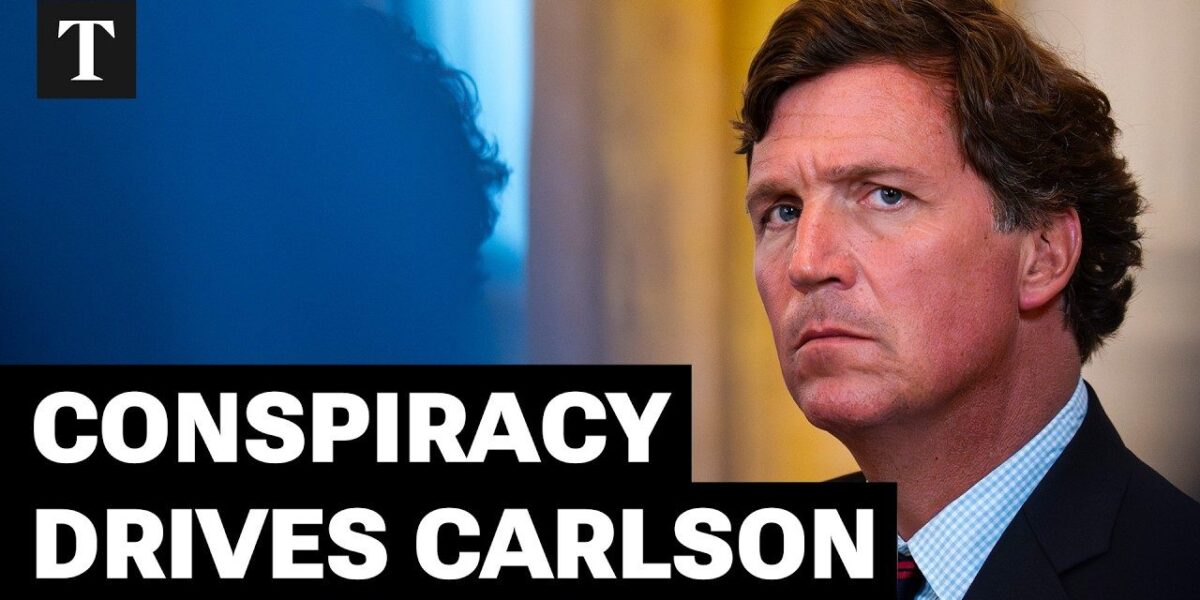
Tucker Carlson’s Meteoric Rise: A Deep Dive into His MAGA Influence
From 2016 to 2023, Tucker Carlson stood as a towering figure in American conservative media, his prime-time Fox News show becoming the most-watched cable news program in the U.S. His journey from a mainstream conservative commentator to a prominent voice often associated with conspiracy theories is detailed in the new biography, Hated by All the Right People by journalist Jason Zangali. Zangali’s work offers a comprehensive look at the forces that shaped Carlson’s influential, and at times controversial, career.
Carlson as a Movement Leader
Jason Zangali characterizes Tucker Carlson not merely as a media figure but as a significant movement leader within the MAGA conservative sphere. “He definitely is someone who has the ear of the president. Um, he’s probably even more influential with the vice president,” Zangali stated in a recent interview. “And then, you know, he his his viewers and his listeners um, take a lot of their cues from him. And I think that he you shouldn’t think of him so much as a as a podcaster as much as a he’s a movement leader at this point.” This perspective highlights Carlson’s profound impact on a substantial segment of the American electorate, shaping their political understanding and actions.
The “Troll” Persona and Evolving Conservatism
The question of whether Carlson is a genuine conservative or more of a political “troll” is addressed by Zangali, who acknowledges the validity of the “troll” label while contextualizing it within the broader landscape of modern American politics. “I think that is that is fair. But I think that’s what a large segment of American politics is these days. I think trolling has become uh, you know, a very important part of of conservatism,” Zangali explained. He further elaborated on the inextricable link between contemporary conservatism, Donald Trump, and the MAGA movement, noting that it represents a departure from earlier iterations of conservative thought.
Early Life: A Contrarian Streak and Privileged Upbringing
Carlson’s inclination towards contrarianism was evident from a young age. Zangali recounts an incident from Carlson’s prep school days where, during a school assembly discussing a racially charged incident in New York City, Carlson raised his hand to question the prevailing sentiment, a move interpreted by some at the time as simply “Tucker being Tucker.” While his upbringing was privileged, it was also marked by personal difficulties. His parents divorced when he was young, and his mother, who struggled with addiction, left the family. “His mother came from a very wealthy family, but then his parents divorced when he was um six or seven… And then when his mother uh died years later, she left him and his little brother only $1 each in in her will,” Zangali noted. This complex background, blending privilege with familial hardship, is seen as a potential influence on his worldview.
The John Stewart Showdown and Ideological Transformation
A pivotal moment in Carlson’s career was his infamous clash with Jon Stewart on CNN’s Crossfire. Zangali emphasizes the profound impact of this event, alongside the Iraq War, on Carlson’s trajectory. Stewart’s critique of cable news, which led to the cancellation of Crossfire, was deeply personal for Carlson. “The Steuart episode was humiliating for him. It was a huge professional setback. He basically lost his job because of it,” Zangali stated. Simultaneously, Carlson was publicly supporting the Iraq War, a stance he later disavowed, becoming one of the first conservative pundits to do so. This period of intense personal and professional upheaval, marked by humiliation and ideological re-evaluation, is considered crucial in shaping the Carlson seen today.
“I think that was tough. Also, I mean, you know, there’s a studio audience in the show and they’re they’re cheering for Stuart when he calls Tucker a dick. Um, I mean, I can’t imagine a more publicly humiliating experience as a as a television host than that.”
The Daily Caller and Navigating the Political Winds
Following the Crossfire incident, Carlson launched The Daily Caller with ambitions of creating a fact-based, sober conservative publication. However, Zangali observes that Carlson quickly discovered a lack of audience for such a platform, leading him to pivot the website’s content towards what garnered more traffic. “I think that was, you know, that was him sort of going which way the wind was blowing,” Zangali said. This experience, however, provided Carlson with valuable insights into the sentiments of conservative voters, which proved instrumental when Donald Trump emerged as a political force. While other pundits dismissed Trump, Carlson recognized the potential of a populist candidate tapping into “white grievance,” a lane he foresaw based on his website’s analytics.
Carlson’s Relationship with Donald Trump
Carlson’s relationship with Donald Trump has evolved significantly. During Trump’s first presidency, Carlson maintained a supportive but somewhat distant stance, reportedly being “weirded out” by Trump’s frequent calls. He backed Trump’s policies but did not fully embrace the “cult of personality.” By the end of Trump’s term, Carlson expressed frustration with Trump’s handling of various issues and his loss in the election. However, their relationship has since become exceptionally close. “Now, I mean, today it couldn’t be it couldn’t be more o opposite. He is he is attached to Trump at the hip,” Zangali noted. Carlson has become a key advisor, playing a role in JD Vance’s selection as vice president and recommending individuals for potential administration roles. Zangali suggests that Trump values Carlson’s usefulness and that their personal rapport is strong, describing them as good “dinner guests with each other.”
Beyond Journalism: Opportunism or Integrity?
The author questions whether Carlson’s later actions, particularly after his departure from Fox News, align with journalistic integrity. Zangali distinguishes between interviewing figures like Vladimir Putin, which he deems acceptable for any journalist, and the manner in which Carlson conducted such interviews. “It was the way he conducted the interview, right? Um, he he just served as sort of a propagandist for Putin. And yes, I I just but that’s why I don’t think you should think of him as a journalist.” Zangali argues that Carlson no longer behaves like a journalist, suggesting he aspires to be something more, potentially a political architect.
The Future of the MAGA Movement and Carlson’s Role
Zangali addresses the potential risks Carlson faces in alienating segments of the MAGA base with more extreme content. However, he believes Carlson is strategically positioning himself for the post-Trump era. “I think he’s making the calculus what they are. Um and I think, you know, when you talk about sort of, you know, going in which direction the wind is blowing. I mean, I think one thing I think he’s trying to stay a little bit ahead of things and I think he’s making he’s predicting that this is where things are headed,” Zangali explained. He points to controversies surrounding figures like Nick Fuentes and antisemitism debates as indicative of the internal struggle within the MAGA movement to define its future identity. Carlson, along with figures like Steve Bannon, appears to be advocating for a vision that embraces more extreme conspiracy theories and a pronounced dose of antisemitism, believing this resonates particularly with younger conservatives.
Ambitions Beyond the Microphone
Regarding Carlson’s personal ambitions, Zangali does not believe he harbors a lifelong desire to run for president. Instead, he sees Carlson as driven by a “political project and an ideological vision.” While Carlson might consider a presidential run if it were the only path to achieving his goals, he would likely prefer to influence a politician who aligns with his views, such as JD Vance. “I think he would prefer to have, you know, a politician who is in agreement with him and who he can be influential with,” Zangali stated. He suggests that Carlson might only consider a presidential bid if Vance were to deviate from his ideological alignment or prove unelectable, a scenario he deems unlikely in the immediate future.
Conclusion: A Defining Figure in Modern Conservatism
Tucker Carlson’s evolution from a traditional conservative pundit to a powerful, albeit controversial, movement leader is a complex narrative of personal transformation, strategic adaptation, and ideological shifts. As detailed in Jason Zangali’s biography, his journey is deeply intertwined with the broader evolution of American conservatism and the rise of the MAGA movement. His influence continues to be a significant factor in shaping political discourse, and his future role in the conservative landscape remains a critical element to watch.
Source: The Forces That Shaped Tucker Carlson’s Meteoric Maga Rise (YouTube)

Related Articles

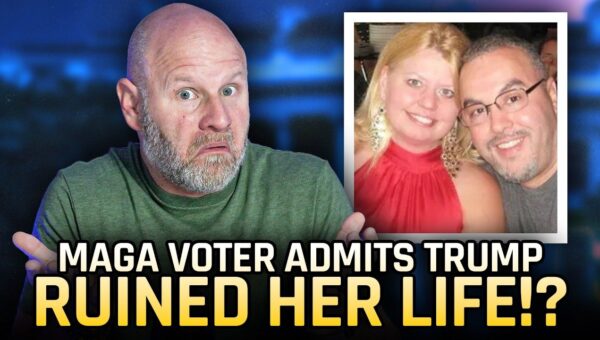
MAGA Voters Realize Trump’s Policies Devastated Their Lives
A New Jersey couple, formerly strong MAGA supporters, are speaking out after Donald Trump's immigration policies led to the husband's 108-day detention and current house arrest. Abdelatif Hafari, a legal resident for 38 years, was detained over a decade-old missed court date, resulting in job loss and severe personal distress for the couple.


MAGA’s Shift: From Isolationism to Neoconservative Foreign Policy
The MAGA movement, once a staunch advocate for "America First" isolationism, shows signs of adopting neoconservative foreign policy stances. Discussions now include potential interventions in the Middle East, shifting from an earlier rejection of foreign entanglements.

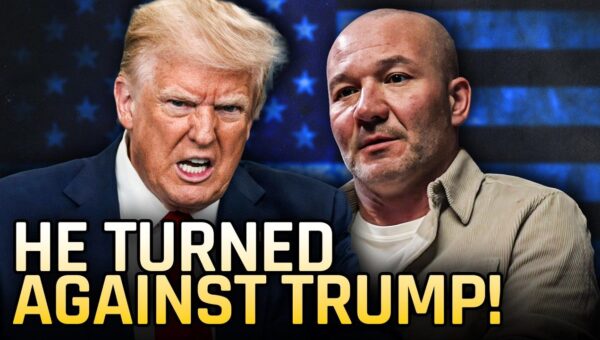
MAGA Podcaster’s Damning Criticism of Trump
MAGA podcaster Shawn Ryan has publicly criticized Donald Trump, even suggesting he shows signs of 'dementia.' This marks a significant shift as figures who previously championed Trump now voice discontent, potentially impacting his core base and the upcoming election.