TSMC: The AI Chip Giant Outshining Rivals
Taiwan Semiconductor Manufacturing Company (TSMC) is emerging as a dominant force in AI chip production, boasting record earnings and advanced manufacturing capabilities. Despite geopolitical risks, its market share and technological leadership position it as a key player in the ongoing AI revolution.

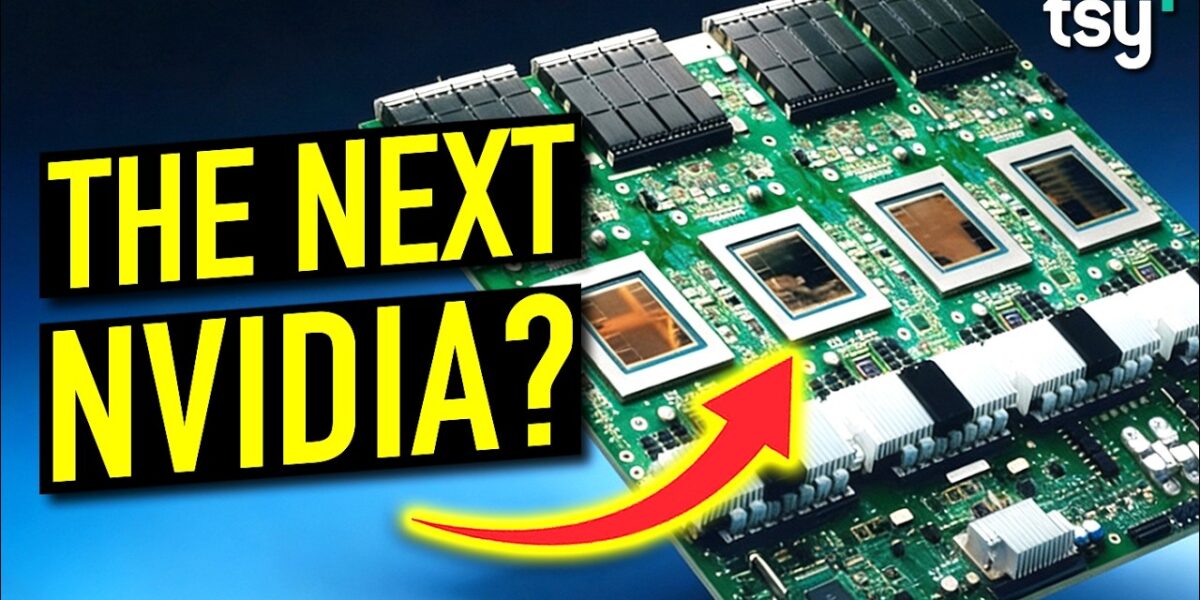
TSMC Dominates AI Chip Manufacturing Amidst Growth Surge
While tech giants like Nvidia, Google, and Tesla often capture headlines for their advancements in artificial intelligence, the company quietly underpinning much of this progress is Taiwan Semiconductor Manufacturing Company (TSMC). TSMC, the world’s largest and most advanced semiconductor foundry, manufactures the critical chips that power these AI innovations. Its recent Q4 earnings report highlighted significant year-over-year growth and robust operating margins, positioning it as a compelling investment, despite geopolitical risks.
The Science Behind the Silicon: TSMC’s Manufacturing Prowess
TSMC’s core business involves manufacturing custom-designed semiconductor wafers and fully packaged chips for other companies. The intricate process of chip fabrication involves hundreds of steps, with Extreme Ultraviolet (EUV) lithography being a particularly crucial and complex technique. EUV lithography utilizes a powerful laser to vaporize tiny drops of molten tin, creating plasma that emits extreme ultraviolet light. This light, with its incredibly small wavelength, can only travel in a vacuum and is precisely patterned through advanced mirrors – supplied by a single company, ASML – to etch billions of nanoscale features onto silicon wafers.
Each wafer undergoes this patterning process hundreds of times, layer by layer, to build the complex 3D circuitry of modern chips. These fabrication facilities, or ‘kitchens’ as they are metaphorically described, are set up by TSMC in collaboration with its clients to meet specific ‘recipes’ or design requirements. For instance, Apple utilizes TSMC’s 3-nanometer nodes (like M3B and N3E) for its power-efficient A-series and M-series chips, while Nvidia opts for nodes like N3P and N3X for its high-performance data center chips, such as the Blackwell and Hopper architectures.
An Unrivaled Ecosystem and Market Dominance
The breadth of TSMC’s client base is staggering, encompassing nearly every major player in the technology sector. Beyond Apple and Nvidia, TSMC manufactures chips for AMD’s Instinct accelerators, Qualcomm’s Snapdragon processors, Google’s Tensor chips, and custom silicon for hyperscalers like Amazon, Google, Microsoft, and Meta. Even Tesla’s full self-driving chips are produced by TSMC.
This extensive network has created an almost unshakeable market dominance. TSMC produces approximately 90% of all chips manufactured at 5-nanometer process nodes and below – the processors essential for AI accelerators, flagship smartphones, and high-performance computing. Competitors like Samsung and Intel face significant challenges, with Samsung reportedly struggling with yield issues and Intel’s most advanced nodes achieving yields around 65%, meaning over a third of their chips are non-functional.
Financial Performance and Growth Catalysts
TSMC’s latest financial results underscore its market leadership. The company reported record quarterly revenues of approximately $33.7 billion USD (1.05 trillion New Taiwan Dollars), marking a 25.5% increase year-over-year. Earnings per share (EPS) reached $3.14 USD, a 35% jump from the previous year. Notably, operating margins expanded from 49% to an impressive 54%, surpassing not only most semiconductor companies but also many software firms.
The company’s revenue streams are heavily concentrated in high-growth sectors: 55% from high-performance computing (HPC) and 32% from smartphone processors. Combined, these segments represent 87% of TSMC’s total revenue, directly benefiting from the AI boom and the increasing integration of AI applications in mobile devices.
Further bolstering its position, 77% of TSMC’s revenue is derived from advanced chips (7-nanometer technology or smaller). This includes 14% from 7nm, 35% from 5nm, and 28% from 3nm nodes. The upcoming 2-nanometer node is already entering mass production, with early capacity effectively sold out, primarily to Apple and major AI/HPC clients like Nvidia, AMD, Broadcom, and Qualcomm. This is anticipated to be a significant catalyst for revenue and profit margin growth in 2024 and 2025.
Advanced Packaging: The Next Frontier
Beyond leading-edge process nodes, TSMC’s strength in advanced packaging technologies is a critical differentiator. As data movement becomes a primary bottleneck in AI, TSMC’s capabilities in Chip-on-Wafer-on-Substrate (COWOS) and System-on-Integrated Chips (SoIC) are crucial. COWOS enables the side-by-side connection of multiple chips with ultra-wide, ultra-short connections, essential for linking GPUs with high-bandwidth memory or combining multiple dies for large accelerators. TSMC reportedly controls about 90% of the world’s COWOS capacity.
SoIC facilitates the vertical stacking of chips, enhancing performance, as seen in AMD’s EPYC CPUs and MI300 accelerators. While competitors are developing similar technologies, TSMC is widely considered to be a generation ahead in high-volume production.
Advanced packaging contributes 7-10% of TSMC’s revenue and is its fastest-growing segment. These high-margin services are directly tied to AI and HPC demand, further boosting overall profitability. Moreover, the complexity of integrating these advanced packaging solutions creates significant switching costs for clients like Nvidia and Apple, effectively locking them into TSMC’s ecosystem.
Valuation and Geopolitical Risk
TSMC currently holds a market capitalization of approximately $1.4 trillion USD. Despite its dominant position, the stock appears attractively valued with a price-to-earnings (P/E) ratio of 26, significantly lower than the semiconductor industry average of around 44. Its P/E ratio is also lower than key competitors like Samsung and SMIC.
The primary risk associated with TSMC is the geopolitical tension surrounding Taiwan and the potential for an invasion by China. This risk was notably highlighted when Warren Buffett, after initially investing over $4 billion in TSMC, divested his entire stake due to concerns about this geopolitical factor. However, it’s worth noting that many major tech companies, including Apple and Google, whose chips are manufactured by TSMC, also carry exposure to this risk.
Ultimately, the argument for investing in TSMC is that its technological leadership, manufacturing scale, and indispensable role in the AI revolution provide a strong foundation for future growth. The company’s ability to command high margins, innovate in advanced packaging, and secure capacity for leading-edge nodes positions it as a key beneficiary of ongoing technological advancements across multiple sectors.
Market Impact
TSMC’s dominance in advanced chip manufacturing makes it a linchpin in the global technology supply chain. Any disruption to its operations would have far-reaching consequences for the production of AI hardware, smartphones, and high-performance computing systems. Its financial performance serves as a bellwether for the broader semiconductor industry and the AI sector.
What Investors Should Know
- TSMC is the world’s leading semiconductor foundry, producing the most advanced chips for major tech companies.
- The company reported strong Q4 earnings with significant year-over-year revenue growth and expanding operating margins.
- Its revenue is heavily concentrated in high-growth areas like high-performance computing and smartphone processors, driven by AI demand.
- TSMC holds a dominant position in advanced chip nodes (7nm and below) and is a leader in critical advanced packaging technologies like COWOS and SoIC.
- The stock appears attractively valued relative to industry peers, but faces significant geopolitical risk related to Taiwan’s status.
Source: GET IN EARLY! I'm Buying This AI Chip Stock (Even Over NVIDIA Stock) (YouTube)

Related Articles


Nvidia Earnings Signal AI Revolution’s Next Phase
Nvidia's latest earnings report reveals accelerating revenue growth and profitability, signaling a new phase in the AI revolution driven by sophisticated AI agents. The company's strong performance underscores the growing demand for computational power as AI transitions into a core digital infrastructure component.


Taiwan’s Nuclear Dilemma: Deterrence or Disaster?
As China expands its nuclear arsenal and military presence, the question of whether Taiwan should possess nuclear weapons or host U.S. nuclear arms gains urgency. The debate weighs the potential for deterrence against the risks of escalation, drawing parallels to Ukraine's disarmament and Taiwan's own past nuclear ambitions.

AI’s RAM Demand Sparks Global Shortage Crisis
The insatiable demand for High Bandwidth Memory (HBM) by AI data centers has triggered a global RAM shortage, impacting everything from consumer electronics to gaming hardware. Memory manufacturers are prioritizing lucrative AI contracts, leading to price hikes and supply constraints for everyday devices.