TSA Workers Strike: Shutdown Sparks Airport Chaos
TSA workers are calling out in large numbers due to the ongoing government shutdown, leading to significant disruptions and long lines at airports nationwide. A former TSA administrator highlights the severe impact on worker morale and financial stability, while also discussing potential security risks and solutions.

TSA Workers Call Out Amid Government Shutdown
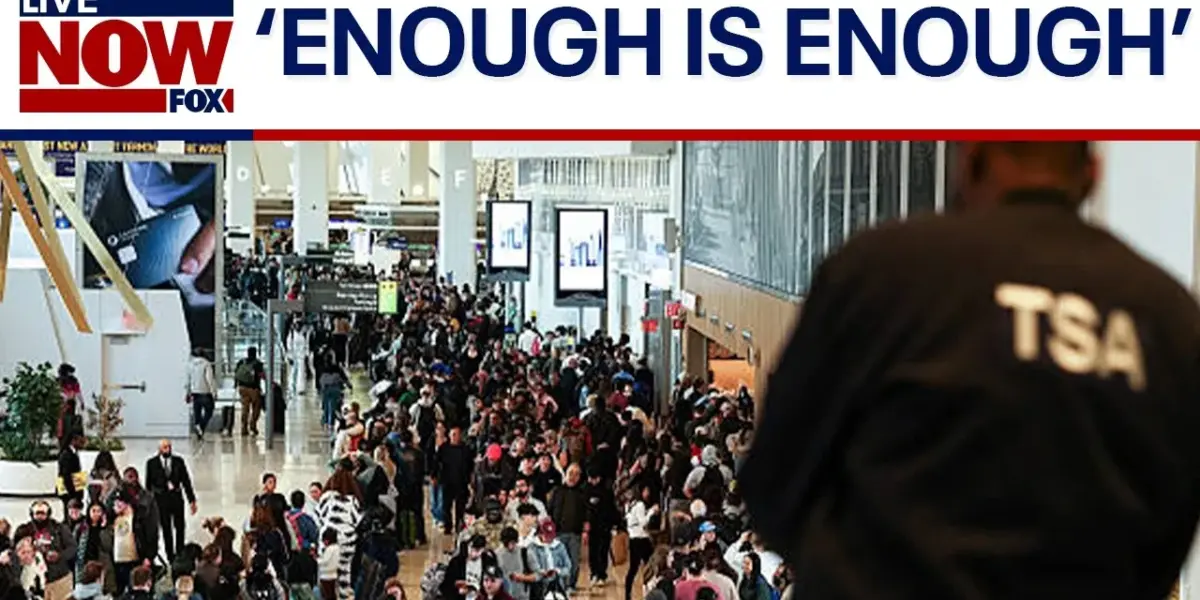
The ongoing partial government shutdown has significantly impacted the Transportation Security Administration (TSA), with a substantial number of workers calling out from their jobs. This is happening as the Department of Homeland Security (DHS) funding remains a point of contention. TSA employees are working without pay, leading to widespread disruptions at airports across the country.
On Monday, the Department of Homeland Security reported striking figures. At William Hobby International Airport in Houston, about 40% of TSA workers did not report for duty. Hartsfield-Jackson International Airport in Atlanta, the nation’s busiest, saw 37% of its TSA staff call out. George Bush Intercontinental Airport in Houston reported 36% of workers absent, while John F. Kennedy International Airport in New York had 34% of its TSA workforce absent. In New Orleans, the figure stood at 35%.
These high numbers of absences translate directly into longer security lines for travelers. Airports are struggling to maintain normal operations, causing frustration for passengers and airport staff alike.
Former TSA Administrator Weighs In
John Pistole, a former TSA administrator, shared his insights on the unprecedented situation. He noted that the country is currently in what is reportedly the 40th day of the partial government shutdown. This shutdown is specifically affecting DHS and, by extension, the TSA.
Pistole recalled a similar situation in the past. “Last fall, of course, we had a 42-day governmentwide shutdown which had similar impacts and one of the similarities was people calling out not not coming to work TSA employees,” he stated. During that 42-day shutdown, approximately 1,000 TSA employees resigned. While the current number of resignations is around 450, Pistole pointed out that this is not far from the typical annual attrition rate of 7%, which affects between 3,500 and 3,700 Transportation Security Officers (TSOs) out of a total of 50,000 to 55,000.
However, he emphasized that the current situation is different because it represents the third time such a shutdown has occurred. “This is third time it’s happened. So it’s impacting morale, impacting recruitment efforts, um just a it’s just a unmitigated mess,” Pistole said.
The Human Cost: Morale and Financial Strain
Pistole described the likely state of TSA worker morale as very low. These workers are classified as essential employees, meaning they are required to show up for work, even without pay. As of the report, workers were heading into their fifth week without receiving a paycheck.
The financial strain is immense. “It’s really hitting them where it hurts in terms of what they can do to pay the bills, pay the rent, pay the car payment, buy groceries, pay child care,” Pistole explained. He also highlighted the added cost of gas for commuting to work, noting that many TSA employees do not live close to the large airports they serve due to high living costs in those areas.
Pistole added, “They’re frustrated. Look, they’re just trying to do their job that they signed up for. They like all government employees swore an oath to the Constitution to defend all enemies, foreign and domestic. And they’re doing that, but they’re not getting paid. And so, they’re they’re frustrated, deeply frustrated, and thinking, if the politicians could just do their job, we could do our job.”
ICE Agents and Security Concerns
The presence of Immigration and Customs Enforcement (ICE) agents at airports was also discussed. While ICE agents are getting paid, TSA workers are not. Pistole clarified that ICE agents are not qualified to perform TSA screening duties at the checkpoints. However, they can play a role in other areas.
“One is in those airports that have TSA officers sitting at an exit lane… If there are TSOs there, they can replace them and allow the TSOs to get back to the checkpoint because they’re qualified to do the checkpoint screening or the check bag screening,” Pistole explained. Additionally, he noted that ICE agents can serve as a visible deterrent to potential terrorists targeting high-visibility areas like long lines of passengers.
Despite these efforts, Pistole expressed concern about the strain on airport police. “Most of the largest all the largest airports in the US have dedicated law enforcement agencies and officers, but they’re just spread too thin to try to ward off all possible attacks,” he stated.
Threat to Smaller Airports
The shutdown poses a particular threat to smaller airports. Pistole explained that airports are categorized by size, with Category 4 airports being the smallest. These airports may only have 10 to 12 TSA employees in total, covering morning and afternoon flights.
If even one or two of these employees resign or call out sick, it could leave the airport without enough staff to operate the security checkpoint. “And there’s no flight crew that is going to get on a plane to pilot a plane without this, you know, the passenger being thoroughly screened,” Pistole emphasized. He concluded that this could lead to the shutdown of smaller airports, a reality driven by post-9/11 security mandates.
Potential Solutions and the Way Forward
When asked about steps to stabilize airport operations beyond resolving the immediate pay issue, Pistole suggested a review of the 9/11 aviation security fee. This fee, which travelers pay on each flight segment, has had a portion diverted to the general federal budget for deficit reduction for the past decade.
“If Congress could act now to resend that diversion of that security fee to get it back into the TSA budget,” Pistole proposed, “because they need to upgrade their equipment, their technology as things evolve.” He also stressed the importance of compromise in government. “My 31 years in government and 10 years helping lead a university. There’s always compromise involved. Nobody gets their way all the time. And so it’s just a matter of can reasonable people find reasonable means to reach reasonable outcomes,” he said.
Pistole also questioned the underlying goals of the shutdown itself. “I would just question what the the goal of this shutdown is. Are we trying to reach reasonable goals that are smart?” he asked.
What to Watch Next
As the shutdown continues, all eyes are on Washington D.C. to see if a compromise can be reached between the White House and Congress. With spring recess approaching, including Passover and Easter, members of Congress may feel increased pressure to resolve the funding impasse before returning home.
Pistole noted that if lawmakers are forced to experience the long lines and travel disruptions firsthand, it could serve as a stark reminder of the impact their decisions have on their constituents. The coming hours and days will be crucial in determining the resolution of this ongoing crisis and its effects on air travel nationwide.
Source: DHS: TSA workers calling out, quitting amid partial government shutdown (YouTube)

Related Articles
House Republicans Reject Senate Deal, Sparking Government Funding Clash
House Republicans have rejected a Senate bill to end the government shutdown, citing insufficient border security measures. Congressman Randy Fine called the Senate deal a "disgrace" and highlighted the ongoing fight for full government funding. President Trump's executive order to pay TSA agents offers temporary relief, but the core disagreement over border security continues to paralyze Washington.


Tiger Woods Arrested for DUI After Crash
Golf legend Tiger Woods was arrested for DUI in Florida following a dramatic rollover crash. Meanwhile, a government shutdown continues as House Republicans block a Senate deal, leading to airport chaos and TSA worker pay issues. The stock market also plummeted into correction territory amid fears of a prolonged Iran conflict.

TSA Funding Fight Sparks Airport Chaos, Worker Exodus
TSA officers will soon receive back pay after President Trump signed an emergency order, but the ongoing congressional funding fight continues to cause airport chaos. Long security lines and a significant number of TSA officer resignations highlight the deep divisions over border security measures, leaving travelers frustrated.