TSA Lines Snag Amid Senate Funding Vote, Democrats Demand Reforms
The Senate has passed a partial funding bill for the Department of Homeland Security, sending it to the House. Democrats are pushing for an immediate vote to ensure TSA workers get paid, but key immigration reforms remain a major sticking point. Congressman James Walkinshaw stated he will not vote for ICE or CBP funding without reforms, calling the current situation "good governance? It isn't."

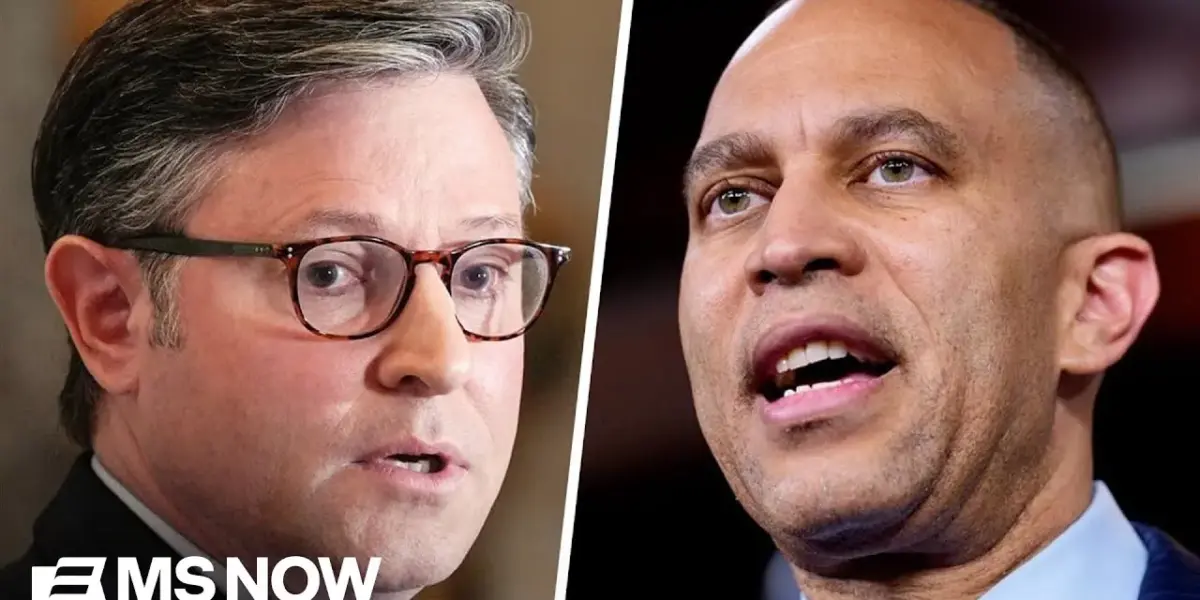
Senate Passes Partial DHS Funding Bill Amid Standoff
The U.S. Senate has passed a partial funding bill for the Department of Homeland Security (DHS), sending it to the House of Representatives. This move comes as travelers face lengthy security lines at airports nationwide. The bill aims to prevent a government shutdown for many DHS agencies but leaves key immigration enforcement funding in limbo. Democrats are pushing for a vote in the House to ensure federal workers, including those at the Transportation Security Administration (TSA), receive their paychecks promptly.
Democrats Push for Immediate Vote, Focus on Worker Pay
Congressman James Walkinshaw of Virginia, a member of the House Homeland Security Committee, emphasized the urgency of passing the funding bill. “It’s payday today for TSA workers, and they’ve already gone without paychecks. We don’t want to see them wait any longer for the pay that they’ve earned,” Walkinshaw stated. He expressed hope for a vote in the House either today or tomorrow, stressing that Democrats are actively pushing for immediate action. This focus on worker pay highlights the human cost of funding disputes and the impact on essential government services.
Immigration Reforms Remain Sticking Point
The current funding bill does not include the immigration reforms that Democrats have been advocating for. These proposed changes include banning the use of masks by immigration agents and requiring judicial warrants for arrests, among other measures. Congressman Walkinshaw made it clear that he would not vote for any funding that benefits U.S. Immigration and Customs Enforcement (ICE) or Customs and Border Protection (CBP) without these reforms in place. “I’m not going to vote for a dime of funding for ICE or CBP, the mass deportation machine that’s been put in place by the Trump administration,” he declared. He views these agencies as having received substantial funding, citing a $150 billion figure, and possessing unused resources like “wrapped custom vehicles that are sitting in garages and warehouses collecting dust.”
“We shouldn’t be holding our TSA agents, our cybersecurity workers, our FEMA workers, hostage because Republicans are insistent on continuing their brutal campaign of immigration enforcement.”
– Congressman James Walkinshaw
Republican Stance on Immigration Reforms
Top Republicans, like Senate Minority Leader John Thune, have indicated that the proposed immigration reforms are no longer on the table. Thune suggested that Democrats missed their opportunity by not securing these changes earlier. However, Congressman Walkinshaw countered this perspective, stating that Republicans, including Senator Thune, were never willing to consider the reforms. He specifically mentioned the proposal to eliminate masking for ICE agents, a measure he believes was dismissed despite ICE agents now appearing in airports without masks, following a directive reportedly from former President Trump. “Senator Thune absolutely refused to consider,” Walkinshaw said, questioning the idea that the opportunity had passed.
Federal Workers Face Funding Uncertainty
The ongoing funding debates have a significant impact on federal workers, who have experienced disruptions and missed paychecks. Congressman Walkinshaw, who co-chairs the Federal Workforce Caucus, has introduced legislation called the “True Shutdown Fairness Act.” This bill aims to ensure that all federal workers are paid during any government shutdowns. “Our federal workers have been abused for the last 15 months of this administration, including these two shutdowns,” he stated, highlighting a pattern of hardship. He believes that if Republicans expect Democratic votes for ICE and CBP funding, they must address Democratic priorities, such as immigration reforms, to protect constituents from perceived abuses.
Concerns Over Government Operations and Public Perception
The use of government shutdowns or partial shutdowns as a tactic to force policy changes is a growing concern. Walkinshaw views this approach as detrimental to good governance and public trust. “It shouldn’t be a go-to tactic, and it certainly isn’t for me,” he asserted. He explained that Democrats proposed separating funding issues weeks ago, allowing essential agencies like the TSA to be funded while negotiations continue on more contentious matters like immigration enforcement. This approach, he argued, allows for progress on critical services without holding them hostage to unrelated political battles.
Looking Ahead: The Path Forward
As the partial DHS funding bill moves to the House, the focus remains on whether a vote will occur quickly and whether a broader agreement can be reached on immigration policy. The demands for immigration reforms from Democrats like Congressman Walkinshaw, coupled with Republican resistance, suggest that negotiations will remain complex. The long TSA lines and the continued uncertainty for federal workers underscore the immediate need for resolution. Future actions will likely involve continued debate over funding levels for ICE and CBP, the potential inclusion of reforms in future legislation, and the ongoing impact on government operations and public services.
Source: Hours-long TSA lines persist as Senate sends partial DHS funding bill to House (YouTube)

Related Articles
Government Shutdown Sparks TSA Pay Chaos; Woods Arrested
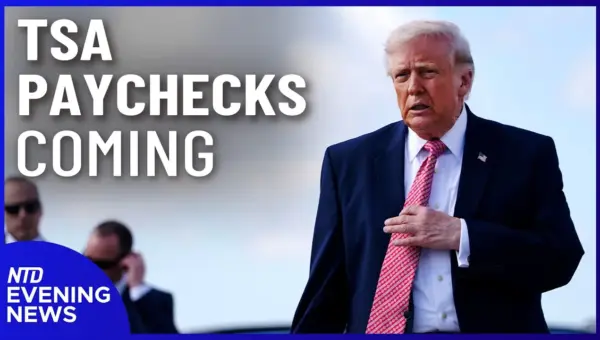
The government shutdown caused major disruptions, leading to TSA agents working without pay and President Trump signing an order to ensure their compensation. Meanwhile, golf icon Tiger Woods was arrested following a car crash in Florida. The news cycle also covered US operations in Iran, support for American farmers, political discussions at CPAC, election record disputes, and lawsuits against social media companies for their impact on students.


House Republicans Block DHS Funding Bill; Iran Faces War Fears
House Republicans have rejected a Senate-passed bill to fund the Department of Homeland Security, leaving thousands of TSA workers unpaid and deepening a political standoff. Meanwhile, in Iran, citizens face escalating conflict amidst fear, an internet blackout, and growing internal divisions, though glimmers of hope persist.
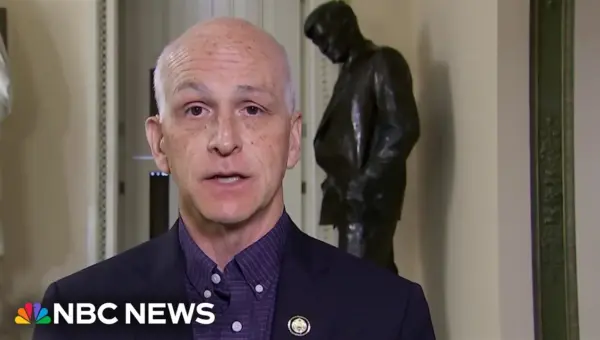
Democrat: Speaker Johnson Holds TSA Hostage for Immigration Reform
House Democrats accuse Speaker Mike Johnson of holding the TSA 'hostage' by refusing to bring a bipartisan Senate funding bill to the floor. Congressman Adam Smith argues this tactic is used to force concessions on immigration reform, putting essential services at risk. A Senate-passed bill could fund the TSA immediately, but Johnson's approach creates a legislative stalemate.