Trump’s Week Unravels Amidst Bizarre Claims and Media Mockery
This analysis dissects a week of controversial statements from Donald Trump, marked by bizarre analogies, crude humor, and questionable remarks on death and faith. The piece examines his communication style, critiques of political authenticity, and the implications of ideas like compulsory military service, revealing a pattern of rhetoric that alienates many while resonating with a dedicated base.

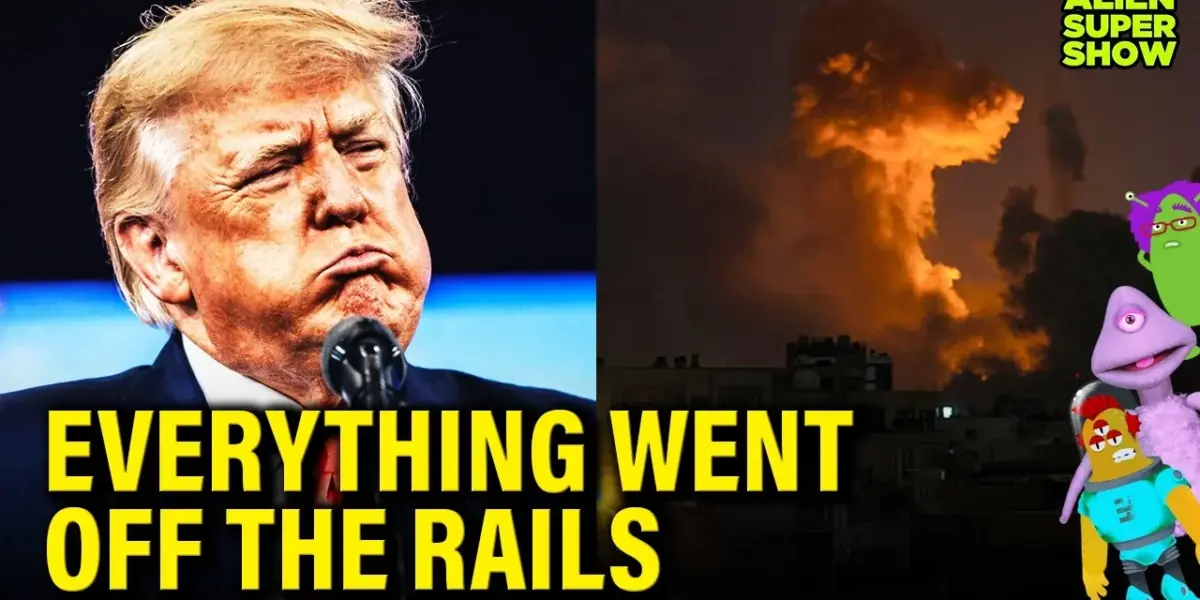
Trump’s Week Unravels Amidst Bizarre Claims and Media Mockery
The past week has been a tumultuous one for former President Donald Trump, marked by public statements that have drawn widespread criticism and ridicule. From bizarre analogies about gifts to questionable comments on death and faith, Trump’s public appearances have provided ample material for comedians and political analysts alike, suggesting a significant misstep in his communication strategy.
“Regime Change” and a “Wooden Horse” Gift
One of the most striking moments came during a discussion that seemed to reference a book titled “Regime Change.” The speaker, seemingly mocking Trump’s speaking style, described his approach as sounding like someone giving a book report without having read the book. The analogy then shifted to a “large wooden horse left at the gates of the White House” as a gift. This was clarified to be a jet, but the description evoked the Trojan Horse, a symbol of deception and hidden danger.
The speaker further elaborated on the nature of this “gift,” describing it as a “small 14-year-old girl” kept at Mar-a-Lago, adding that “she looks 18 though.” This comment was met with incredulity, highlighting a perceived immaturity and inappropriate focus on appearance, reminiscent of a “12-year-old girl who’s like, ‘Who gave me the best present?'”
Bizarre Military Analogies and “Loitering”
Trump’s rhetoric also ventured into strange military metaphors. When discussing negotiations, he stated, “we negotiate with bombs and we masturbate with scissors.” This crude and nonsensical statement was juxtaposed with the idea of “loitering over the top of Tyrannon.” When called out for admitting to “loitering,” the response was to accuse Democrats of similar actions, suggesting a defensive and illogical deflection.
Further comments about keeping “our hand on that throttle” and finishing jobs with that hand were interpreted as aggressive and possibly suggestive. The speaker noted, “This is not a president who is interested in vague end states. He has been very clear with us about what we need to accomplish. He knows where the shaft is. He knows how to climb it. He knows how to escalate and deescalate.” This language, while seemingly intended to project strength, came across as crude and disjointed.
Comments on Robert Mueller’s Death and Performative Grief
The transcript touches on the death of Robert Mueller, with a speaker expressing a surprising lack of sympathy: “Robert Mueller just died. Good. I’m glad.” This was followed by a critique of “performative grief,” suggesting that people often react insincerely to death. The speaker then outlined a supposed “MAGA zero stages of grief,” moving from anger to a desire to “make money off of this real fast,” referencing merchandise and profit opportunities.
The commentary then veered into a strange theological and philosophical discussion, questioning the value of conferring nobility in death if the life was not noble. It bizarrely suggested that Jesus posted on Trump’s Truth Social account, with a critique of the chosen image of Jesus. The speaker noted, “Even Jesus is like, ‘Are you [expletive] kidding me?'” This was followed by a contradictory statement about Mueller being “with God and Jesus” but also “burning in hell for the way he treated the president.” The analysis concluded that this was a “combination of buzzwords” with no clear meaning.
Politicians Afraid to Speak Out?
A segment of the discussion focused on politicians who claim to have private conversations with colleagues about important issues but are afraid to say these things publicly. One speaker directly addressed this, stating, “If you’re saying that the problem is Republicans won’t be public about the things they’re saying privately, you’re on television right now. You’re the problem.”
The analysis suggested that this reluctance to speak out publicly, while claiming to hold private convictions, benefits no one. It creates a false impression of hidden good intentions that never materialize. The contrast was drawn between being a politician and a civil servant, with figures like Cory Booker being cited as examples of politicians who are good at the performance but achieve little concrete action.
The Idea of Compulsory Service
The conversation then shifted to the idea of compulsory military service. When asked about a volunteer obligation, a suggestion was made to “frame a responsibility to serve for a year, 6 months minimum year, 18 months.” This sparked a question about whether a draft was being discussed.
The analogy was made to countries like Korea and Israel, where military service is mandatory. However, the explanation for these countries’ policies was simplified. For Israel, it was noted that failure to join leads to punishment, though not necessarily jail. The idea of compulsory service was then linked to political platforms, with the observation that “Democrats run on affordability. It’s right there. You don’t need to run on draft.”
The transcript highlights a candidate, J.B. Pritzker, who reportedly suggested that everyone should be in the military for a year minimum. This idea was presented as potentially damaging to a Democratic candidate, especially when “affordability” is a more popular platform. The humor arises from suggesting that this candidate should announce his run on the “Alien Super Show” and that he might be recognized from a past life as a geometry and PE teacher.
Military Operations vs. War
Towards the end, there was a brief explanation of why some actions are referred to as “military operations” rather than “wars.” The reason given is legal: “As a military operation I don’t need any approvals. As a war you’re supposed to get approval from Congress.” This points to a strategy of bypassing congressional oversight by using specific terminology.
Why This Matters
This collection of statements and reactions reveals a pattern of communication that is often crude, nonsensical, and self-serving. The reliance on bizarre analogies, inappropriate humor, and deflection tactics suggests a struggle to articulate coherent policy or connect with voters on a substantive level. The critique of performative grief and politicians unwilling to speak out highlights a broader concern about authenticity and accountability in public life.
Furthermore, the discussion around compulsory military service touches on fundamental questions about civic duty, individual liberty, and the role of government. The willingness of some political figures to entertain such ideas, even if framed as character-building, can be alarming to those who prioritize freedom from government mandates. The legal distinction between “war” and “military operation” also underscores a concerning trend of circumventing democratic processes and transparency.
Implications and Future Outlook
The constant stream of controversial statements from Trump and his associates continues to define his public image. While his base may find these moments entertaining or defiant, they alienate a broader audience and raise serious questions about his judgment and fitness for office. The media’s role in highlighting these gaffes, often through satirical lenses, further amplifies their impact.
The political discourse surrounding these issues appears increasingly polarized. The reliance on simplistic slogans and divisive rhetoric, as seen in the critique of “MAGA zero stages of grief,” suggests a lack of depth in political engagement. As candidates grapple with complex issues, the ability to communicate clearly and authentically will be crucial. The idea of compulsory service, while perhaps intended to foster unity, could easily backfire by sparking widespread opposition and raising concerns about government overreach.
The future outlook suggests a continuation of this trend. Politicians will likely continue to use carefully chosen language to avoid oversight, and public figures will face intense scrutiny for their every utterance. The challenge for voters will be to discern substance from noise, and for leaders to rise above crude analogies and engage in meaningful dialogue about the issues that truly matter.
Source: Trump Has DISASTER WEEK as NO KINGS Makes Him SPIRAL | Alien Super Show (YouTube)

Related Articles

Millions Protest Trump, CPAC Shows GOP Divisions
Millions protested Donald Trump nationwide with "No Kings" rallies, citing war, deportations, and constitutional fears. Meanwhile, CPAC revealed deep divisions within the Republican party, with Donald Trump absent for the first time since 2016. Concerns over foreign policy and domestic economic struggles emerged as key issues, potentially shifting political momentum.

Trump Sees Iran Deal as War’s Root; US Boosts Mideast Troops
Amid rising tensions, former President Trump suggested Iran seeks a deal while the U.S. has significantly boosted its military presence in the Middle East. Experts believe Iran views the conflict as a long-standing war, with recent events prompting a strategic reassessment by both nations.

CPAC’s Power Wanes as Comedian Captures Conservative Conference “Funeral”
The Conservative Political Action Conference (CPAC) is showing signs of diminished influence, with fewer high-profile attendees and lower engagement at its recent gathering. Comedian Jason Selvig observed the event, describing it as a "funeral" for CPAC and noting a shift towards more concerning, nationalistic rhetoric among some attendees.