Trump’s War Triggers Economic Collapse, Analysts Warn
Analysts contend that Donald Trump's policies, particularly the war against Iran, have triggered a global economic catastrophe. The piece highlights market warnings, strategic missteps, and eroded international trust as key factors.

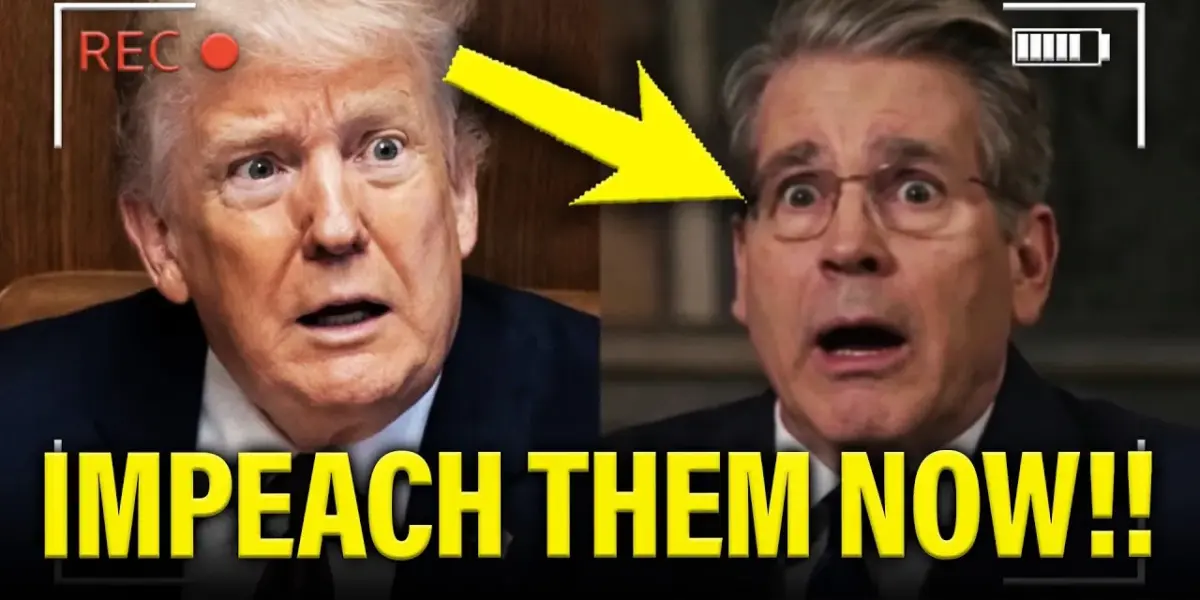
Trump’s Risky Gamble: An Unfolding Economic Catastrophe
The narrative emerging from recent events suggests that former President Donald Trump may have inadvertently orchestrated a global economic crisis, drawing parallels to his past business failures. The argument posits that an “unlawful and disastrous war against Iran,” initiated under his administration, has precipitated a severe downturn, impacting both the United States and the global economy.
Treasury Secretary’s Troubled Testimony
A pivotal moment highlighted is Treasury Secretary Scott Bessant’s interview with Sky News. During the interview, Bessant appeared to be delivering administration talking points, asserting that there were no cost concerns regarding the conflict with Iran and that any expenditure would be supported. However, the situation took a dramatic turn when Bessant received a call from Donald Trump mid-interview. The transcript describes Bessant’s reaction as akin to seeing a ghost, visibly shaken and struggling to articulate coherent sentences upon his return to the interview. This abrupt shift is interpreted as a sign of deep-seated worry and an acknowledgment of the severe economic repercussions that he and Trump have allegedly unleashed.
Market Indicators Signal Alarm
Supporting these concerns are analyses from major financial institutions. Bank of America is cited as warning that market conditions are beginning to resemble the period leading up to the 2008 global financial crisis. Similarly, S&P is reported to have indicated that the conflict in the Middle East could have long-lasting adverse effects on the U.S. economy and credit conditions. These observations paint a grim picture of the current economic landscape, suggesting that the conflict’s financial fallout is far from contained.
Historical Context and Strategic Missteps
The analysis draws a connection between Trump’s past business bankruptcies and his current approach to economic policy, suggesting a pattern of behavior that leads to financial ruin. The decision to engage in conflict with Iran is framed as a strategic miscalculation, particularly in light of previous policies. The transcript questions the logic of imposing tariffs on global allies while simultaneously initiating a conflict that necessitates international cooperation, arguing that such actions alienate potential partners and weaken the U.S. position.
The “It was always part of our planning” Defense and its Flaws
During his interview, Bessant attempted to frame the potential closure of the Strait of Hormuz as a planned contingency, stating it was “always part of our planning” that the U.S. would have to contend with this scenario and that an international coalition would be needed to escort tankers. However, the analysis critiques this narrative, questioning why allies would be willing to cooperate after being alienated by past tariff policies. The transcript also notes Bessant’s earlier optimistic statements about economic growth, citing projections of a “banquet for the American people” in 2026, which now appear starkly at odds with the unfolding economic crisis.
Geopolitical Ramifications and Perceptions of Weakness
Beyond the immediate economic concerns, the analysis delves into the geopolitical implications. It is argued that Iran, China, and Russia perceive Trump as weak, viewing the current situation as an opportunity to reshape the global order to America’s detriment. The involvement of figures like Steve Witoff and Jared Kushner, described as “dumbest people,” in negotiations with Iran is criticized, as is their alleged association with Russians in Miami while sanctions on Russian oil are being eased. This is juxtaposed with the U.S. providing resources to Iran, which is then seen as capable of striking American interests.
Tariff Policies and the Misuse of Funds
The transcript also criticizes the administration’s approach to tariffs, particularly the Supreme Court’s ruling against certain Trump-era tariffs. The response from officials like Jameson Greer, the trade representative, is characterized as dismissive and deceptive. Greer’s suggestion that refunded tariff money should be given as bonuses to workers is framed as a deflection from the alleged “theft” of funds and the negative consequences of the trade war. The analysis contends that these tariffs, intended to reshore manufacturing, have instead alienated allies and harmed the U.S. economy.
Farmers Bearing the Brunt
The impact on American farmers is also a significant point of concern. With rising fertilizer prices, partly attributed to the conflict in the Middle East, farmers are facing increased costs and potential shortfalls. The suggestion of further bailouts for farmers, following previous ones necessitated by tariffs and trade disputes, is presented as evidence of a cycle of economic mismanagement. This adds another layer to the argument that the administration’s policies are creating a cascade of financial problems.
Attacks on Institutions and Erosion of Trust
The analysis extends to the administration’s alleged attacks on the independence of the Federal Reserve. Trump’s public pressure on Federal Reserve Chair Jerome Powell to lower interest rates, including the initiation of a criminal investigation, is highlighted. A federal judge’s ruling quashing the subpoenas against Powell is presented as a rebuke to this pressure campaign. The transcript argues that these actions, along with the broader “war” rhetoric and policies, are systematically eroding trust in U.S. institutions and international relationships, making future economic stability precarious.
Why This Matters
The core argument is that the current economic instability is not an isolated incident but a direct consequence of a series of policy decisions, particularly the initiation of a conflict with Iran and a broader pattern of protectionist and confrontational trade policies. The analysis suggests that these actions have not only damaged the U.S. economy but have also weakened its standing on the global stage, creating an environment ripe for geopolitical and economic exploitation by adversaries. The repeated use of bailouts and the alienation of allies point to a reactive and unsustainable economic strategy.
Implications, Trends, and Future Outlook
The trend identified is one of increasing economic vulnerability driven by geopolitical adventurism and a disregard for international alliances. The future outlook, as presented in the analysis, is one of continued uncertainty and potential further economic decline. The erosion of trust, both domestically and internationally, is seen as a significant impediment to recovery. The reliance on bailouts rather than structural economic fixes suggests a path of escalating costs and diminishing returns. The historical context of U.S. involvement in wars often underestimating duration and cost, as exemplified by the Iraq War, further fuels concerns about the long-term economic consequences of the current conflict.
Conclusion: A Trail of Destruction
The piece concludes by characterizing Trump’s approach as creating “death traps” and “economic death spirals.” The argument is that when challenged, Trump’s responses escalate problems rather than solve them, leading to a “trail of destruction.” The analysis posits that his self-preservation instincts lead him to damage everything around him, a pattern that is now playing out on a global economic scale.
Source: Trump LOSES IT as US ECONOMY CRASHES during WAR!!! (YouTube)

Related Articles
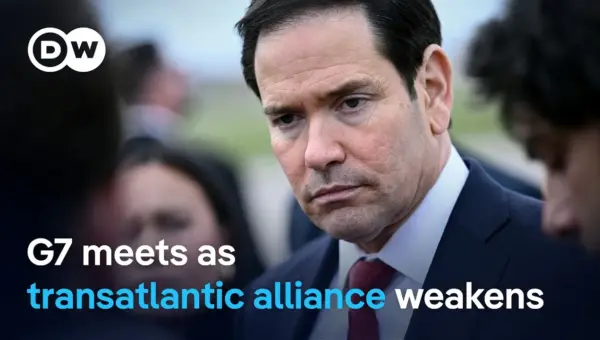
G7 Allies Clash Over Iran War Strategy, Urge Focus on Russia
G7 foreign ministers met in Paris, revealing deep divisions over the U.S. war with Iran. European allies urged the U.S. to pressure Russia, linking its actions to the conflict and fearing support for Ukraine will wane.

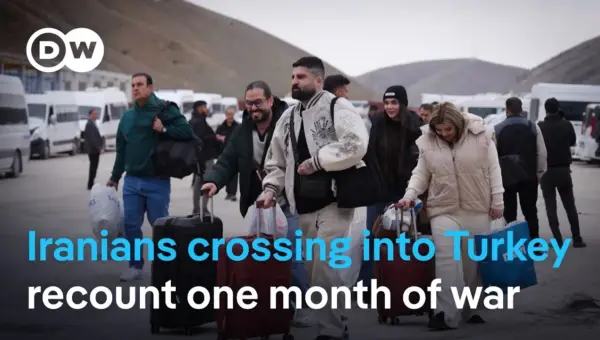
Iran War Exodus: Refugees Flee to Turkey Amidst Bombings
A train from Tehran brings refugees to Turkey, fleeing daily bombings and economic collapse. Many express deep fear for loved ones left behind, while some hold onto national pride and hope for victory. The conflict's impact is also felt economically in Turkey, with rising gas prices.
Trump’s Name Everywhere: A ‘Stain’ on GOP Legacy?
Former President Donald Trump's efforts to brand national symbols, including a proposed signature on dollar bills, spark debate. Critics view this as an authoritarian attempt to embed his legacy, potentially staining the Republican Party's history and contrasting with democratic ideals of public ownership.