Trump’s War Team Falters Under Scrutiny on Live TV
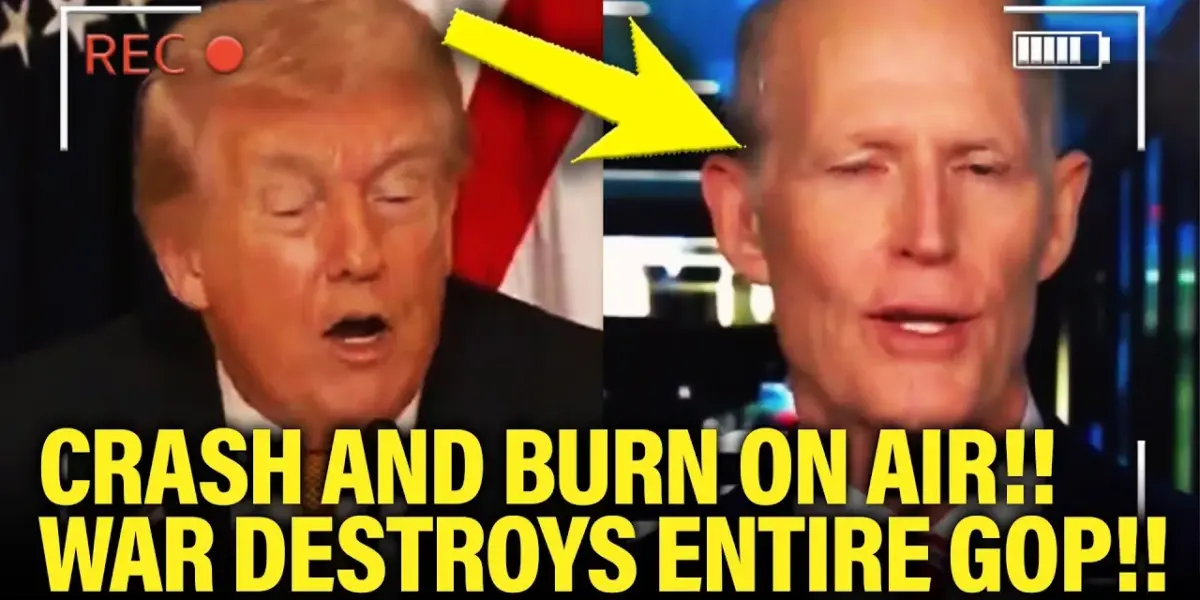
Donald Trump's surrogates have struggled to present a unified message on live TV regarding the conflict in Iran, offering contradictory explanations on gas prices, the need for allies, and the rationale behind military actions. This has led to public confusion and criticism.

Trump’s War Team Falters Under Scrutiny on Live TV
Donald Trump’s surrogates are struggling to defend his actions regarding a conflict in Iran. On live television, these representatives have faced tough questions and appeared unable to provide clear or consistent answers. This has led to a public perception of disarray among those tasked with explaining the administration’s policies.
Conflicting Messages on Gas Prices and Patriotism
Senator Rick Scott of Florida appeared on CNN and addressed the rising gas prices. He suggested that the economic pain was a necessary sacrifice for national safety and patriotism. “This is the pain we need to engage in and we need to feel in order to really be patriotic,” Scott stated. When pressed on how long families might face these higher costs, he admitted, “I have no idea how long this is going to take.” He emphasized that the priority is to “destroy their ability to kill us,” believing that prices would eventually fall.
Blaming the “Green New Deal” for International Conflict
Another Trump surrogate, Senator John Eubanks, who is currently facing a tough reelection battle in Ohio, offered a different explanation. He blamed President Joe Biden and the “Green New Deal” for the situation in Iran. Eubanks claimed that Biden’s policies empowered Iran and allowed them to threaten vital shipping routes like the Strait of Hormuz. He argued that former President Trump was now forced to clean up past mistakes made by Democratic presidents.
“It was the failures of two Democrat presidents that put us in a position today where Iran had the capacity to make a nuclear weapon. They had the ability to send ballistic missiles into their neighbors. They had the drones and the capacity to cut off the Strait of Hormuz and now President Trump is having to remedy those problems.”
Appeals for European and NATO Assistance
Caroline Levit, the US Ambassador to NATO, called for Europe and NATO allies to step up and assist. She highlighted President Trump’s past success in getting NATO members to increase their defense spending. Levit stated that the US was leading the effort to protect American interests and prevent Iran from obtaining nuclear weapons, and that allies needed to contribute more.
Criticism of NATO and the EU as a “Sham Marriage”
However, this call for help was met with a different narrative from some conservative media outlets, particularly Fox News. Laura Ingraham described the alliances with Europe and NATO as a “sham marriage.” She argued that European nations had taken advantage of US military support for decades without adequately contributing to their own defense. Ingraham suggested that it was only after Trump pressured them that they began to increase their spending, and even then, they did so grudgingly.
Distraction Tactics and Shifting Blame
During this period, some commentators on media platforms focused on cultural issues, questioning Democrats’ understanding of terms like “war” while also challenging their views on gender. This was seen by critics as a distraction from the serious economic and military implications of the ongoing conflict. The transcript highlighted Greg Gutfeld’s remarks, which pivoted to discussions about “penises and vaginas” and the definition of a woman, while overlooking the casualties and economic strain resulting from the war.
Contradictions on Needing Allied Help
The inconsistencies in the administration’s messaging were further exposed when Senator Rick Scott was questioned again on CNN. When asked if the US needed Europe’s help, Scott initially said, “Of course we don’t need their help.” However, he then explained that allies should want to help because they are more impacted by the situation. He argued that America had sufficient oil and that the global markets were interconnected, meaning rising prices affected everyone. Critics pointed out that this contradicted the earlier calls for assistance and suggested the public was being misled about the economic realities.
“Well, of course we don’t need their help and we have the strongest military in the world. Um, but he’s asking for their help. Well, it’s in their best interest. I mean, there, you know, the rest of the world’s way is is dependent. We’re not dependent. So they can show up or not show up.”
Past Controversies and Shifting Narratives
The transcript also brought up Senator Scott’s past involvement in a significant Medicare and Medicaid fraud case, where he invoked the Fifth Amendment numerous times. This was presented as relevant context when discussing his current role as the Republican Party’s healthcare spokesperson.
Confusing Statements on Cuba and Nuclear Capabilities
Further confusion arose from statements attributed to Donald Trump regarding Cuba. When asked about Trump’s remarks about “taking Cuba,” Senator Scott suggested it meant bringing democracy. However, the transcript presented an alternative interpretation, suggesting a continuation of existing regimes to secure oil resources. Additionally, there was a discrepancy regarding Iran’s nuclear program. When questioned about Trump’s past claims of “obliterating” Iran’s nuclear weapons, Scott clarified that “obliterated” meant they were rebuilding the program, which was still a threat due to enriched uranium and ballistic missile development.
Marjorie Taylor Greene’s Break with Trump
In contrast to the other surrogates, Congresswoman Marjorie Taylor Greene openly criticized Donald Trump and the Republican party’s approach. She argued that Congress was prioritizing loyalty tests from the White House over the needs of their constituents. Greene stated that this behavior was “pathetic and wrong,” and that elected officials should remember the districts that sent them to Washington. She also questioned the political wisdom of waging a major war just before midterm elections, especially if it was perceived as being for the benefit of Israel rather than America.
“This is not a monarchy. This is a constitutional republic with elected representatives. And so for these members of Congress to totally cast into the wind what their districts want, what’s important for their districts just in order to make sure they don’t get a nasty Truth Social post dropped on them, I think is absolutely pathetic and wrong.”
Greene clarified that her break with Trump was not solely over foreign policy, but also due to his alleged involvement in covering up child sex trafficking and rape cases, referencing the “Epstein files.”
Ambassador Whitaker’s Defense and Strategic Ambiguity
The transcript concluded with remarks from Matt Whitaker, the US Ambassador to NATO. He acknowledged that the current situation might provide a short-term benefit to Russia through increased oil prices. However, he argued that this was a necessary step to put pressure on Iran and that the US was balancing global oil demand. Whitaker also stated that while the US has the most capable military, it needs allies who share its values and contribute to collective security. He suggested that countries benefiting from safe passage through the Strait of Hormuz, including Japan, South Korea, and China, should contribute to a coalition. He presented Trump’s actions as bold steps that would likely lead to long-term peace and economic stability in the Middle East.
Why This Matters
The conflicting messages and apparent disarray among Trump’s surrogates highlight a significant challenge in communicating foreign policy decisions. When representatives offer contradictory explanations on critical issues like economic impact, national security, and international alliances, it erodes public trust and creates confusion. The reliance on partisan media for messaging, coupled with attacks on traditional alliances, suggests a strategy aimed at rallying a specific base rather than engaging in open, transparent debate. This approach risks alienating allies and leaves the public uncertain about the true goals and consequences of the nation’s foreign policy actions.
Trends and Future Outlook
This situation reflects a broader trend of political communication becoming increasingly fragmented and polarized. The use of surrogates to deliver talking points, the reliance on specific media ecosystems, and the tendency to shift blame rather than address complex issues directly are common tactics. The future outlook suggests a continued struggle for clear, consistent foreign policy communication. As global challenges become more complex, the ability of political leaders to articulate coherent strategies and gain public support will be crucial. The effectiveness of alliances and the perception of American leadership on the world stage will depend on the clarity and credibility of these messages.
Historical Context
The debate over America’s role in international conflicts and its relationship with allies is not new. Throughout history, there have been periods of both deep engagement and isolationist sentiment. The tension between prioritizing “America First” and maintaining global partnerships has been a recurring theme in US foreign policy. The current situation echoes past debates about burden-sharing within alliances like NATO and the economic costs associated with global security. The specific context of rising oil prices, regional instability in the Middle East, and the complex relationship with Iran adds layers to these ongoing historical discussions.
Source: Trump Surrogates CRASH AND BURN on LIVE TV as WAR BACKFIRES!! (YouTube)

Related Articles
Rubio Puts US First at G7 Summit, Sparks Debate
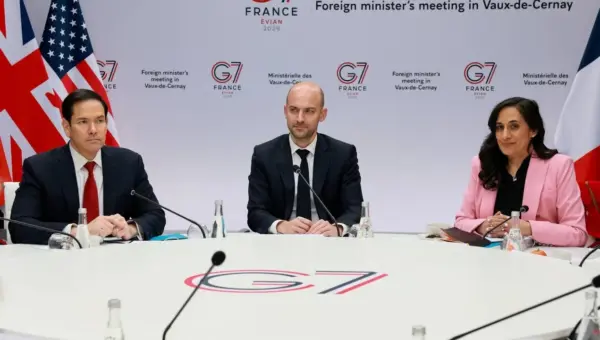
Secretary of State Marco Rubio attended the G7 summit in France, emphasizing his commitment to serving the American people above all else. The meeting addressed the war in Iran and Russia's role, revealing differing approaches among allies on regional security and the Strait of Hormuz.

Tiger Woods Arrested for DUI After Crash
Golf legend Tiger Woods was arrested for DUI in Florida following a dramatic rollover crash. Meanwhile, a government shutdown continues as House Republicans block a Senate deal, leading to airport chaos and TSA worker pay issues. The stock market also plummeted into correction territory amid fears of a prolonged Iran conflict.
Trump’s Iran War Plans Criticized Amid Border Funding Standoff
Lawmakers and analysts are criticizing the Trump administration's handling of the Iran conflict and its approach to border funding, arguing that a lack of clear planning and a focus on political battles are making the U.S. less safe. Concerns are particularly high regarding the FBI's priorities and the potential impact of these issues on national security.