Trump’s War Talk Stuns Financial Crowd
Donald Trump's recent speech in Miami focused on his foreign policy, particularly his critical views on NATO and his vision for international relations. He declared the U.S. would no longer defend NATO allies, questioned the value of existing alliances, and suggested renaming the Strait of Hormuz. The speech also touched on his personal views of success, his allies, and his perceived role as a global peacemaker.

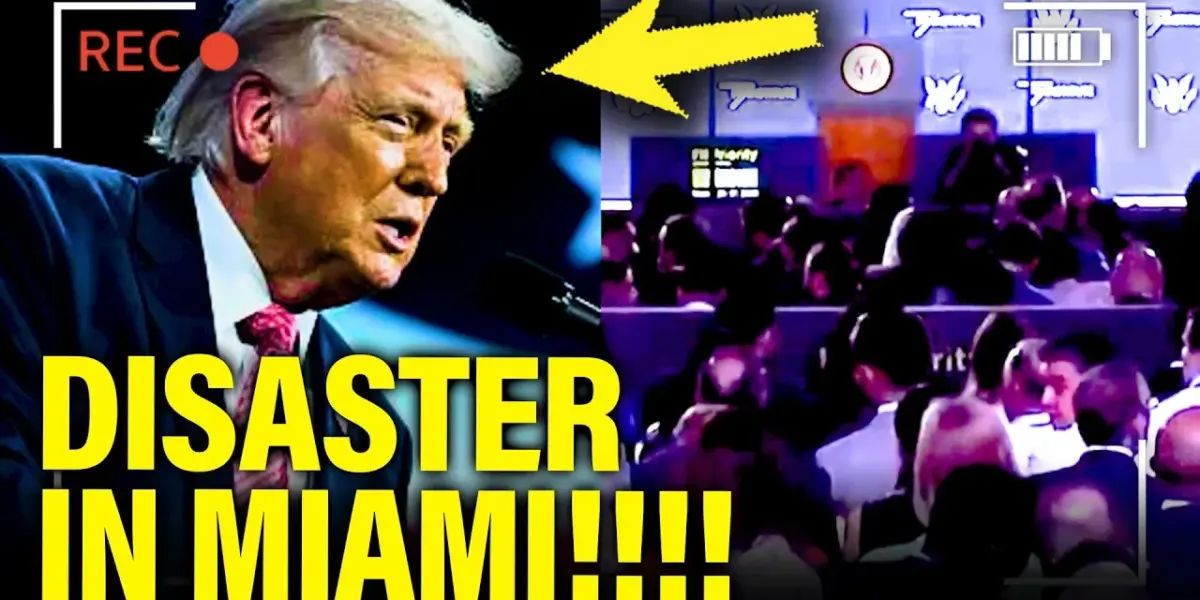
Trump’s War Talk Stuns Financial Crowd
Donald Trump recently delivered a speech at a financial conference in Miami. The event took place as news broke about U.S. service members being injured in a strike in Saudi Arabia. Trump’s speech touched on war and international relations, drawing attention for its bold statements.
NATO Under Fire
A major point of Trump’s speech was his stance on NATO, the North Atlantic Treaty Organization. He declared that the United States would no longer help defend NATO allies in the future. This announcement came as he discussed removing sanctions on Russian oil, a move that benefits Russia financially. Trump questioned the value of supporting NATO if allies are not supporting the U.S. in return. He stated, “But now, based on their actions, I guess we don’t have to be, do we?” This suggests a transactional view of international alliances, where loyalty and support must be mutual and immediate.
Renaming Straits and Personal Branding
The speech also featured a peculiar suggestion: renaming the Strait of Hormuz to the “Strait of Trump.” Trump seemed to struggle with the name, initially saying “Strait of Trump” before correcting himself to “Harmuz.” This moment was highlighted as an example of his public persona and branding efforts. The presenter of the video noted a perceived physical and mental deterioration while Trump made this suggestion.
Views on Success and Failure
Trump also shared his thoughts on success and associating with people. He mentioned preferring to be around “losers” because it made him feel better, contrasting this with disliking listening to the success stories of very successful people. He explained, “I always like to hang around with losers actually because it makes me feel better.” This perspective was interpreted by the video’s presenter as a sign of insecurity and a potential reason for his views on international bodies like NATO, suggesting successful alliances might intimidate him.
MAGA Principles and Allies
When discussing the core principles of his MAGA movement, Trump listed helping allies like Israel, Saudi Arabia, Qatar, and the UAE. He stated, “MAGA stands for helping Israel, Saudi Arabia, Qatar, or the UAE. That’s what MAGA base wants us to do.” This indicates a foreign policy approach focused on specific regional partners, emphasizing protection and strategic interests. He also claimed his current term is better than his first, citing “regime change” in Iran as a success, despite ongoing regional conflicts.
Economic Outlook and War
Trump touched on economic matters, including oil prices and the stock market. He suggested that oil prices might rise further once current conflicts end, implying a volatile economic future. He also mentioned that his administration had achieved significant stock market success, calling the U.S. a “rocket ship” for investment. His remarks about ongoing conflicts suggested a belief that his actions had prevented worse outcomes, such as Iran obtaining nuclear weapons.
Advisors and Negotiation
The former president praised Jared Kushner and Steve Bannon as negotiators, comparing them to Henry Kissinger. He referred to them as a “high IQ team” doing a great job. This endorsement of his advisors highlights his reliance on a specific group of individuals for foreign policy and negotiation tasks.
Claims of Victory and Media Criticism
Trump asserted that the U.S. had “obliterated Iran,” claiming their military capabilities were destroyed. He criticized media outlets like The New York Times for suggesting otherwise, calling such reporting “almost treasonous.” He countered these reports by detailing Iran’s alleged weaknesses, including a lack of naval and air forces and destroyed infrastructure. This strong rhetoric paints a picture of decisive military success, contrasting sharply with a more nuanced view of the ongoing regional tensions.
Personal Style and General Praise
The speech also included personal anecdotes and observations. Trump discussed his willingness to answer any question, even about sex, in a seemingly unscripted manner. He also praised General Mark Milley, the Chairman of the Joint Chiefs of Staff, for his dedication and focus, contrasting him with others he felt were not taking their responsibilities seriously. He noted Milley’s nickname, “Raisin,” and expressed admiration for his work ethic.
Attacks on Biden and Global Salvation
Continuing his well-known pattern, Trump referred to President Biden as “Sleepy Joe.” He also claimed to have saved the world from nuclear catastrophe during his presidency, stating that a nation was “two weeks away” from obtaining nuclear weapons before his intervention. He described his actions as “violently” and “powerfully” executed, with the “respect of the world.” This narrative positions him as a decisive global savior.
Legacy Aspirations
When asked about his legacy, Trump expressed a desire to be remembered as a peacemaker. He cited settling eight wars, which he claimed saved millions of lives. Despite the current global conflicts, he maintained, “I’d love my legacy to be made as a great peacemaker because I really believe I’m a peacemaker.” This statement contrasts with the critical tone of the video’s presenter, who suggested Trump would be remembered differently.
Closing Remarks
The speech concluded with a personal note about his son, Don Jr., and his “best jeans.” The video presenter ended by encouraging viewers to subscribe to their channel and other platforms for more content.
Why This Matters
Donald Trump’s remarks at the Miami financial conference offer a window into his foreign policy vision and leadership style. His strong pronouncements on NATO, international conflicts, and alliances signal a potential shift in U.S. global engagement should he return to power. The audience, composed of financial professionals, likely heard messages about economic stability, risk, and strategic investment tied to his policy ideas. His emphasis on transactional alliances and national interests over collective security could reshape international relations, impacting global trade, security agreements, and diplomatic ties. The stark contrast between his self-portrayal as a peacemaker and the presenter’s critical view underscores the polarized perceptions of his impact on world affairs.
Implications and Future Outlook
Trump’s declarations about NATO suggest a potential weakening of the alliance, which could embolden adversaries and create instability in Europe. His focus on specific regional allies, like Israel and Saudi Arabia, might lead to a more fragmented approach to foreign policy, prioritizing bilateral relationships over multilateral cooperation. The economic implications are also significant; his promises of strong economic growth alongside protectionist policies could create both opportunities and challenges for businesses and investors. The volatility in his rhetoric, particularly concerning ongoing conflicts, adds another layer of uncertainty to the global economic and security outlook.
Historical Context
Trump’s “America First” approach has deep roots in historical isolationist movements within the United States. His questioning of long-standing alliances like NATO echoes sentiments expressed by politicians in previous eras who advocated for less international involvement. The post-World War II era saw the U.S. embrace a role of global leadership, establishing institutions like NATO to ensure collective security and promote democracy. Trump’s presidency marked a significant departure from this tradition, emphasizing bilateral deals and national sovereignty above all else. His current statements suggest a continuation of this philosophy, potentially signaling a return to a more unilateral foreign policy if he were to regain the presidency.
Source: Trump gives DISASTER SPEECH on WAR to TINY CROWD!!! (YouTube)

Related Articles
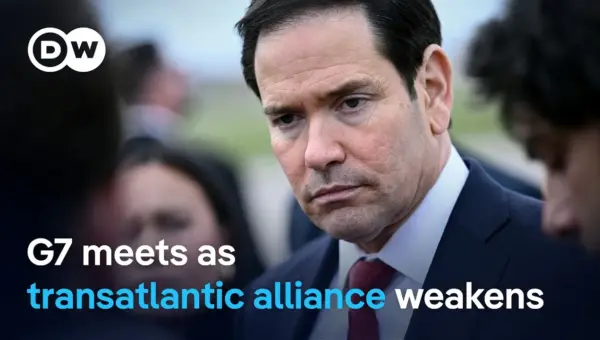
G7 Allies Clash Over Iran War Strategy, Urge Focus on Russia
G7 foreign ministers met in Paris, revealing deep divisions over the U.S. war with Iran. European allies urged the U.S. to pressure Russia, linking its actions to the conflict and fearing support for Ukraine will wane.

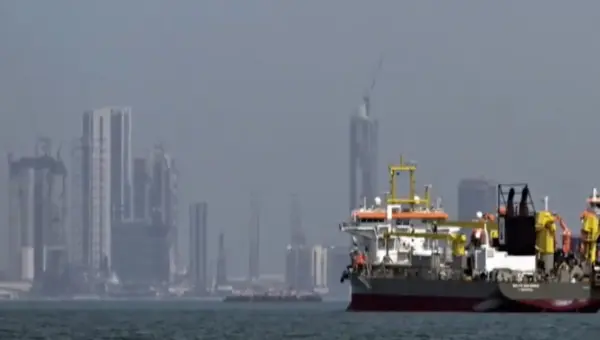
Iran Blocks China Ships, Exposing Beijing’s Weak Grip
Iran's recent decision to block Chinese ships at the Strait of Hormuz is exposing the limits of Beijing's influence in the Middle East. This action is causing delays and cancellations for Chinese manufacturers, turning a perceived geopolitical win into an economic strain.
Trump’s “Walk Away” Tactic Signals Tougher Stance on China
Retired Air Force Brigadier General David Stillwell believes President Trump's strategy of being willing to walk away from negotiations puts pressure on China. This tactic, combined with US global actions and strengthened alliances, signals a more assertive American foreign policy.